حمام باريسي
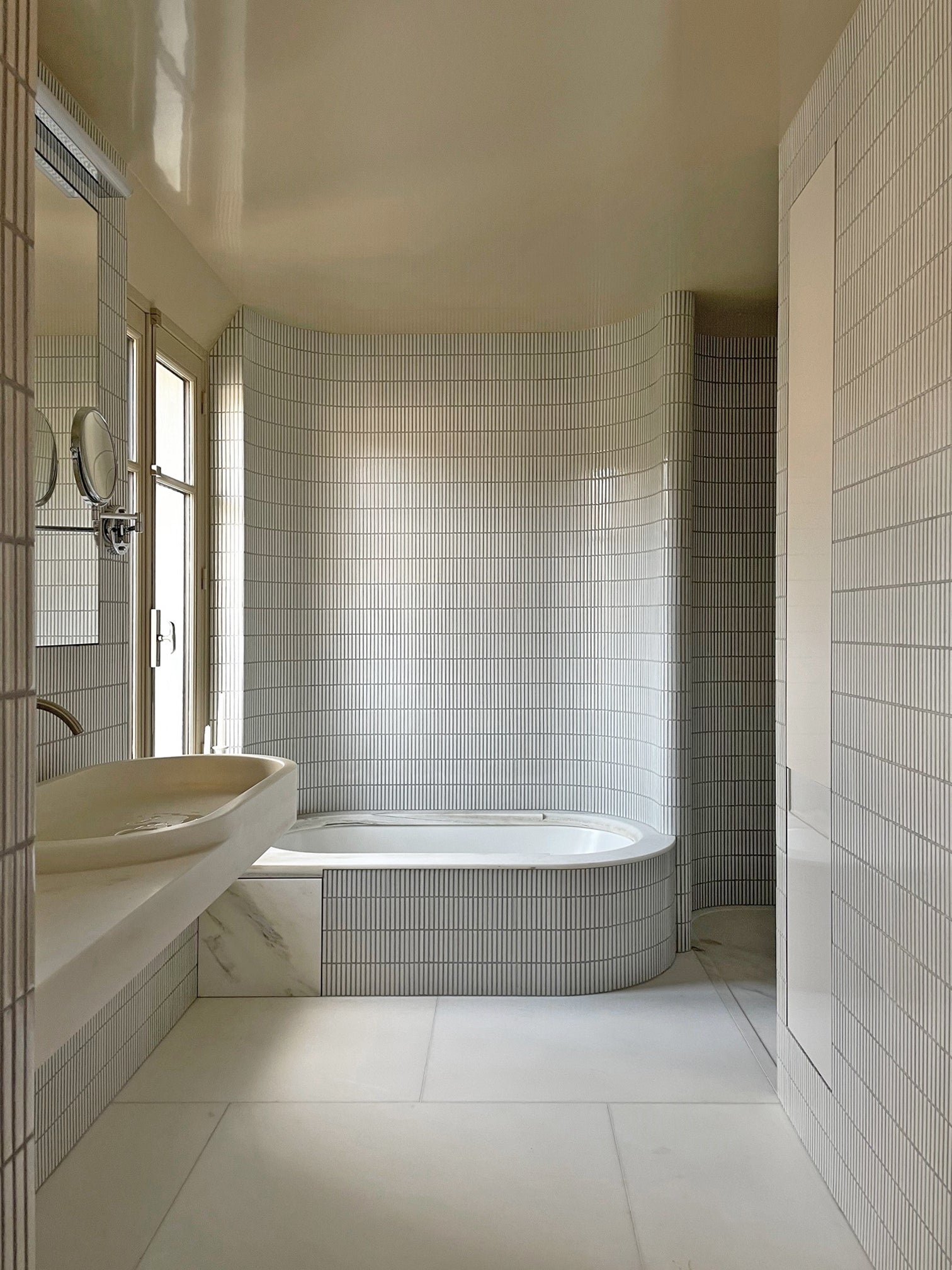
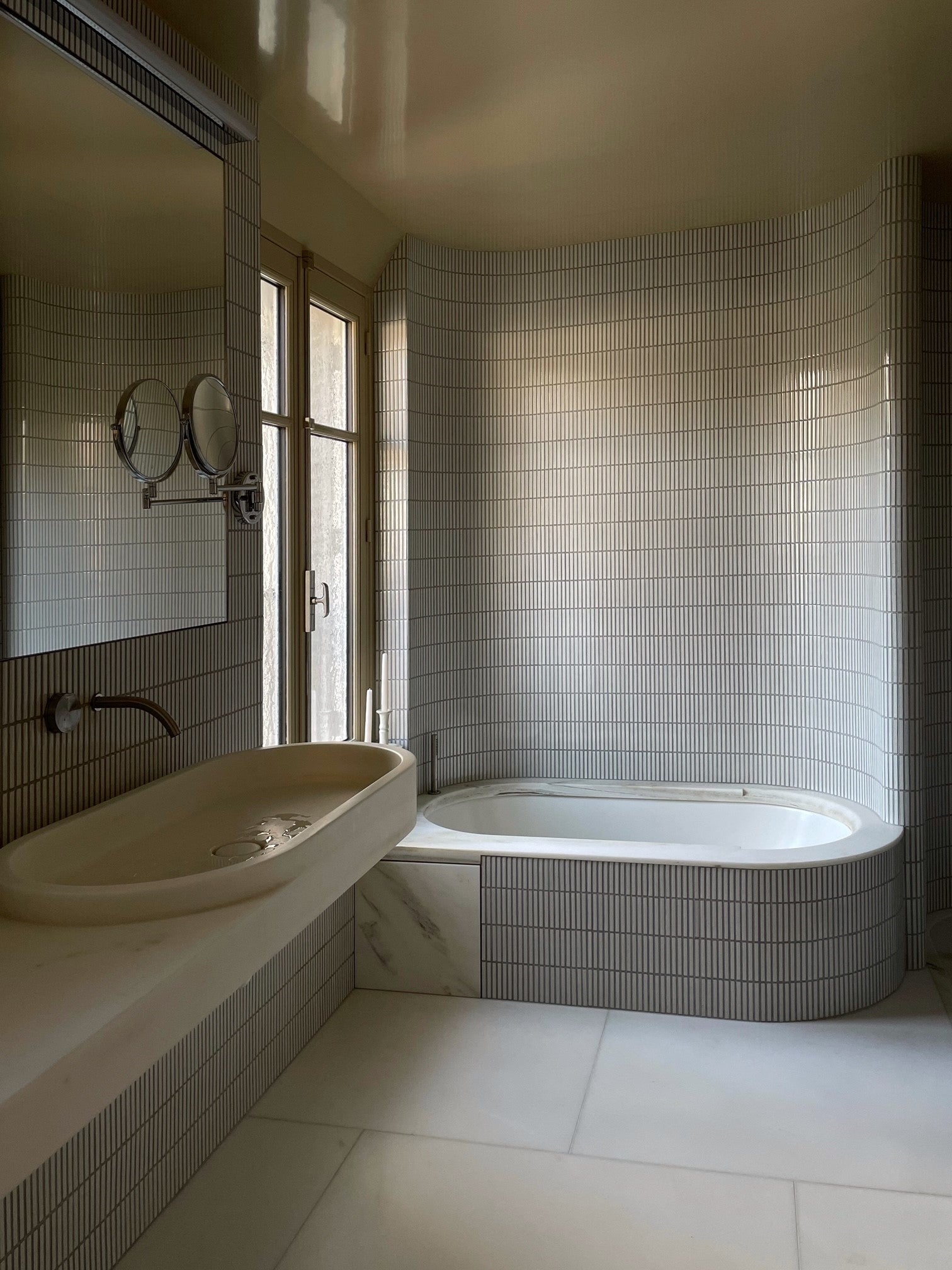
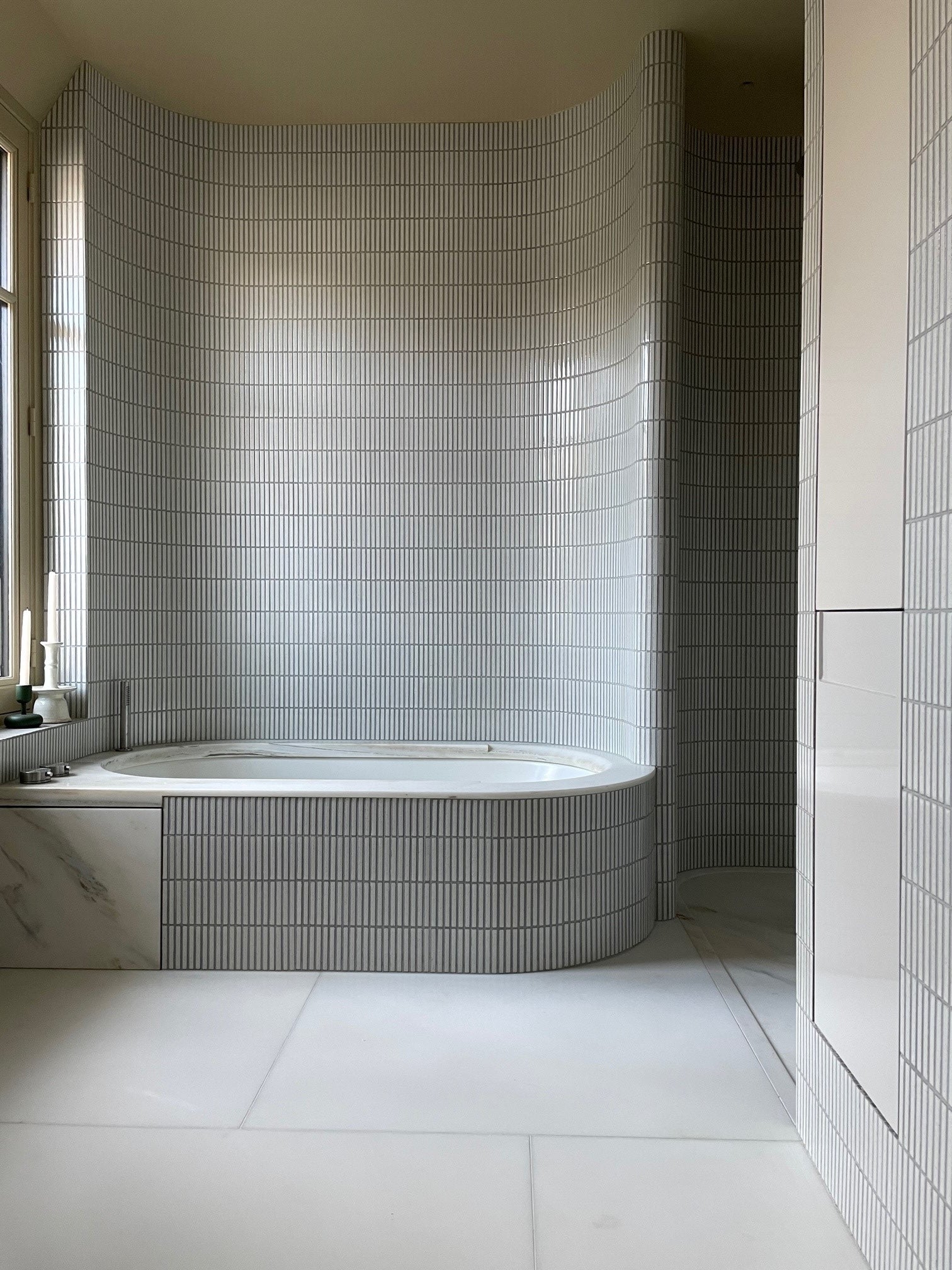
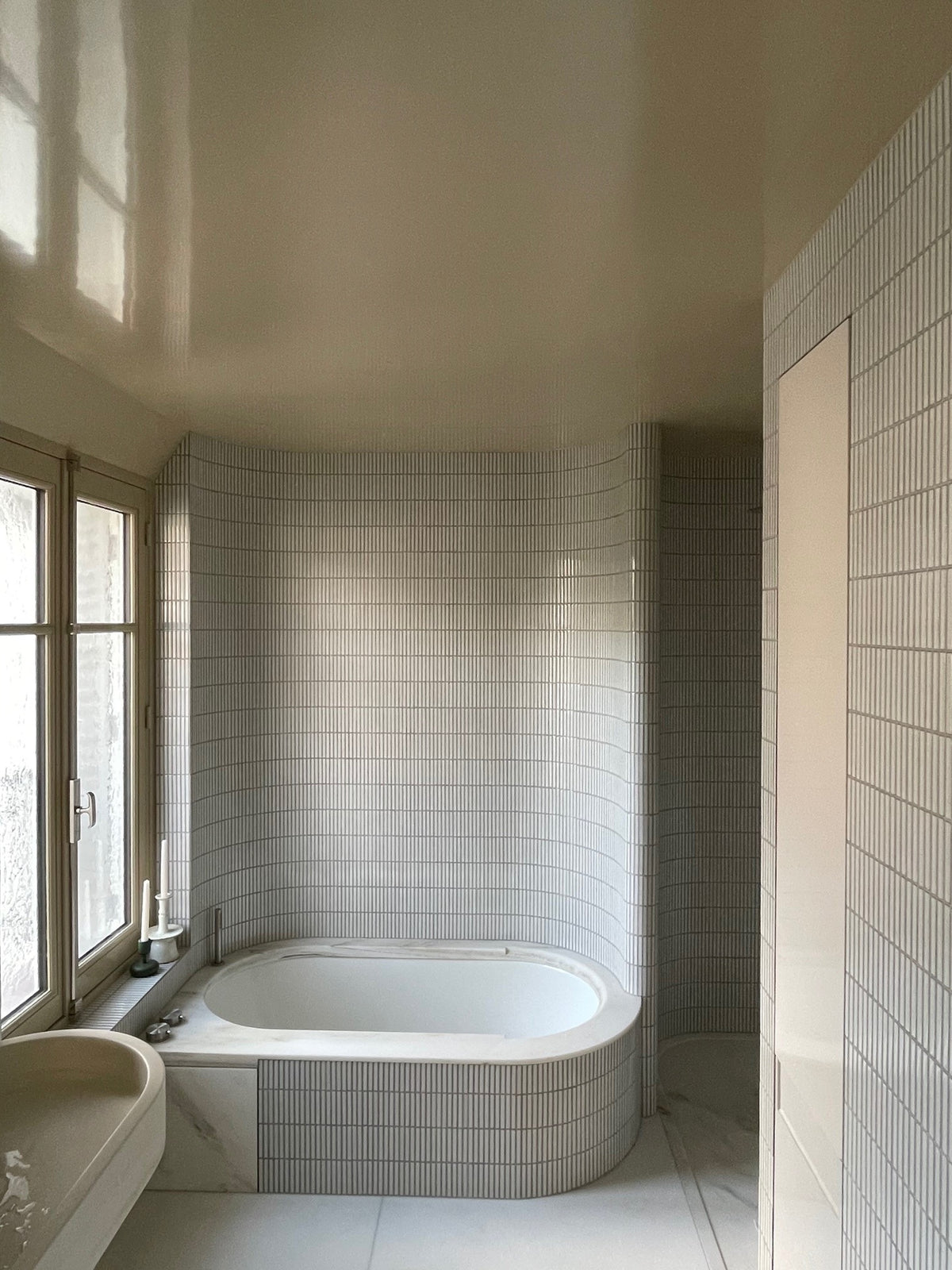
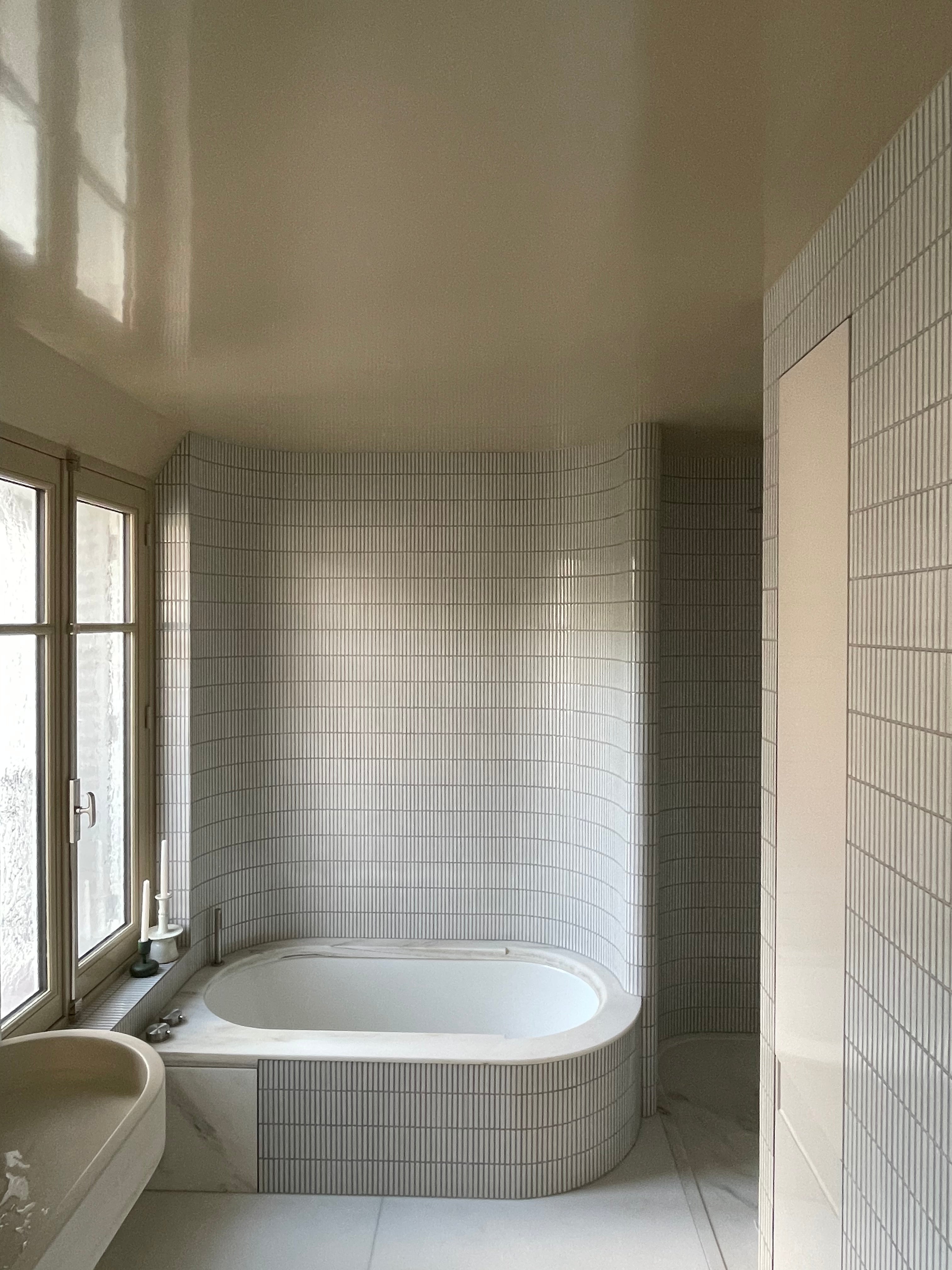
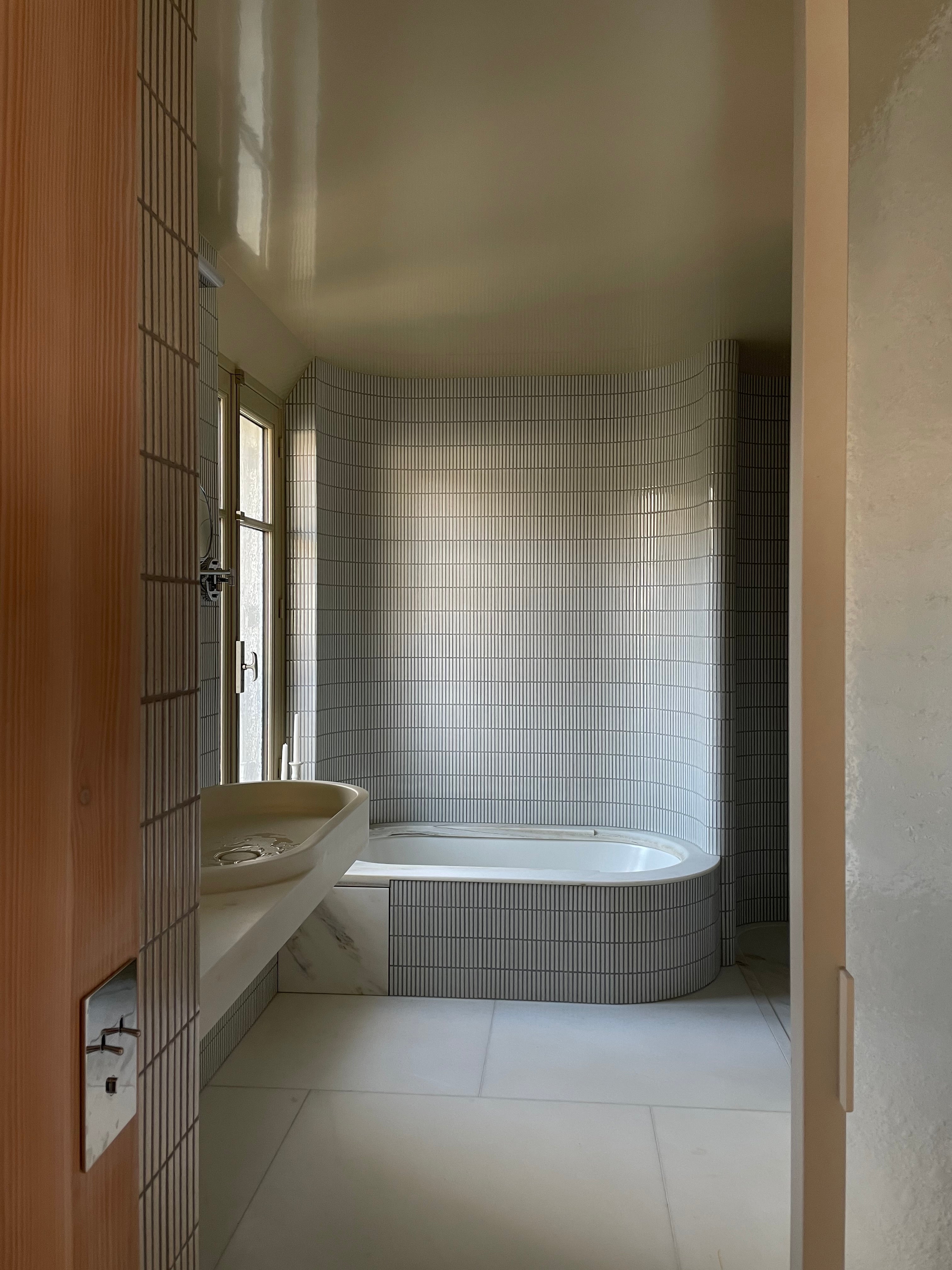
في حمام باريس هذا من تصميم Federico Masotto Architecte، يستخدم بلاط يوهين باللون الأبيض المرقط كسطح خزفي مستمر عبر الجدران والأشكال المنحنية والتفاصيل المعمارية المتكاملة.
تم تصميم الغرفة حول وحدة البلاط الكاملة. تم تعديل ارتفاع سقفها بحيث يمكن تركيب كل صف باستخدام بلاط كامل: لم يتم قص أي بلاطة في أي مكان في المشروع.
معلومات المشروع
المشروع: YB102
الموقع: باريس، فرنسا
المهندس المعماري: Federico Masotto Architecte
المورد: Mittsu Japanese Tiles
مجموعة البلاط: Yohen
اللون: أبيض مرقط
بلد التصنيع: اليابان
المادة: بورسلان
التطبيق: جدران الحمامات، وتغليف الحوض، والتفاصيل المتكاملة
توفر البلاط والعينات: مجموعة يوهين.
مجلد صور المشروع: YB102 باريس
سطح مادي مستمر
تم تنظيم الحمام من خلال مجموعة محدودة من الحجر الفاتح، والبورسلين، والمعدن. مقابل هذه المواد الأكثر هدوءًا، يخلق الشكل الرأسي الضيق لـ "يوهين" إيقاعًا محسوبًا دون إدخال نمط زخرفي منفصل.
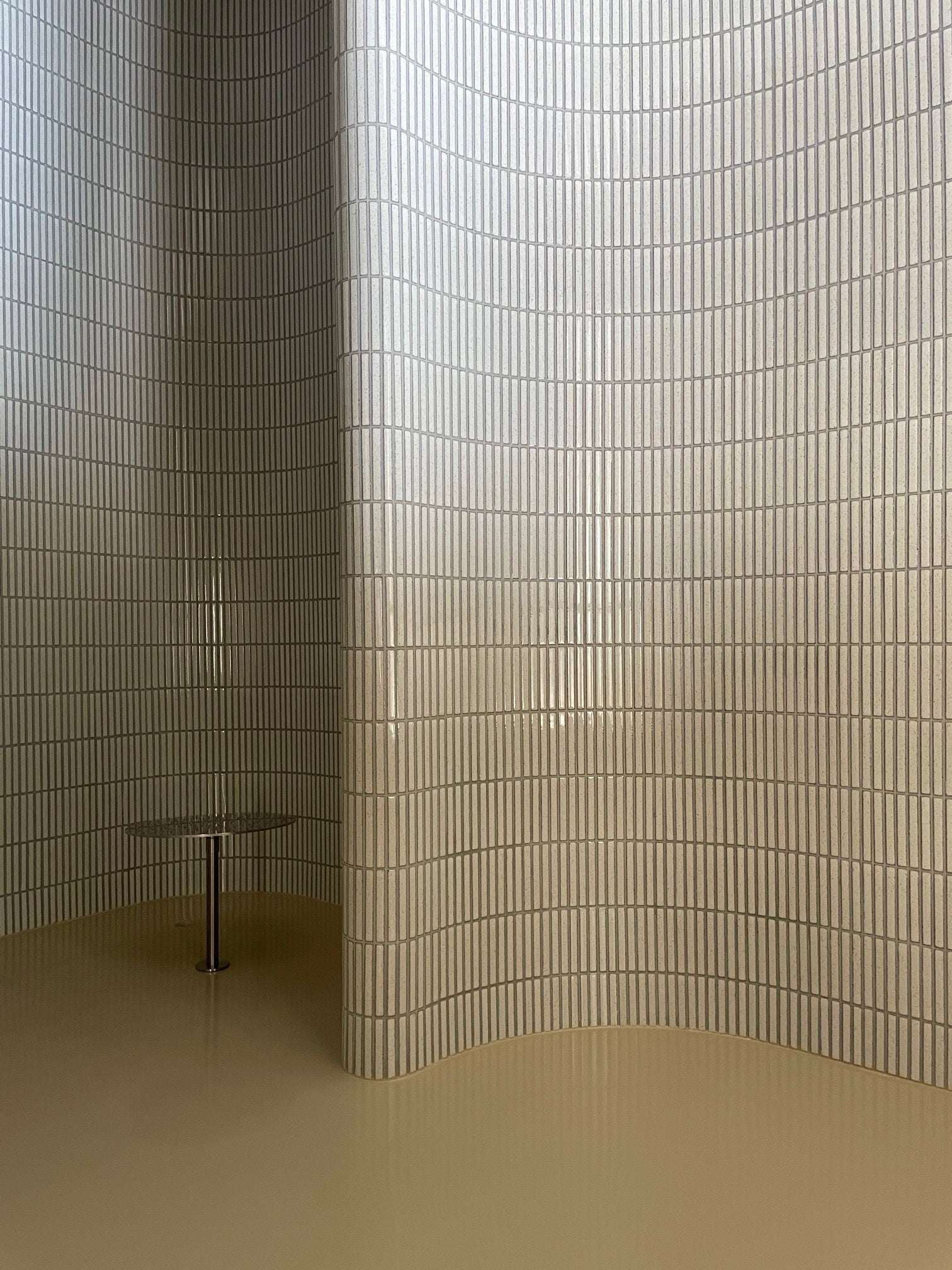
يُستخدم نفس البلاط على مساحات جدارية كبيرة، وأسطح منحنية، وعناصر بناء أصغر. يتيح هذا الاستمرارية قراءة الغرفة كتكوين واحد بدلاً من مجموعة من التجهيزات والتشطيبات.
مصمم حول وحدة البلاط
تبدأ دقة التركيب بقرار معماري. قام المهندس المعماري فيديريكو ماسوتو بتعديل ارتفاع السقف ليتوافق مع أبعاد بلاط يوهين وتصميم الوصلات المقصود.
وبالتالي، يمثل كل مسار وحدة كاملة. تظل نسبة البلاط سليمة من الأرضية إلى السقف وعبر العناصر المنحنية والمتكاملة للغرفة، دون مسار نهائي قصير أو بلاط مقطع.
هذا أكثر من مجرد تفصيل تركيب أنيق. فقد سمح للمادة بالتأثير على العمارة نفسها: تم تحديد أبعاد الغرفة حول البلاط، بدلاً من مطالبة البلاط بالتعويض عن أبعاد تم تحديدها في مكان آخر.
السطح، الضوء والتباين
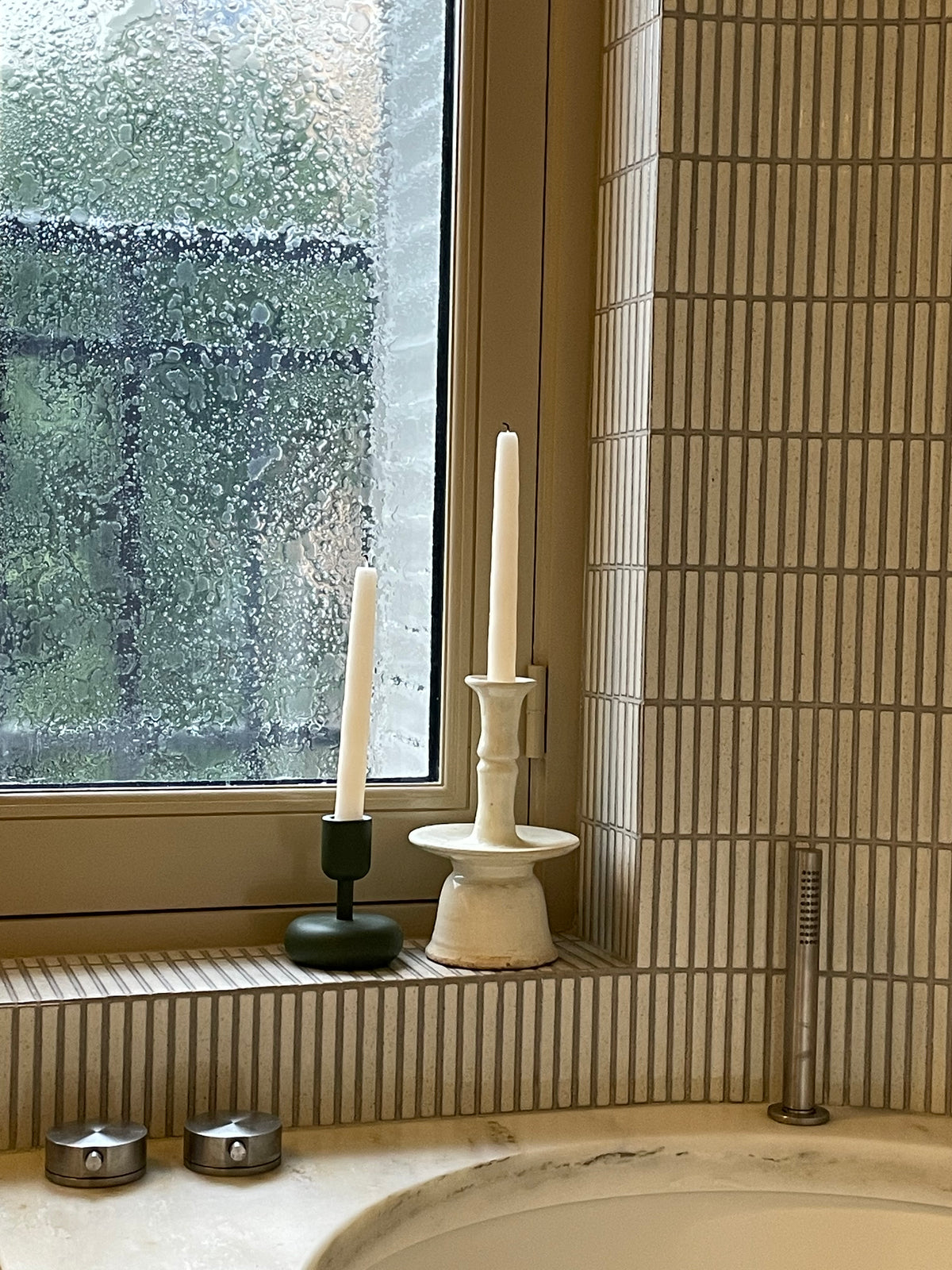
يتميز بلاط يوهين ذو اللون الأبيض المرقط بسطح زجاجي متنوع بمهارة تم تشكيله من خلال الإنتاج الخزفي وعملية الحرق. في ضوء النهار، تصبح الاختلافات الطفيفة في اللون والانعكاس مرئية عبر التركيب. في الظل، يهدأ السطح ويبرز الهيكل الخطي للتصميم.
يوجد تباين، ولكنه يتماسك بتكرار الشكل ودقة التحديد. تتغير النتيجة مع الضوء مع الحفاظ على التناسق المادي.
تتبع العمارة
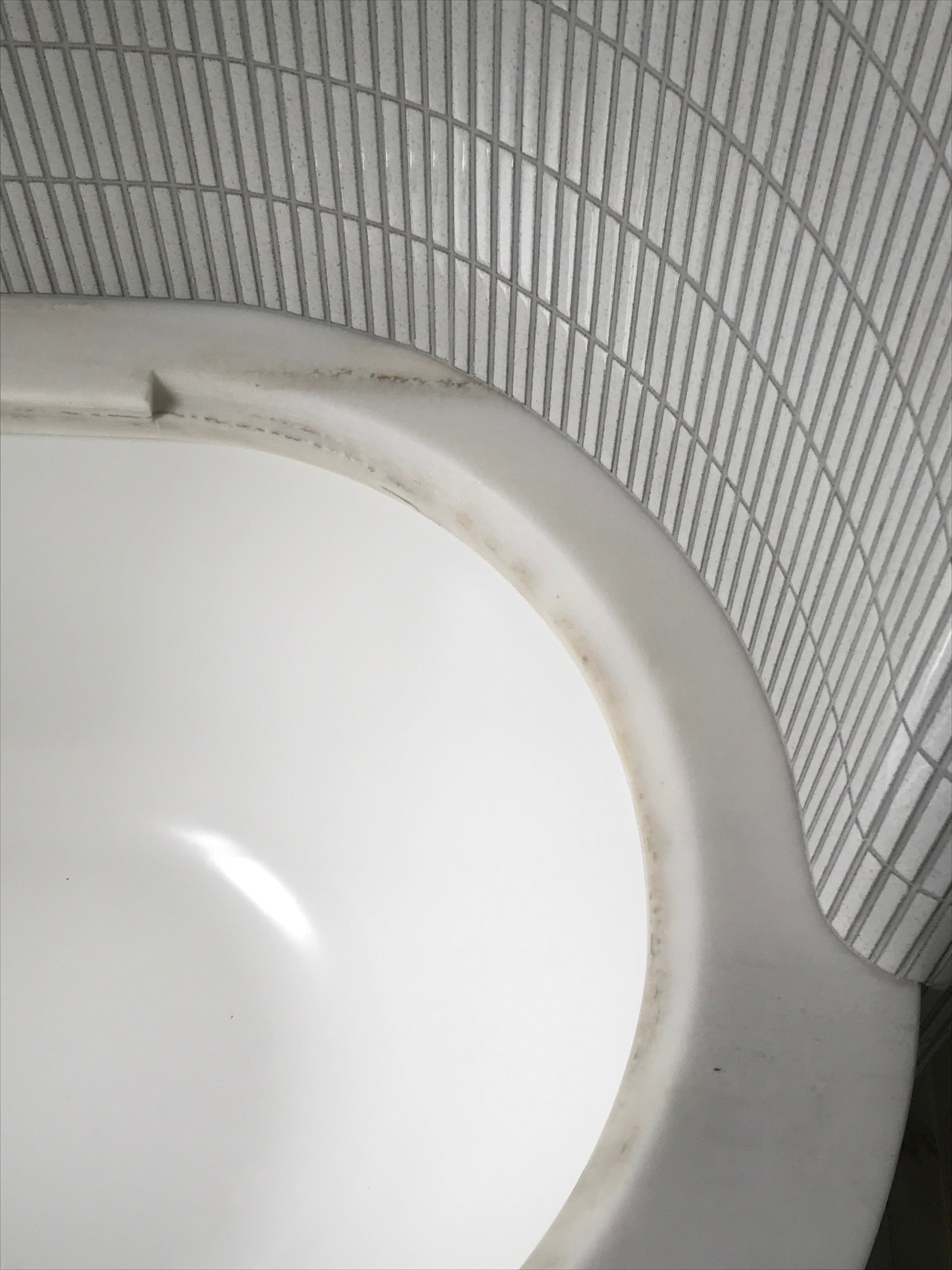
يتم تركيب البلاط الطويل عمودياً في جميع أنحاء المكان، مما يعزز ارتفاع الغرفة مع تتبع هندستها المنحنية. وتسمح الانتقالات الدائرية للأسطح المبلطة بالاستمرار حول حوض الاستحمام والدش دون انقطاعات بصرية مفاجئة.
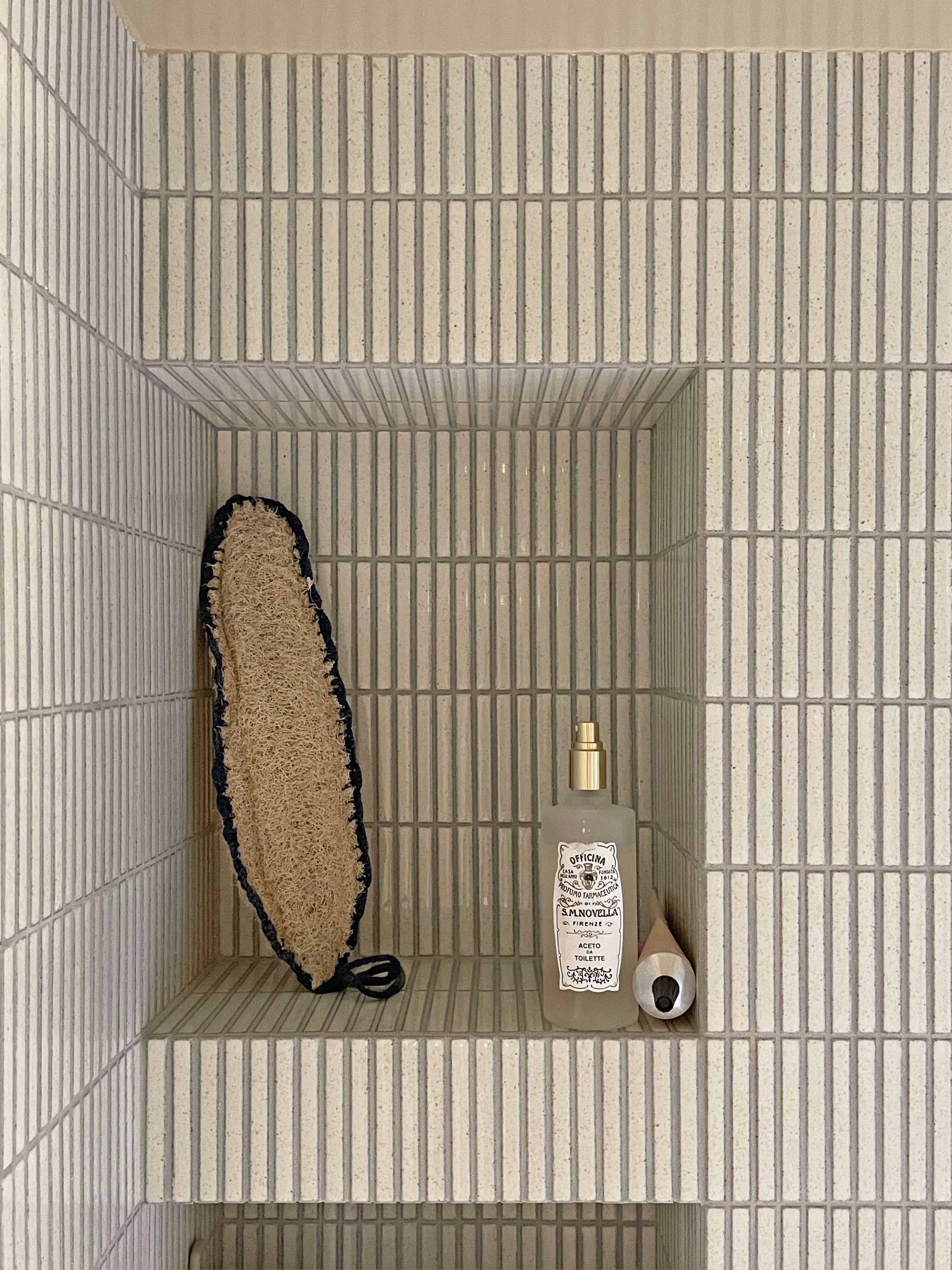
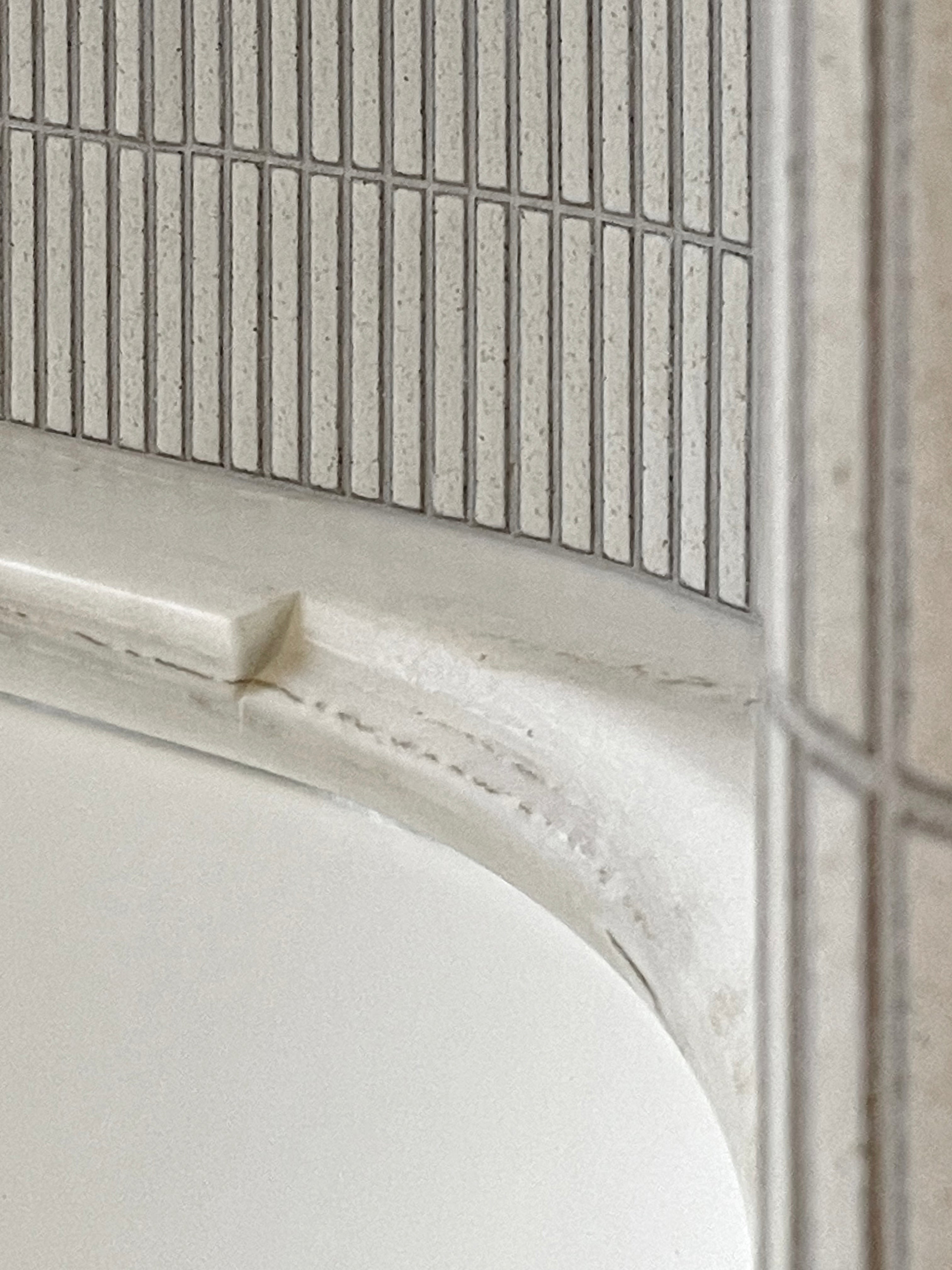
يتم حل الرفوف المدمجة والتجهيزات وتغييرات المواد ضمن نفس الشبكة الخزفية. عند هذه الوصلات القريبة، يتضح اهتمام بالغرفة بأكملها: يلتقي البلاط والحجر والمعدن دون إخلال بالإيقاع الأساسي.
ملخص
في هذا التصميم الداخلي في باريس، يمنح بلاط يوهين باللون الأبيض المرقط الحمام لغة مادية واضحة. إن تناسبه لا يقتصر على توفير النظام البصري فحسب: بل يساعد في تحديد أبعاد البناء. من خلال تعديل ارتفاع السقف واستخدام بلاط كامل فقط، خلق المهندس المعماري فيديريكو ماسوتو تركيبًا تتناغم فيه المواد والوصلات والفراغ كتكوين واحد.
استكشف مجموعة Yohen واطلب عينات من مجموعة Yohen.
تعرف على البلاط الياباني
تعرف على التنوع في طلاء اليوهين الياباني
الأسئلة الشائعة
ما هو البلاط المستخدم في حمام باريس هذا؟
بلاط بورسلين ياباني من نوع Yohen باللون الأبيض المرقط، من توريد Mittsu Japanese Tiles.
من صمم المشروع؟
صمم الحمام من قبل Federico Masotto Architecte.
هل تم قطع أي بلاط؟
لا. تم تعديل ارتفاع السقف ليتناسب مع وحدة البلاط، مما سمح باستخدام البلاط الكامل في كل صف.
لماذا يتنوع سطح Yohen؟
تنشأ الفروق الدقيقة في اللون والانعكاس من خلال عملية التزجيج والحرق، مما يمنح السطح المثبت عمقًا دون الاعتماد على نمط مطبوع.
مقالة من Mittsu Japanese Tiles
بإشراف إيان رينولدز