Haarlem House of Four
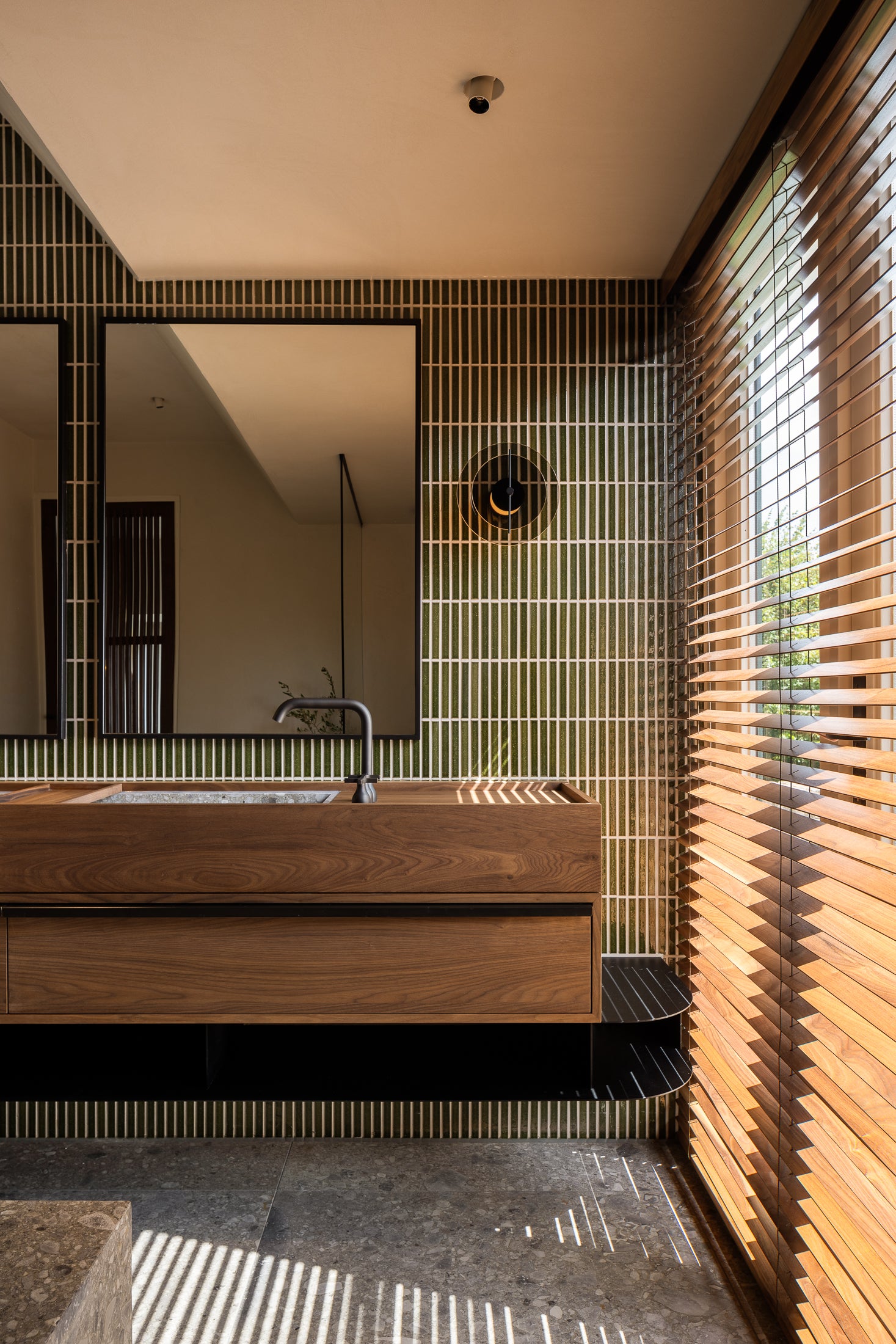
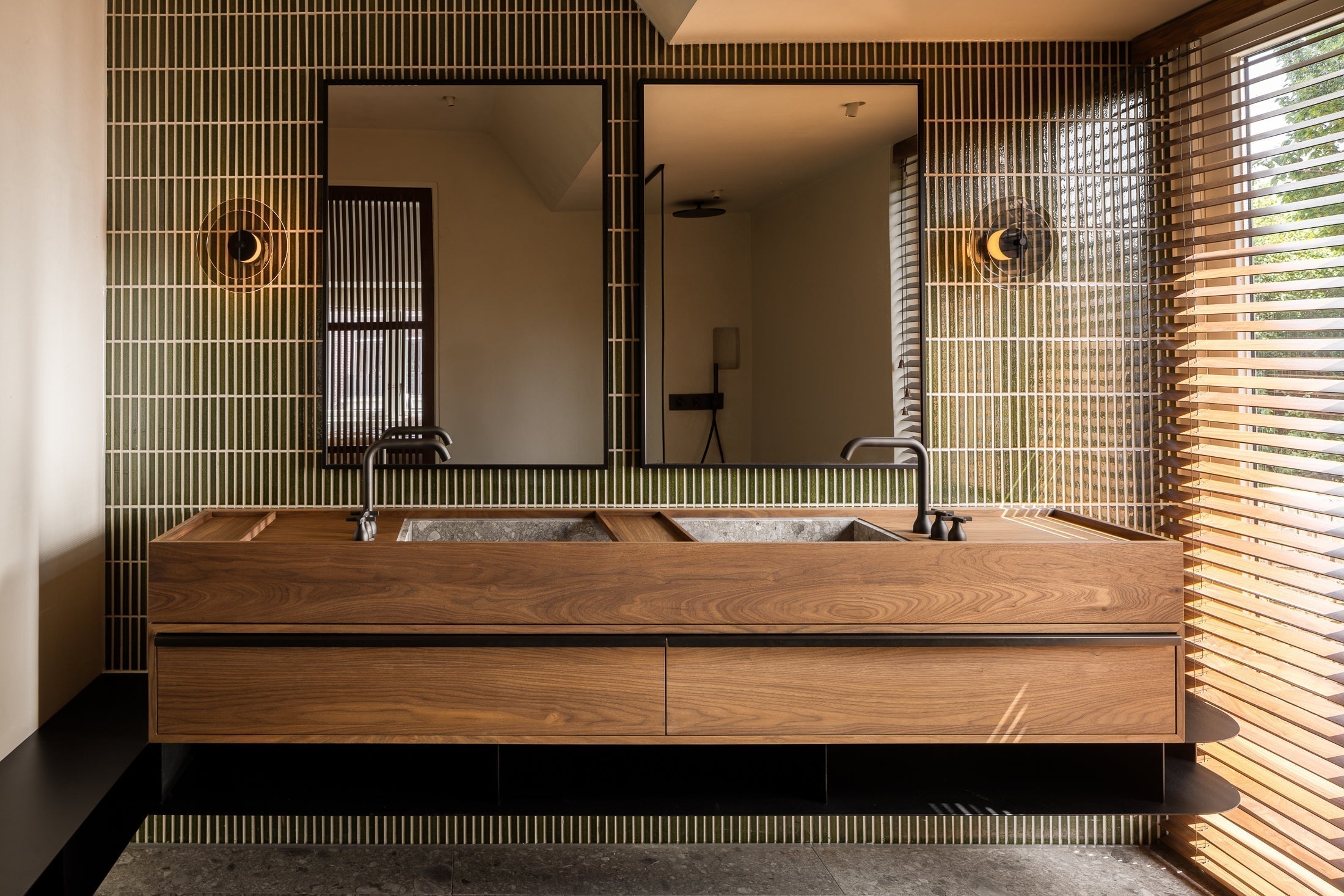
Haarlem House of Four in Amsterdam features Kaji Border Vintage Green, a Japanese porcelain tile collection produced in Japan and used to define depth, rhythm and material balance within a refined residential interior.
Project Information
Project: Haarlem House of Four
Location: Amsterdam, Netherlands
Designer: Barde + vanVoltt
Supplier: Mittsu Japanese Tiles
Tile Collection: Kaji Border
Colour: Vintage Green
Country of Manufacture: Japan
Material: Porcelain
Water Absorption: 0.02–0.07%
Surface: Textured gloss glaze
Application: Interior wall finish
Technical Data Sheet: Kaji Border
CAD Data: Kaji Border
Mittsu Image Folder: Kaji Border
Kaji Border at Haarlem House of Four
House of Four in Haarlem uses Japanese ceramic tiles to introduce depth, warmth and a controlled material rhythm within a carefully considered residential interior.
Designed by Barde + vanVoltt, the early twentieth-century Dutch home was reworked to balance historical character with a more restrained contemporary language. Natural materials are used with precision, allowing proportion, texture and light to define the atmosphere. Within the bathrooms, Kaji Border in Vintage Green establishes a continuous architectural surface that anchors the space.
Material & Surface Character
Used across full wall planes, Kaji Border introduces a fine linear rhythm. Its elongated proportions create a precise vertical cadence, while the gloss glaze responds to shifting natural light, softening the geometry of the room and introducing subtle movement.
Vintage Green was selected for its depth and restraint. The glaze carries tonal variation through moss, olive and darker mineral notes, creating variation across the surface while remaining calm and composed. Set against walnut joinery, dark fittings and natural stone, the tile brings quiet richness to the palette.
Produced in Japan using high-temperature kiln firing, each tile carries natural variation in tone, gloss and surface character. These irregularities prevent repetition from feeling flat, allowing the surface to retain depth as light moves across it throughout the day.
Unlike printed ceramic surfaces, the variation in Kaji Border is created during firing, resulting in natural tonal movement rather than repeated pattern.
Installation Approach
Kaji Border is supplied on paper-fronted sheets, helping maintain consistent alignment across large wall areas and detailed junctions. This installation method supports the clean linear rhythm of the project while ensuring precision across the full surface.
About Kaji Border
Kaji Border is a Japanese porcelain tile collection characterised by its elongated format, textured glaze and natural tonal variation created during high-temperature kiln firing in Japan. The collection is designed for architectural wall applications where light, rhythm and surface movement are central to the design.
Why Japanese Porcelain Tiles Were Selected
Japanese porcelain tiles are fired at extremely high temperatures, creating a dense ceramic body with very low water absorption and exceptional surface durability. Combined with naturally varied glazes formed during kiln firing, this allows large tiled surfaces to retain depth, movement and material character under changing light conditions.
“This project shows how material restraint can create depth without relying on contrast,” says Ian Reynolds. “The surface remains calm, but the variation within the glaze ensures it never feels static.”
Summary
At Haarlem House of Four, Kaji Border is used as an architectural surface, shaping the bathroom through proportion, tone and the controlled variation of glazed Japanese ceramic.
View and order samples of
Kaji Border Japanese Porcelain Tiles (UK)
Kaji Border Japanese Porcelain Tiles (Europe)
Kaji Border Japanese Porcelain Tiles (UAE)
Learn about Japanese Tiles
Learn about Japanese Glaze Variation
Press & Media
High-resolution images from Mittsu Japanese Tiles projects are available for editorial use, including full project photography and detail imagery across multiple installations.
Download Project Image Library
Images may be used for editorial coverage with credit to Mittsu Japanese Tiles.
For press enquiries, please contact Mittsu Japanese Tiles.
FAQ
What tiles were used at Haarlem House of Four?
Kaji Border Vintage Green Japanese porcelain tiles by Mittsu Japanese Tiles.
Are Kaji Border tiles made in Japan?
Yes. Kaji Border is produced in Japan using high-temperature kiln firing.
What makes Japanese porcelain tiles different?
Japanese porcelain tiles are known for their dense ceramic body, natural glaze variation and refined surface detailing created during firing.
Are Kaji Border tiles suitable for residential bathrooms?
Yes. Kaji Border is designed for interior architectural wall applications including residential, hospitality and retail environments.
Why does Kaji Border have variation in colour and tone?
The variation is created naturally during kiln firing, where differences in glaze thickness, temperature and atmosphere produce subtle tonal shifts across each tile.
Related Projects
Hamilton Park
Parisian Kitchen
Home Spa Concept
Article by Mittsu Japanese Tiles
Curated by Ian Reynolds