Bisque Golf
Bisque Golf in Amsterdam features Kaji Border Vintage Green, a Japanese porcelain tile collection produced in Japan and used to define a retail interior through material continuity, rhythm and controlled contrast.
Project Information
Project: Bisque Golf
Location: Amsterdam, Netherlands
Designer: Barde + vanVoltt
Supplier: Mittsu Japanese Tiles
Tile Collection: Kaji Border
Colour: Vintage Green
Country of Manufacture: Japan
Material: Porcelain
Water Absorption: 0.02–0.07%
Surface: Textured gloss glaze
Application: Interior wall finish
Technical Data Sheet: Kaji Border
CAD Data: Kaji Border
Mittsu Image Folder: Kaji Border
Kaji Border at Bisque Golf
Bisque Golf in Amsterdam uses Japanese ceramic tiles to define a retail interior with warmth, precision and quiet material contrast.
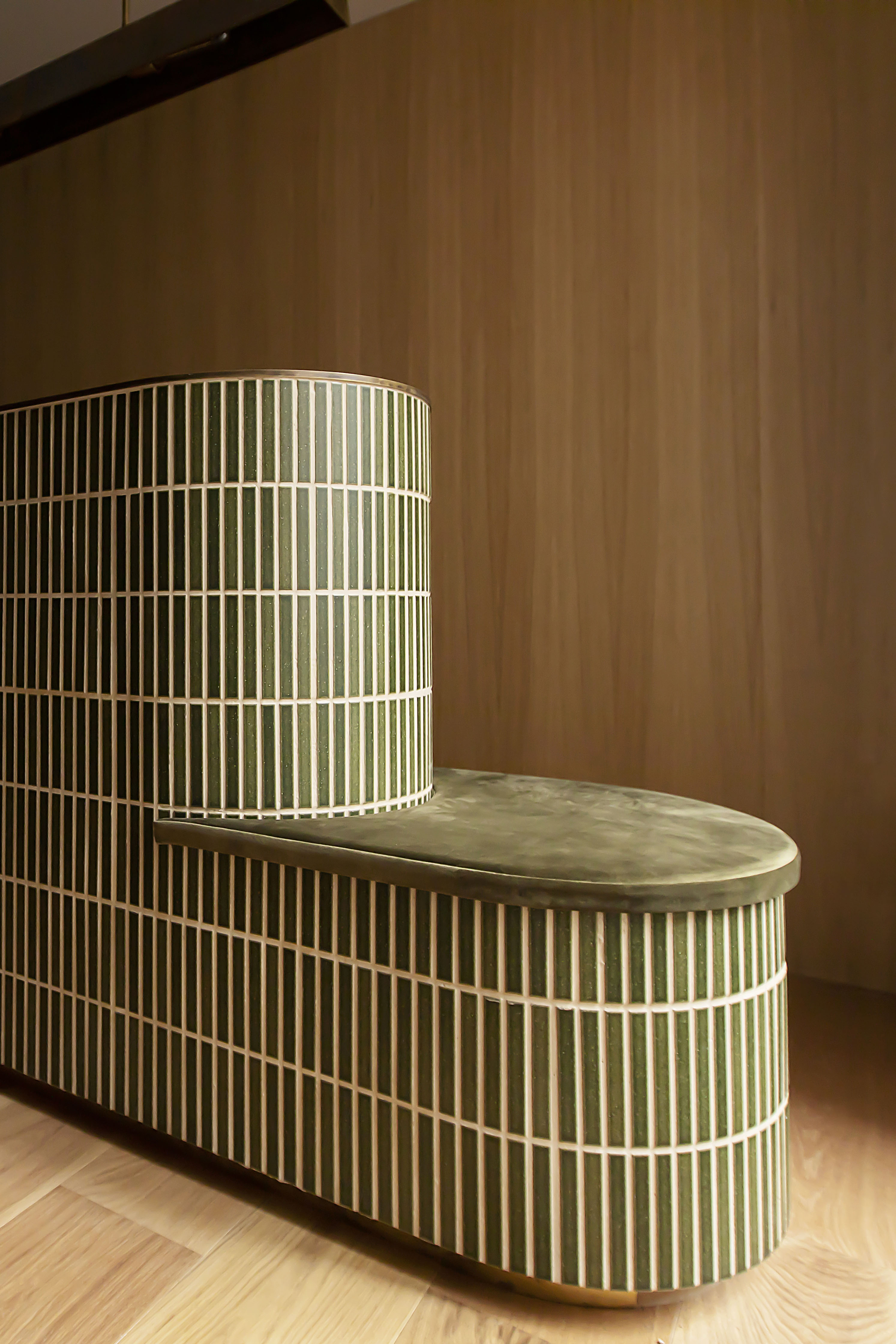
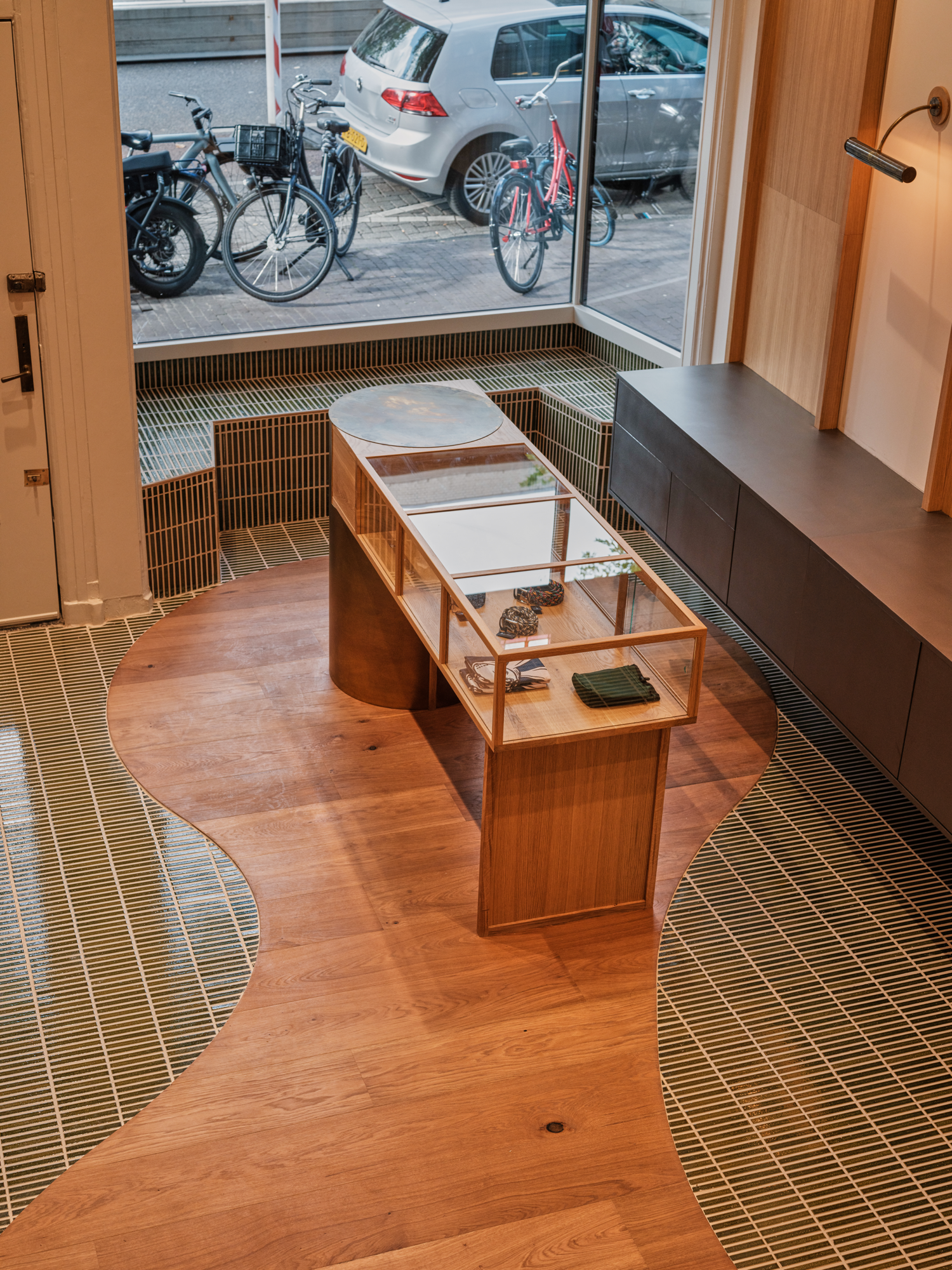
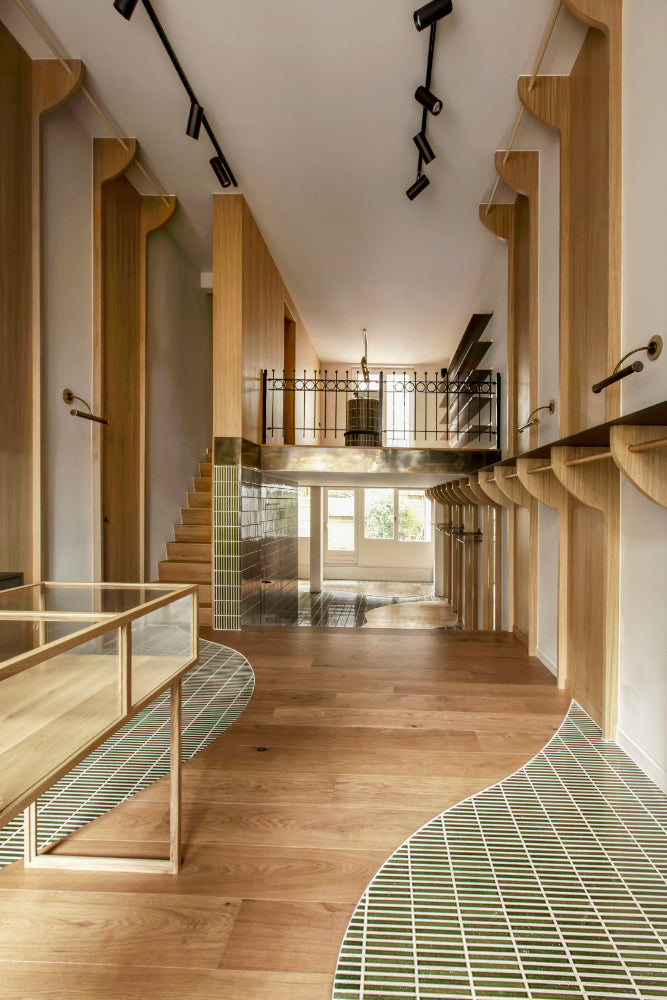
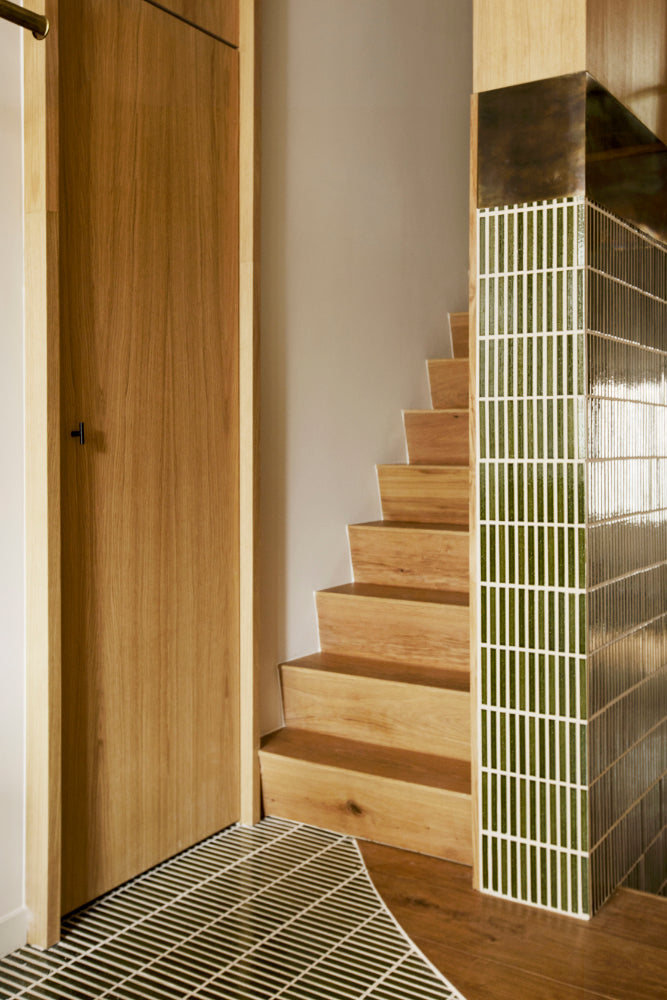
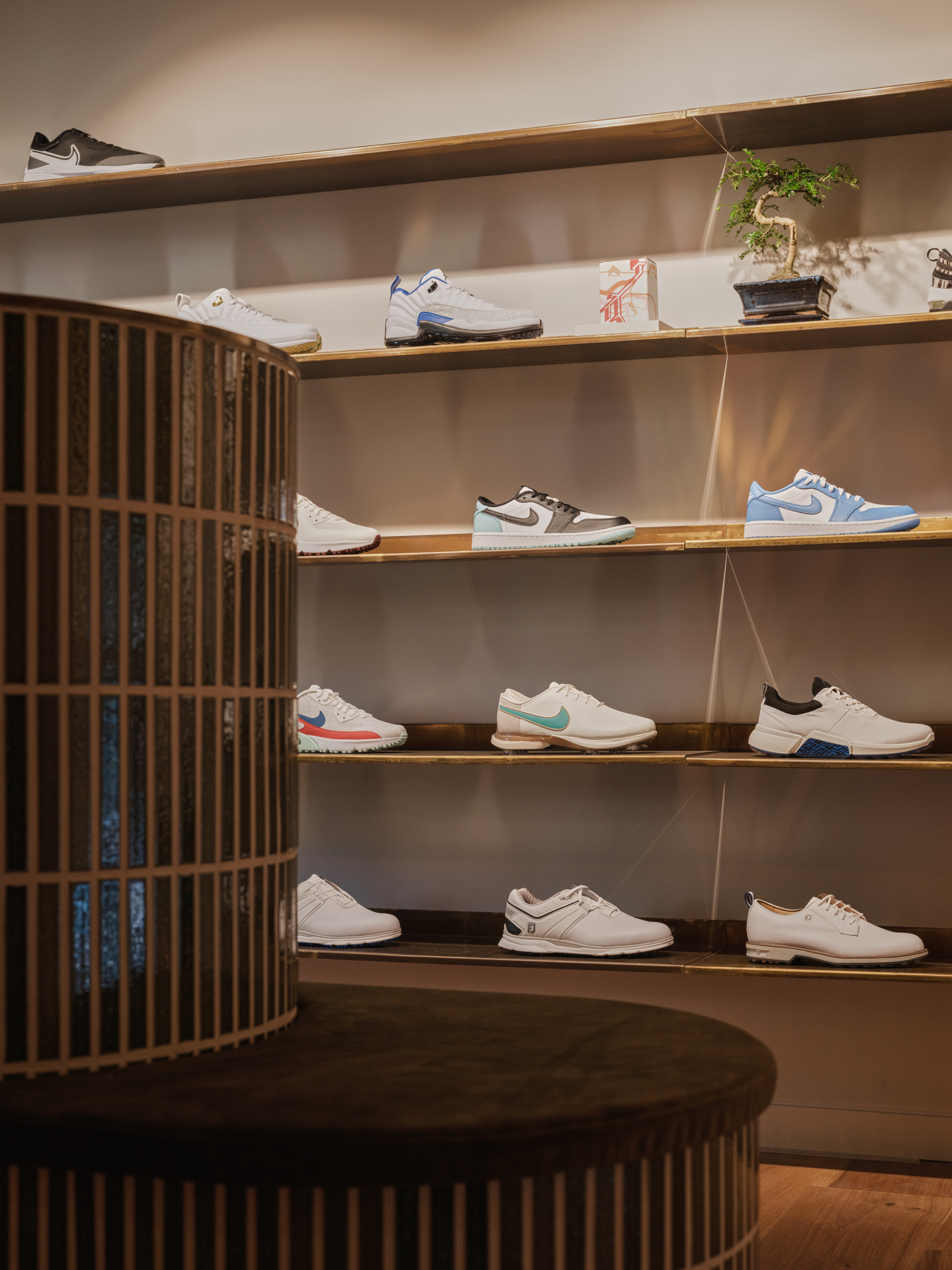
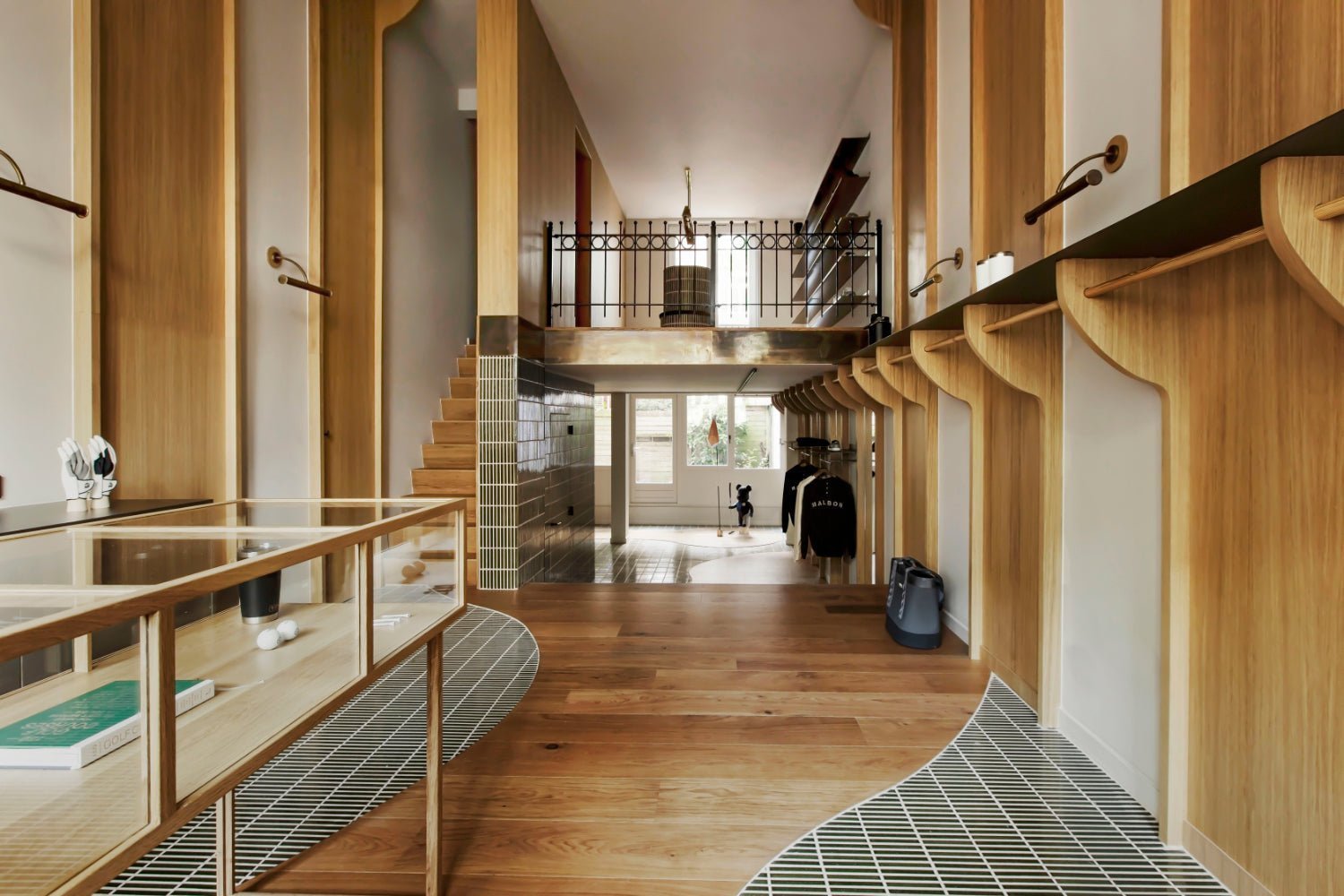
Designed by Barde + vanVoltt, the space combines timber, darkened metal and softly reflective surfaces to create an environment that feels both refined and relaxed. Kaji Border in Vintage Green is used as a continuous architectural surface, wrapping floors, plinths and counters in a single ceramic language.
Material & Surface Character
The elongated format of Kaji Border gives the interior its rhythm. Repeated across floor planes and curved joinery, the tile introduces structure without visual weight. Its narrow proportions create a fine linear grain that guides movement through the space, while the gloss surface responds to light with subtle shifts throughout the day.
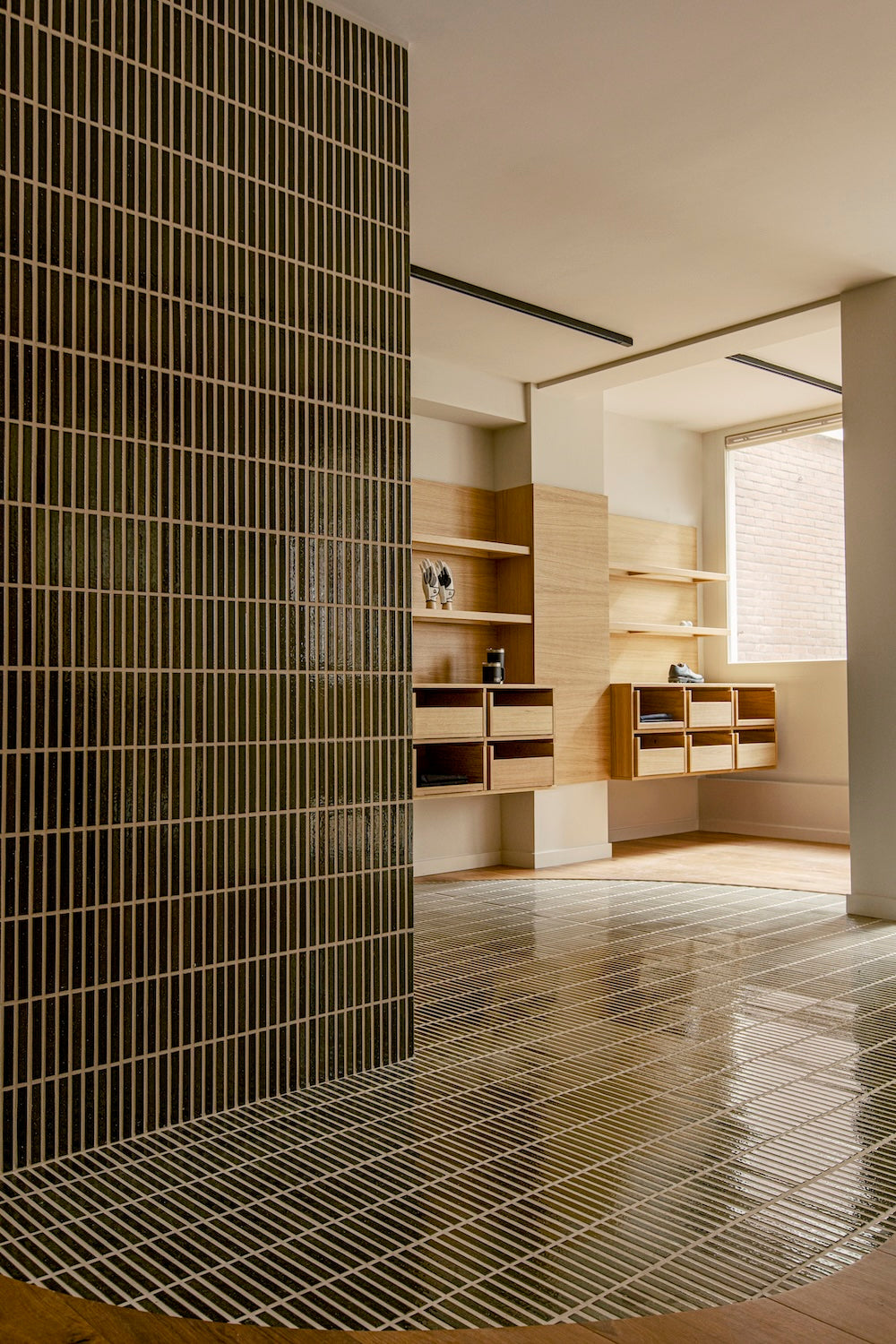
Vintage Green was selected for its depth and restraint. The glaze carries tonal variation through deep green and near-black notes, creating movement across the surface while remaining composed. This balance allows the tile to anchor the interior against warm timber and brushed metal.
Produced in Japan using high-temperature kiln firing, each tile carries natural variation in tone, gloss and surface character. These irregularities prevent repetition from feeling flat, allowing large tiled areas to retain depth and texture.
Unlike printed ceramic surfaces, the variation in Kaji Border is created during firing, resulting in natural tonal movement rather than repeated pattern.
Installation Approach
Kaji Border is supplied on paper-fronted sheets, allowing the tiles to follow curved counters and transitions with precision while maintaining consistent alignment. This method supports the continuous material language that defines the project.
Spatial Application
Rather than being treated as a surface finish, the tile is used as part of the architecture itself. It folds around curved counters, continues across raised platforms and defines transitions between circulation and display.
This continuity gives the project a strong spatial identity, where material repetition becomes a form of visual order within the retail environment.
About Kaji Border
Kaji Border is a Japanese porcelain tile collection characterised by its elongated format, textured glaze and natural tonal variation created during high-temperature kiln firing in Japan. The collection is designed for architectural wall applications where light, rhythm and surface movement are central to the design.
Why Japanese Porcelain Tiles Were Selected
Japanese porcelain tiles are fired at extremely high temperatures, creating a dense ceramic body with very low water absorption and exceptional surface durability. Combined with naturally varied glazes formed during kiln firing, this allows tiled surfaces to retain depth and material character under changing light conditions.
“This project demonstrates how ceramic can define a retail space through continuity rather than contrast,” says Ian Reynolds. “The repetition of the tile creates structure, while the variation within the glaze keeps the surface active.”
Summary
At Bisque Golf, Kaji Border is used as a continuous material surface, shaping the retail interior through proportion, rhythm and the controlled variation of glazed Japanese ceramic.
View and order samples of
Kaji Border Japanese Porcelain Tiles (UK)
Kaji Border Japanese Porcelain Tiles (Europe)
Kaji Border Japanese Porcelain Tiles (UAE)
Learn about Japanese Tiles
Learn about Japanese Glaze Variation
Press & Media
High-resolution images from Mittsu Japanese Tiles projects are available for editorial use, including full project photography and detail imagery across multiple installations.
Download Project Image Library
Images may be used for editorial coverage with credit to Mittsu Japanese Tiles.
For press enquiries, please contact Mittsu Japanese Tiles.
FAQ
What tiles were used at Bisque Golf?
Kaji Border Vintage Green Japanese porcelain tiles by Mittsu Japanese Tiles.
Are Kaji Border tiles made in Japan?
Yes. Kaji Border is produced in Japan using high-temperature kiln firing.
What makes Japanese porcelain tiles suitable for retail interiors?
Japanese porcelain tiles combine durability with natural glaze variation, allowing surfaces to remain visually active under changing lighting conditions.
Why was Kaji Border used across floors and counters?
The elongated format and sheet-mounted installation allow the tile to wrap surfaces continuously, creating a unified architectural language.
Why does Kaji Border have variation in colour and tone?
The variation is created naturally during kiln firing, where differences in glaze thickness and temperature produce subtle tonal shifts across each tile.
Related Projects
Mikel
The Broadcaster
LUX Grand Baie
Article by Mittsu Japanese Tiles
Curated by Ian Reynolds