Kasumigaseki at Vida Emirates Hills
Kasumigaseki at Vida Emirates Hills in Dubai features Wall Oribe and Ka-Bu, Japanese ceramic tile collections produced in Japan and used to define depth, variation and material contrast within a contemporary hospitality interior.
Project Information
Project: Kasumigaseki at Vida Emirates Hills
Location: Dubai, United Arab Emirates
Supplier: Mittsu Japanese Tiles
Tile Collections: Wall Oribe, Ka-Bu (UAE Only)
Country of Manufacture: Japan
Material: Porcelain
Application: Interior wall finish
Technical Data Sheet:
Wall Oribe
Ka-Bu
Mittsu Image Folder:
Wall Oribe
Ka-Bu
Wall Oribe at Kasumigaseki
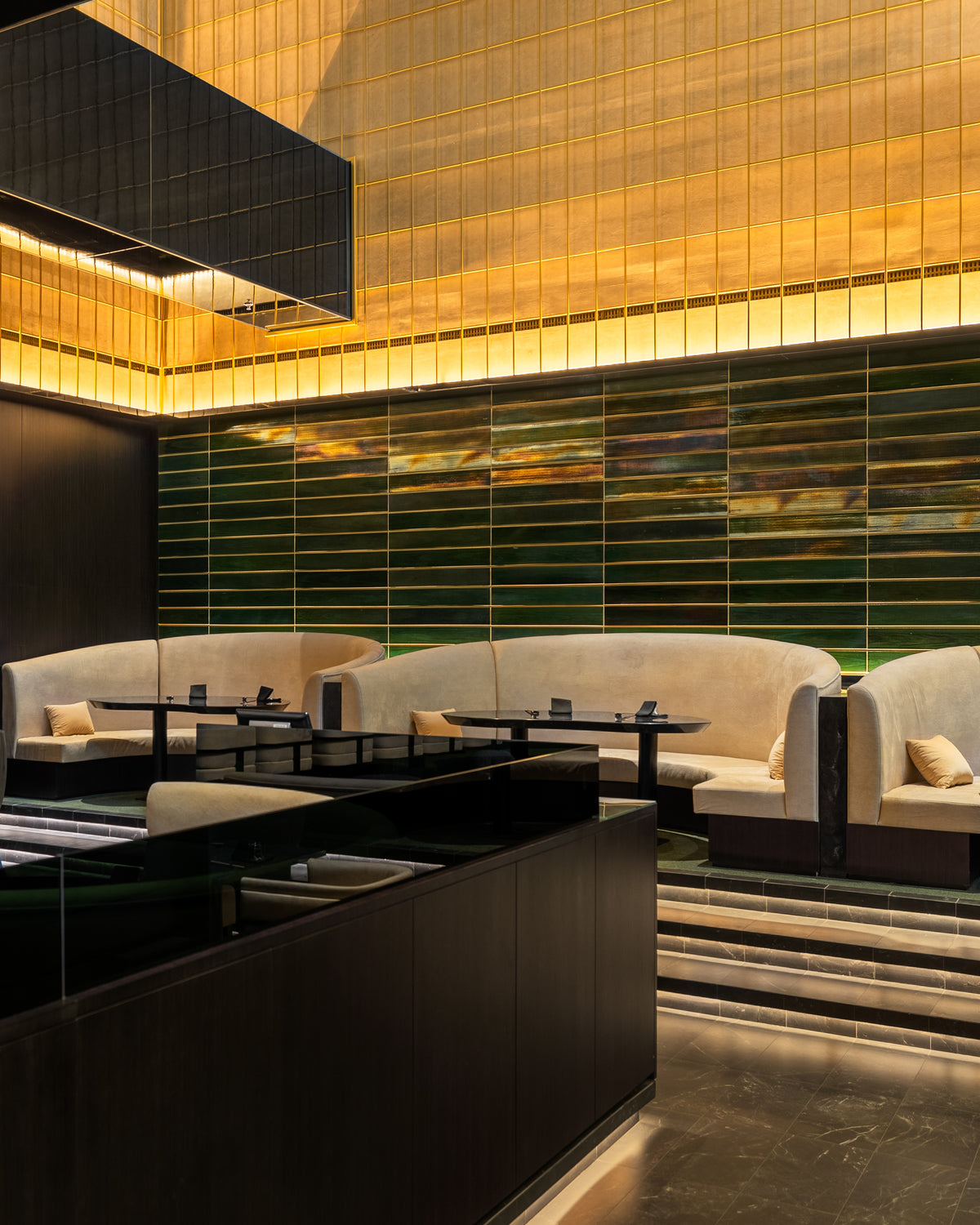
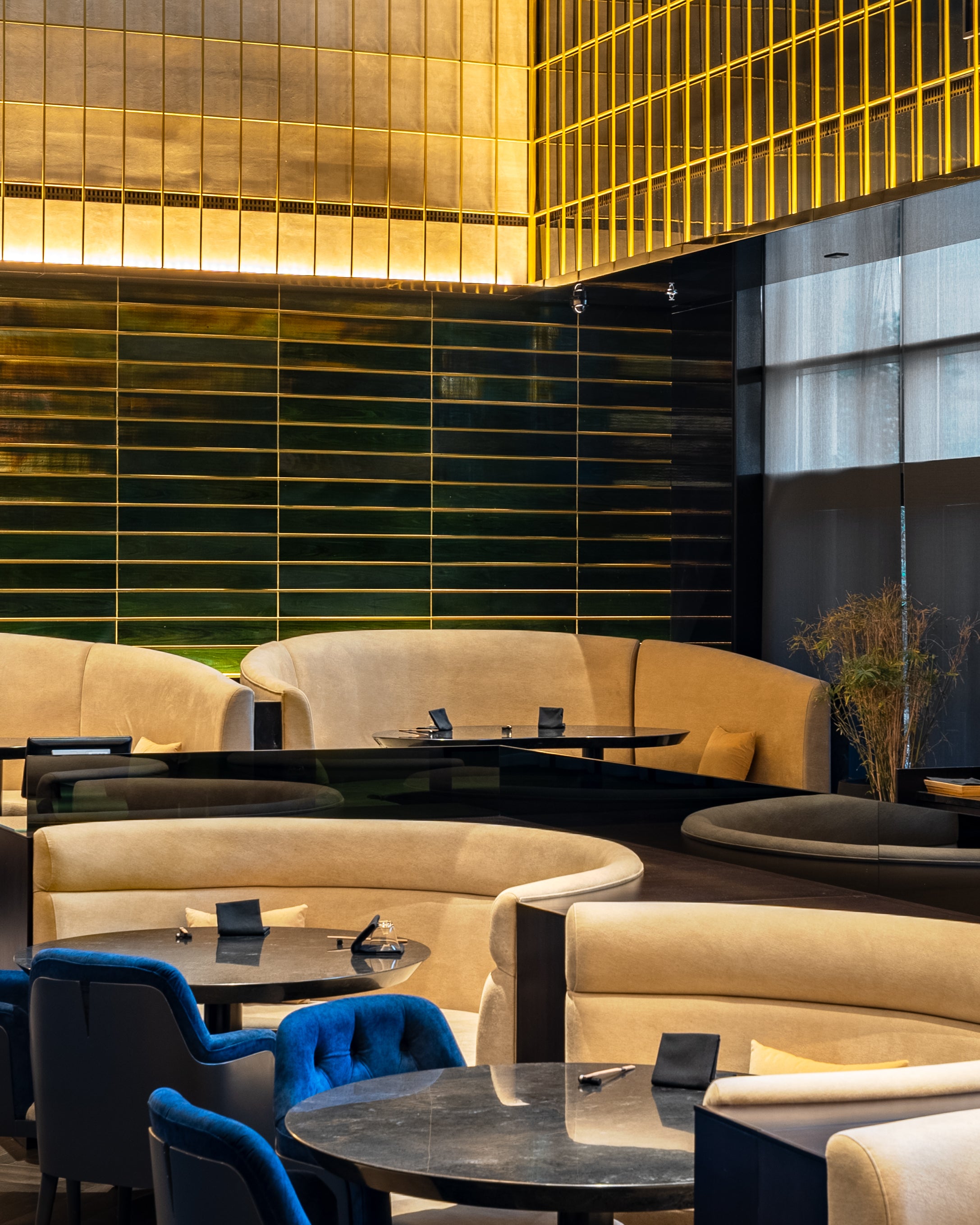
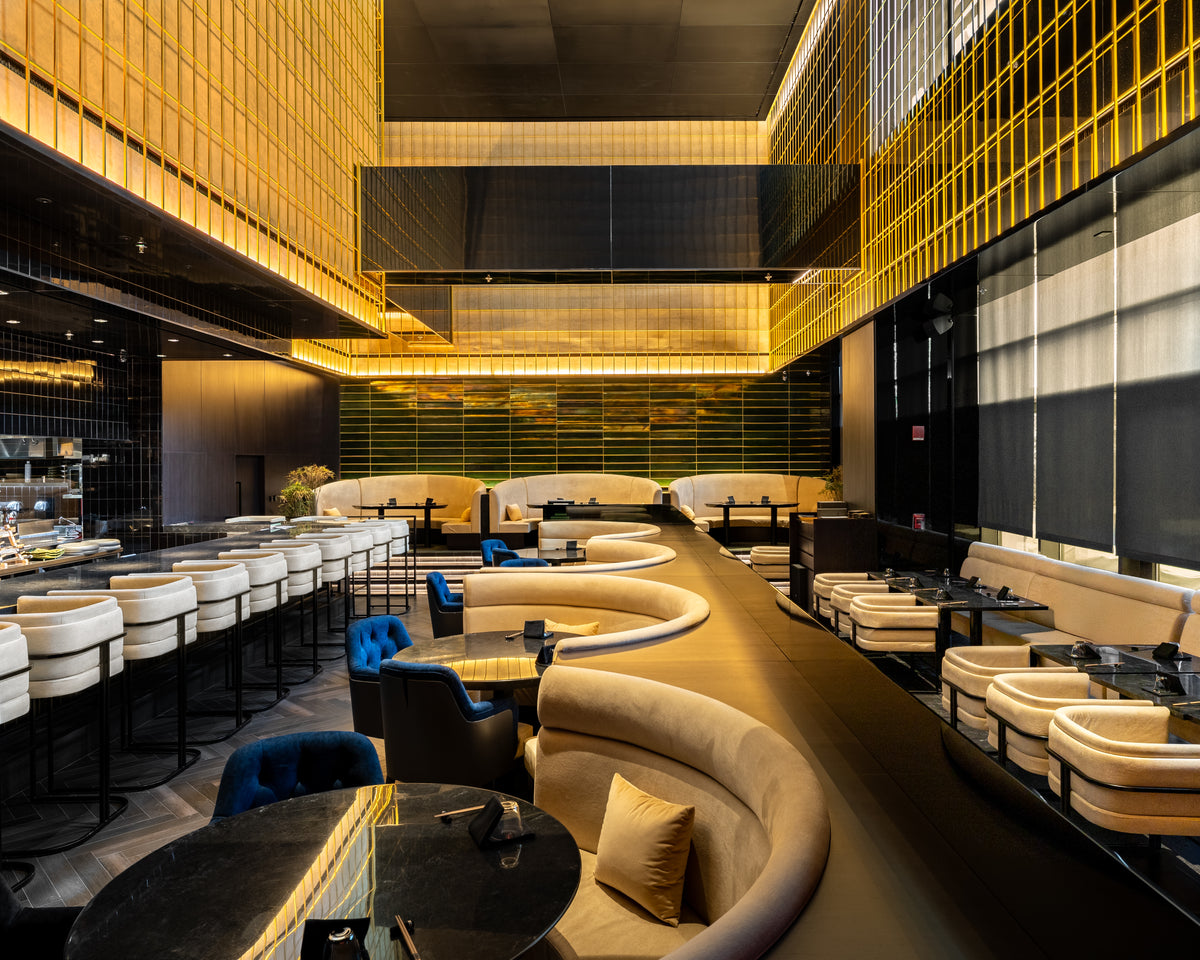
Kasumigaseki at Vida Emirates Hills incorporates Japanese ceramic tiles to create a refined and tactile dining environment defined by depth and material variation.
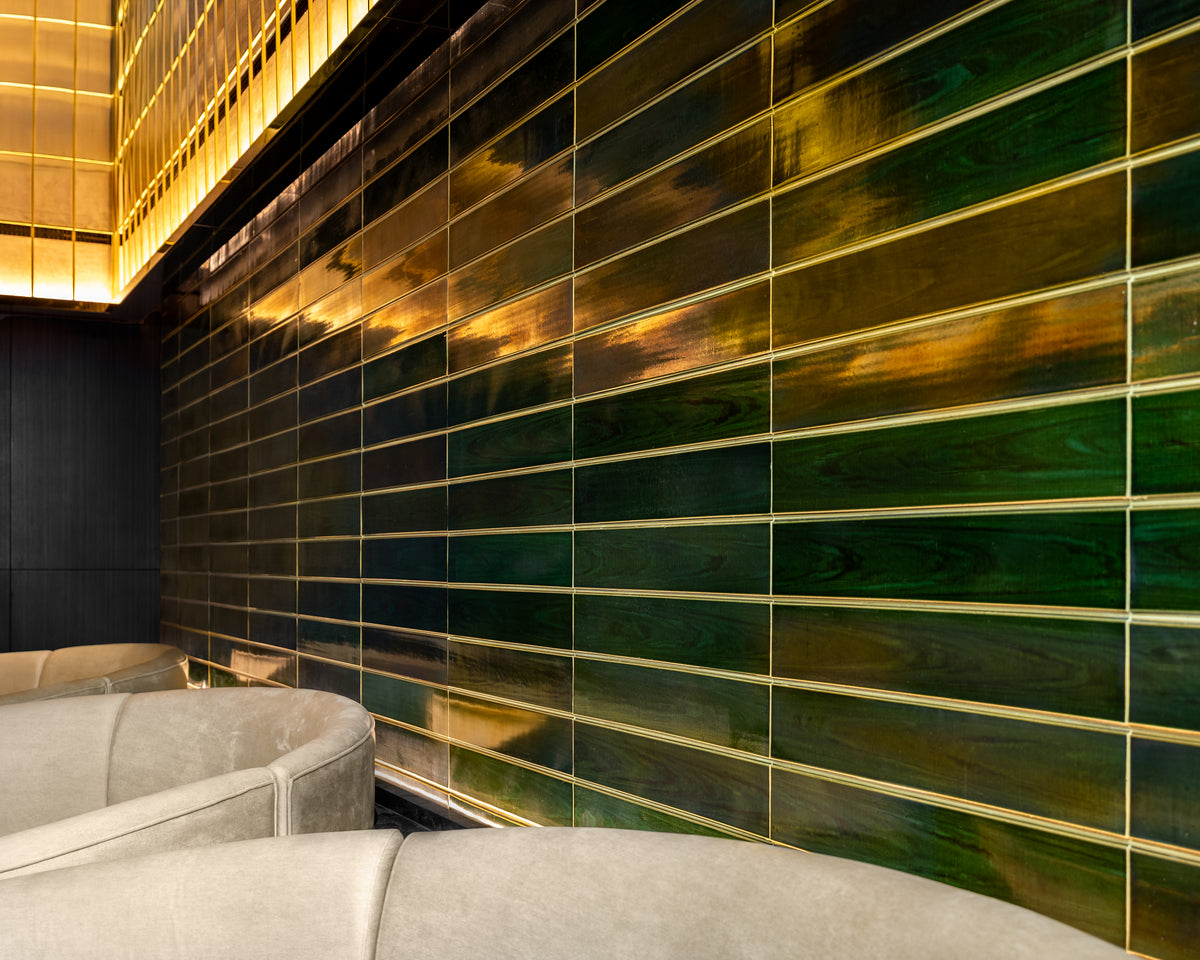
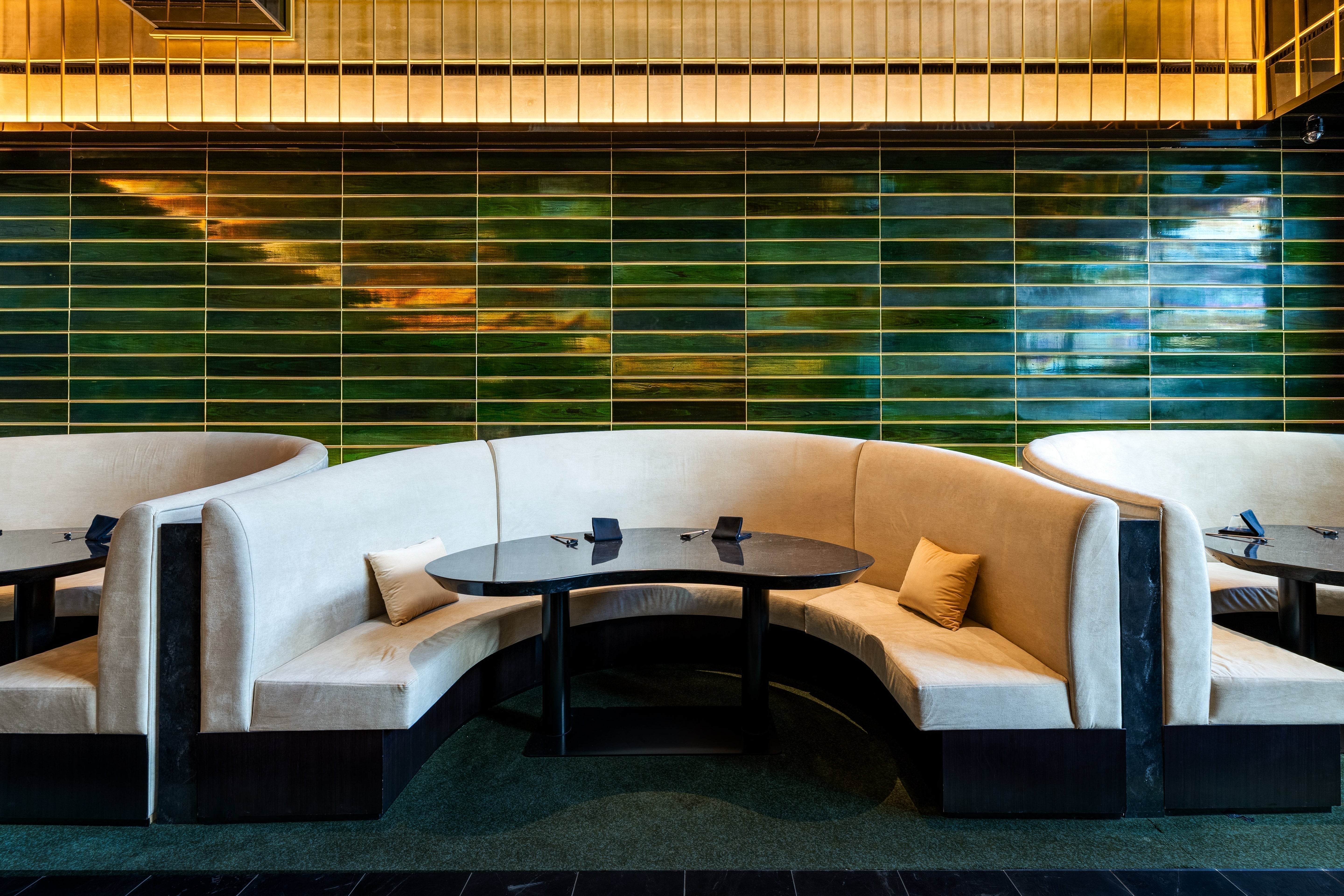
Within the main dining areas, Wall Oribe tiles are used to introduce a rich, expressive surface that responds to light and movement. Rather than relying on applied pattern, the space is defined through the glaze itself, allowing the material to become the primary architectural element.
Material & Surface Character
The distinctive green tones of Oribe originate from early seventeenth-century Japanese ceramic traditions associated with Furuta Oribe. This style is characterised by expressive glazing, asymmetry and a deliberate embrace of irregularity, marking a departure from earlier, more restrained ceramic approaches.
Produced in Japan using high-temperature kiln firing, each tile carries natural variation in tone and surface character. These variations create a surface that shifts throughout the day, responding to changes in light and viewing angle.
Unlike printed ceramic surfaces, the variation in Wall Oribe is created during firing, resulting in natural tonal movement rather than repeated pattern.
Ka-Bu in Supporting Spaces
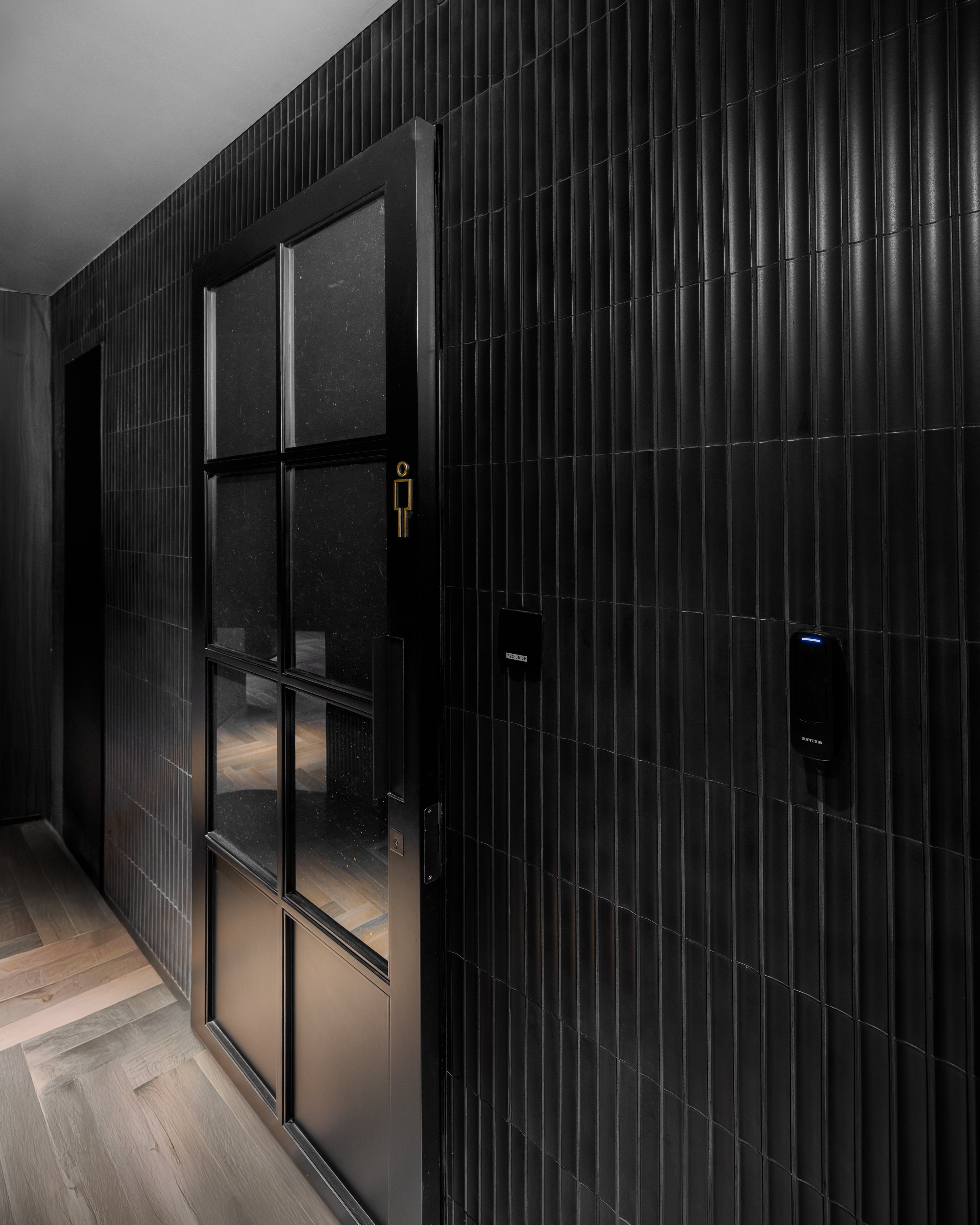
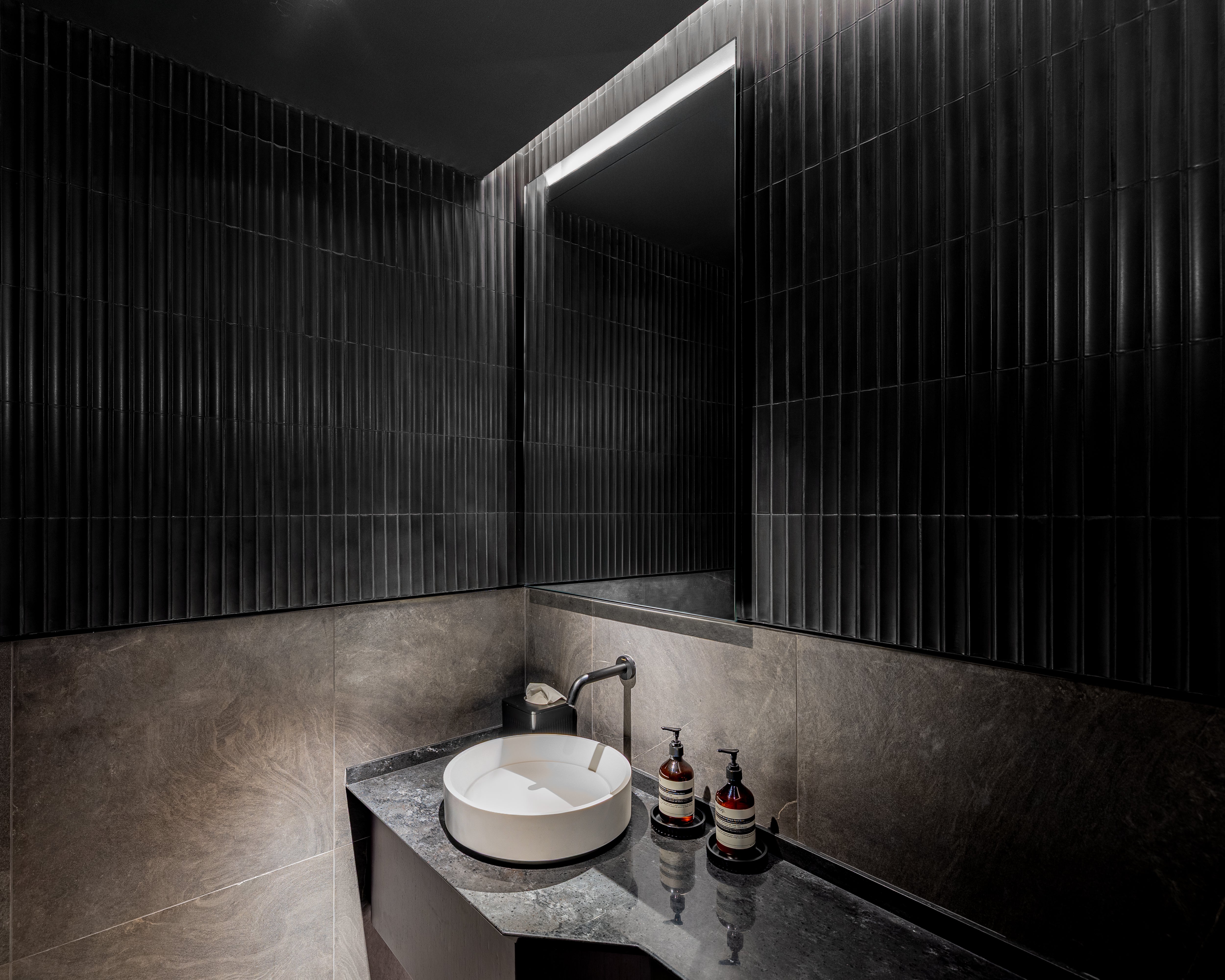
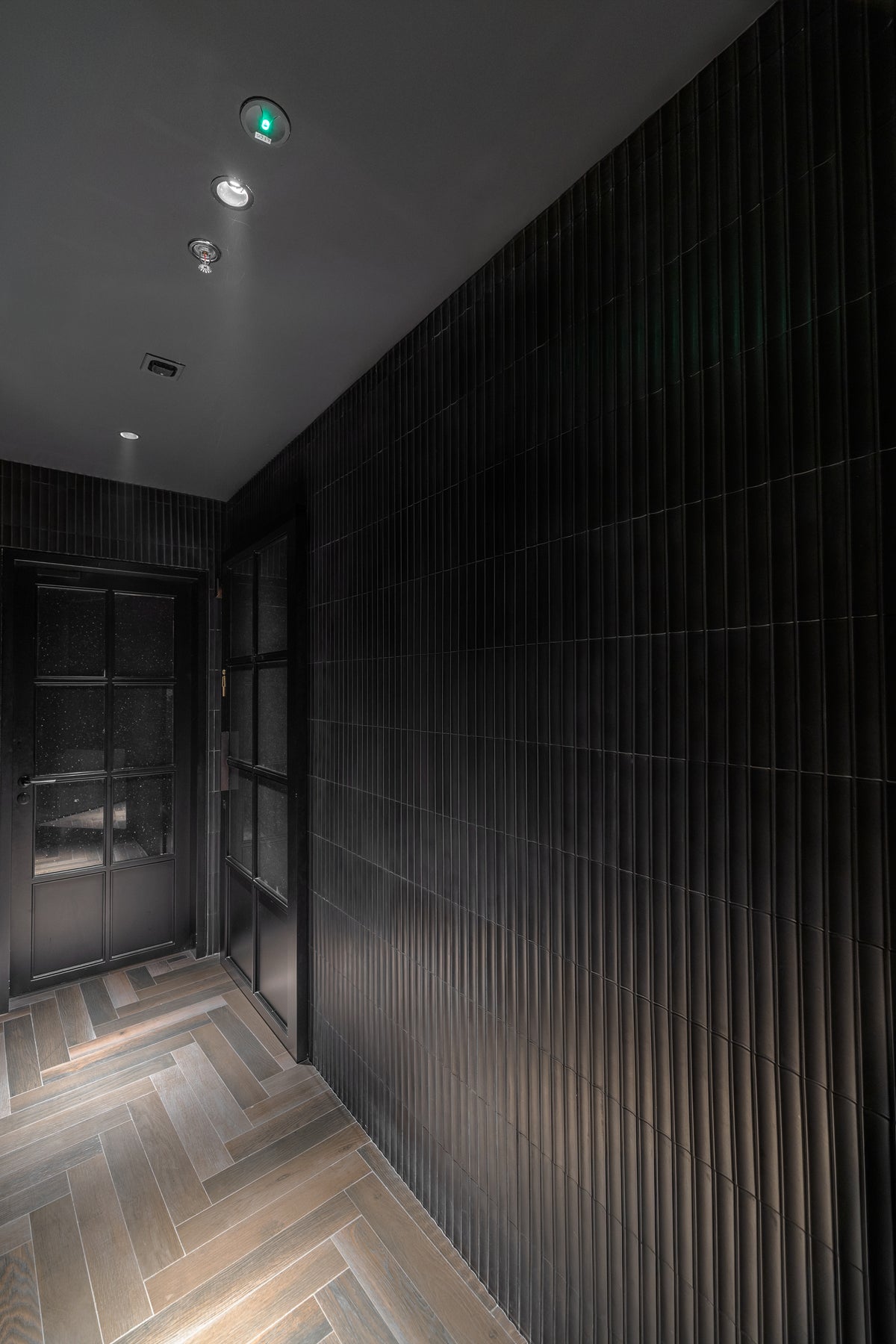
In the restrooms, Ka-Bu tiles in a matt black finish introduce a contrasting material expression. The darker, more uniform surface creates a quieter and more enclosed atmosphere while maintaining the tactile quality of Japanese ceramic.
This contrast between expressive glaze variation and controlled matte surfaces allows different areas of the project to develop distinct identities while remaining materially connected.
Why Japanese Ceramic Tiles Were Selected
Japanese ceramic tiles are produced using high-temperature kiln firing, creating a dense and durable material suited to high-use hospitality environments. Combined with naturally varied glazes, this allows surfaces to retain depth and visual complexity without relying on applied decoration.
“Oribe is not about uniformity,” says Ian Reynolds. “It is about natural variation and movement, shaped by the way the glaze reacts in the kiln. That unpredictability gives the surface its depth.”
Summary
At Kasumigaseki, Japanese ceramic tiles are used to establish a material-led interior, where variation, contrast and surface depth define the space across both dining and supporting areas.
Learn about Japanese Tiles
Learn about Japanese Glaze Variation
Press & Media
High-resolution images from Mittsu Japanese Tiles projects are available for editorial use, including full project photography and detail imagery across multiple installations.
Download Project Image Library
Images may be used for editorial coverage with credit to Mittsu Japanese Tiles.
For press enquiries, please contact Mittsu Japanese Tiles.
FAQ
What tiles were used at Kasumigaseki?
Wall Oribe and Ka-Bu Japanese ceramic tiles by Mittsu Japanese Tiles.
Are these tiles made in Japan?
Yes. Both Wall Oribe and Ka-Bu are produced in Japan using high-temperature kiln firing.
What defines Oribe tiles?
Oribe tiles are known for their expressive green glaze, natural variation and surface movement created during kiln firing.
Are these tiles suitable for hospitality environments?
Yes. Japanese ceramic tiles combine durability with refined surface character, making them suitable for high-traffic interior applications.
Why do the tiles vary in colour and tone?
The variation is created naturally during kiln firing, where differences in glaze thickness and temperature produce unique tonal shifts across each tile.
Related Projects
The Broadcaster
Mikel
LUX Grand Baie
Article by Mittsu Japanese Tiles
Curated by Ian Reynolds