Mikel
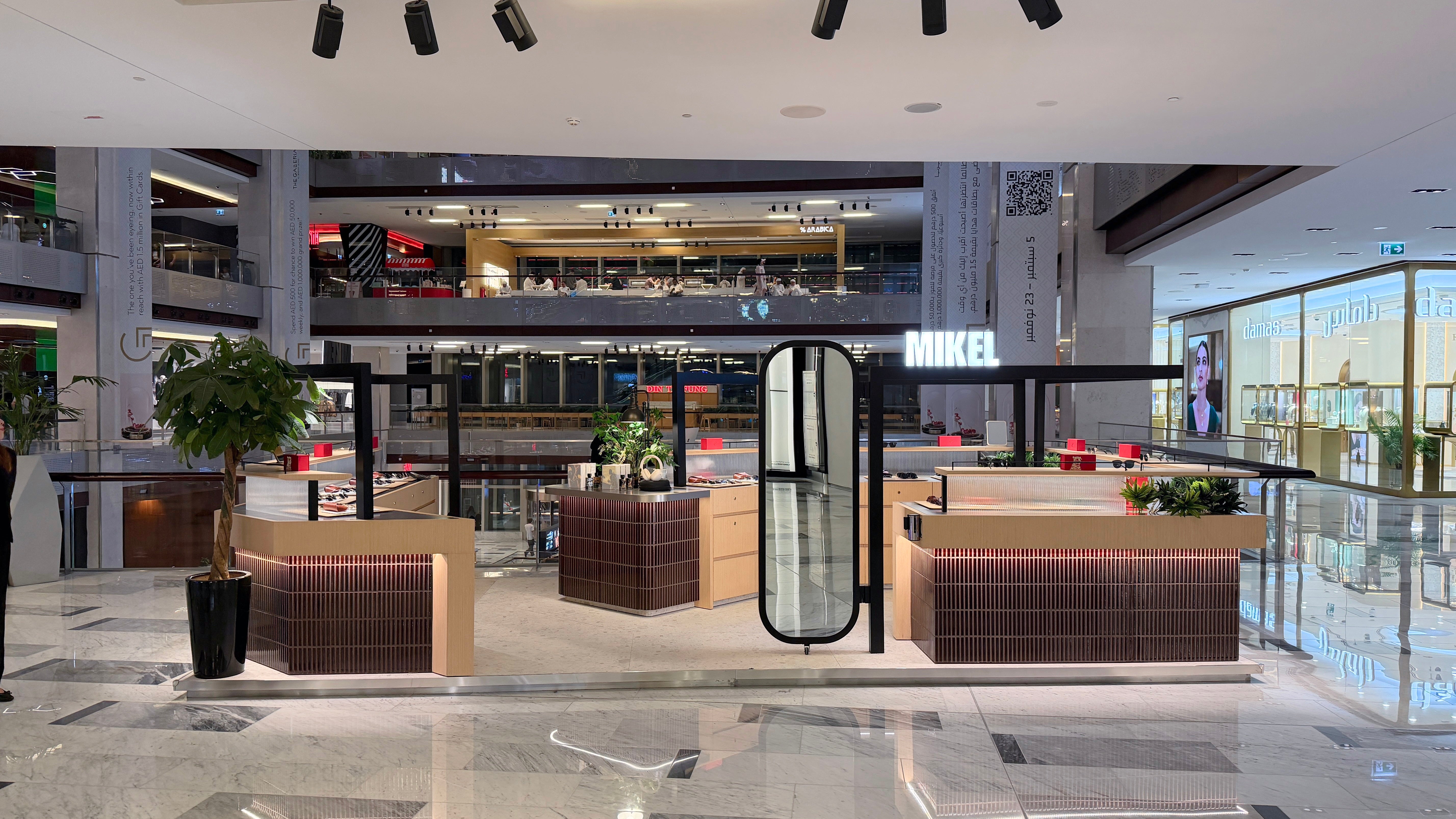
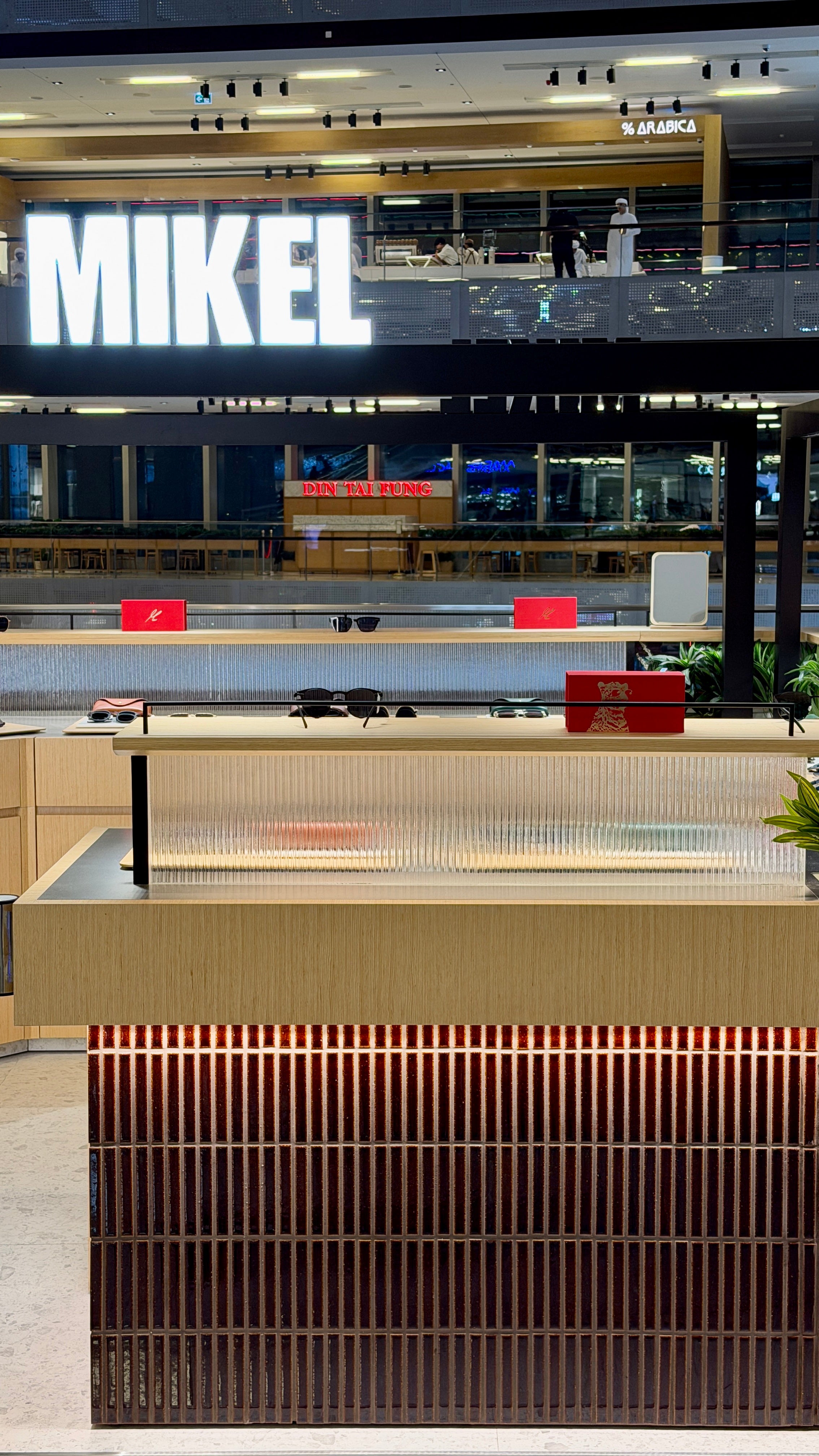
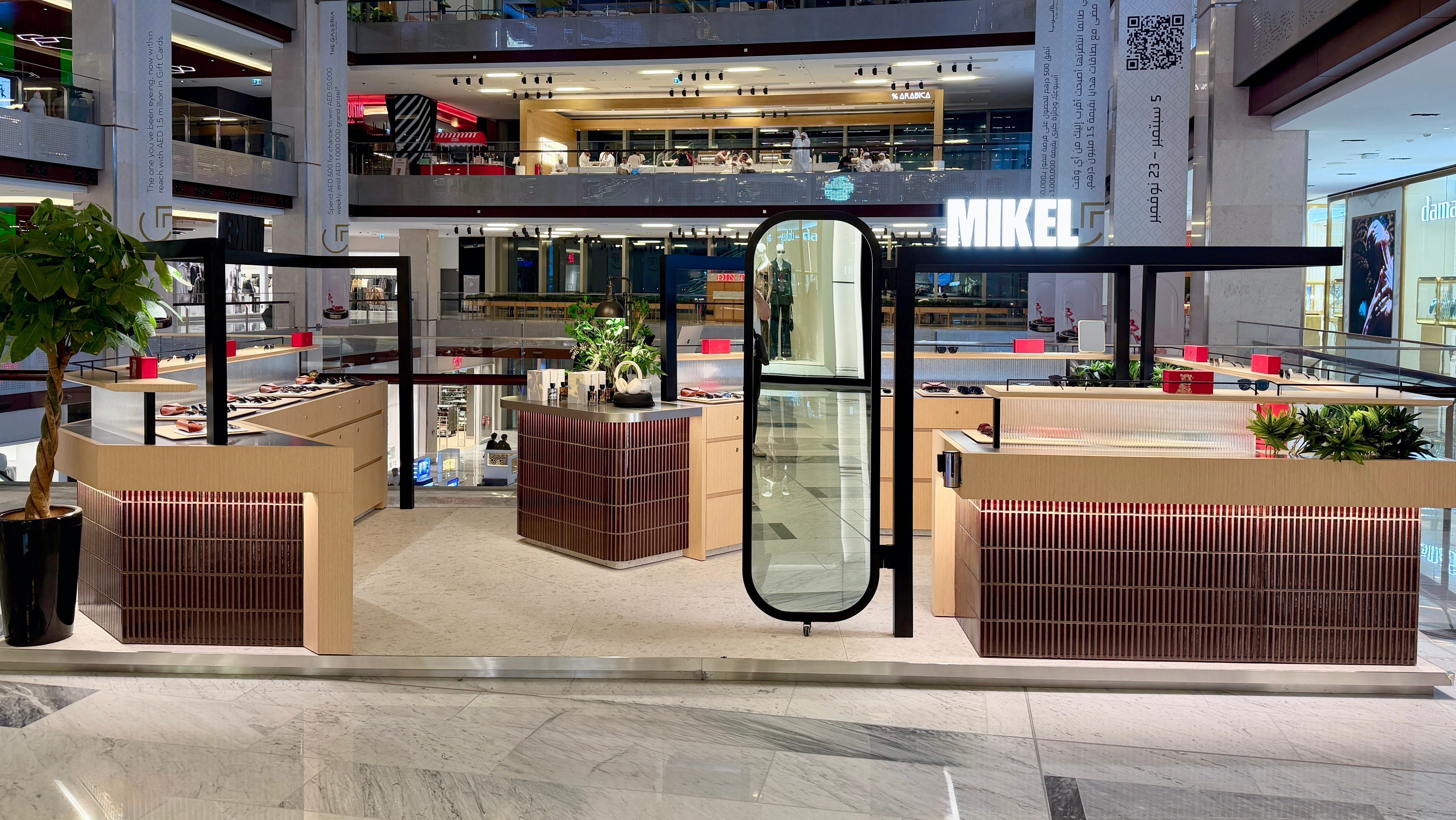
Mikel in The Galleria Al Maryah Island in Abu Dhabi präsentiert Kaji Border Burnt Russet, eine japanische Porzellanfliesenkollektion, die in Japan hergestellt und für architektonische Wandanwendungen in Innenräumen konzipiert wurde, mit einer strukturierten Glasur, länglichen Proportionen und natürlichen Brennofenvariationen.
Projektinformationen
Projekt: Mikel
Standort: The Galleria Al Maryah Island, Abu Dhabi, Vereinigte Arabische Emirate
Lieferant: Mittsu Japanese Tiles
Fliesenkollektion: Kaji Border
Farbe: Burnt Russet
Herstellungsland: Japan
Material: Porzellan
Wasseraufnahme: 0,02–0,07 %
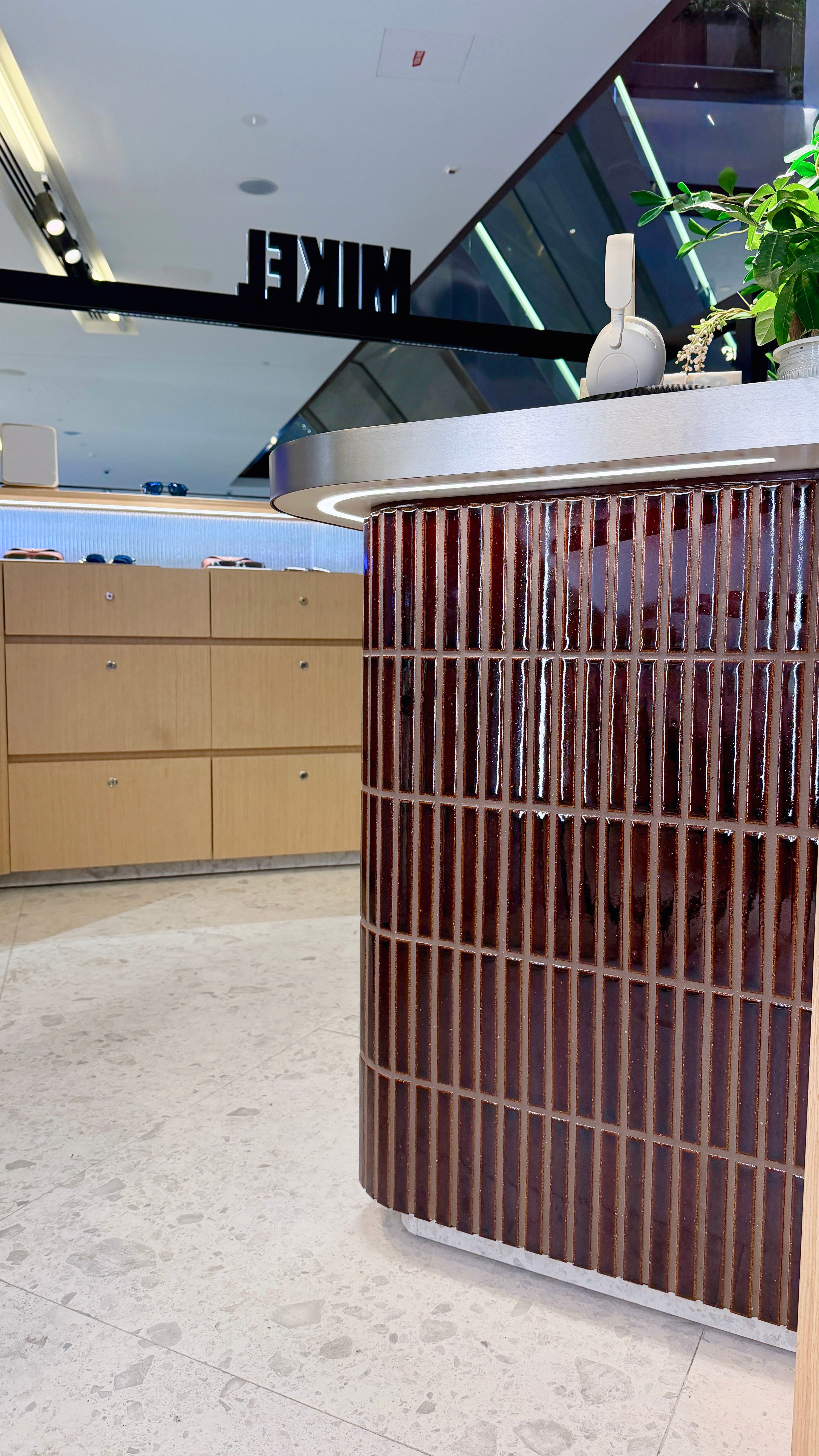
Oberfläche: Strukturierte Glanzglasur
Anwendung: Innenwandverkleidung
Technisches Datenblatt: Kaji Border
CAD-Daten: Kaji Border
Mittsu Bildordner: Kaji Border
Kaji Border bei Mikel Abu Dhabi
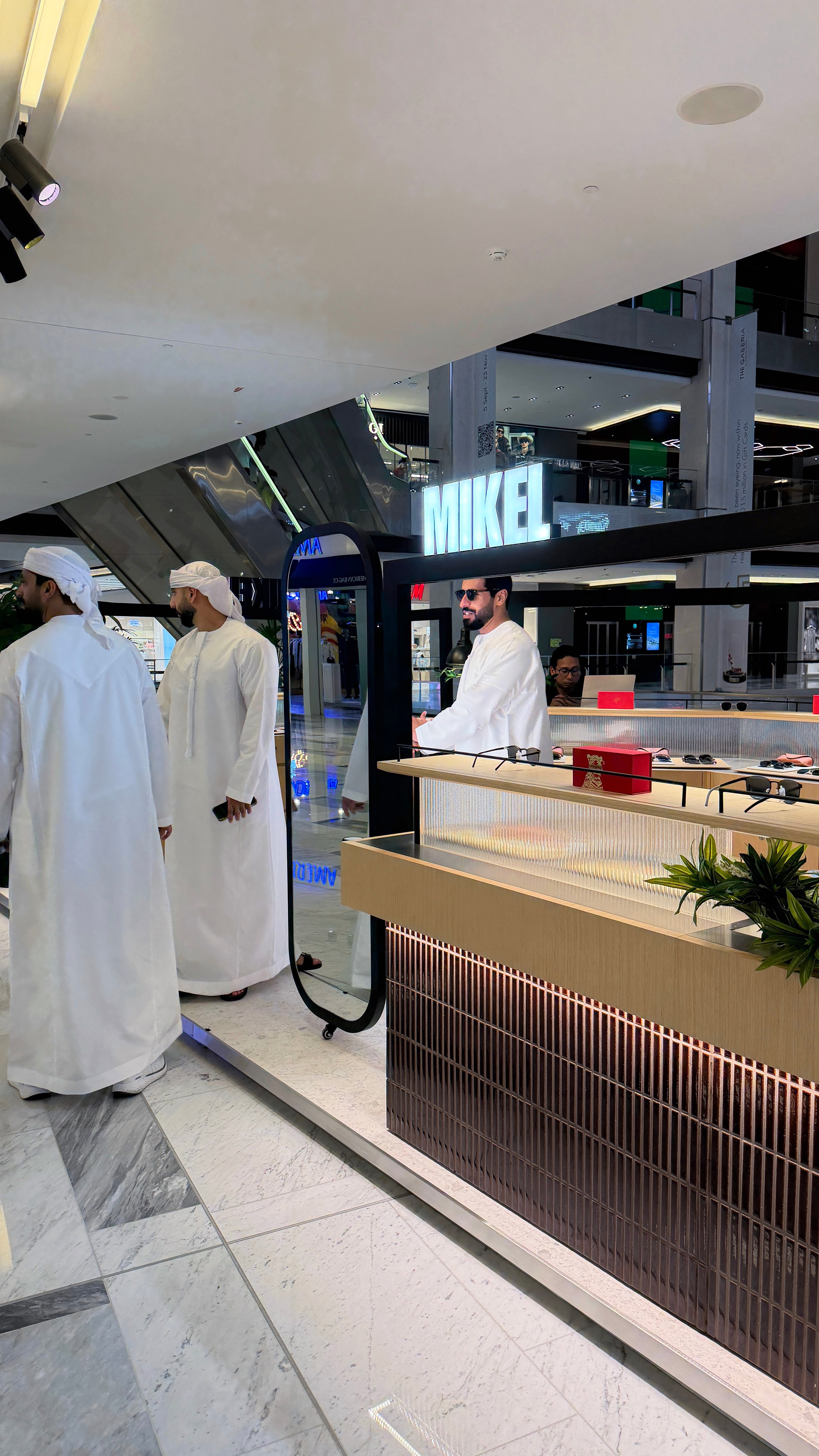
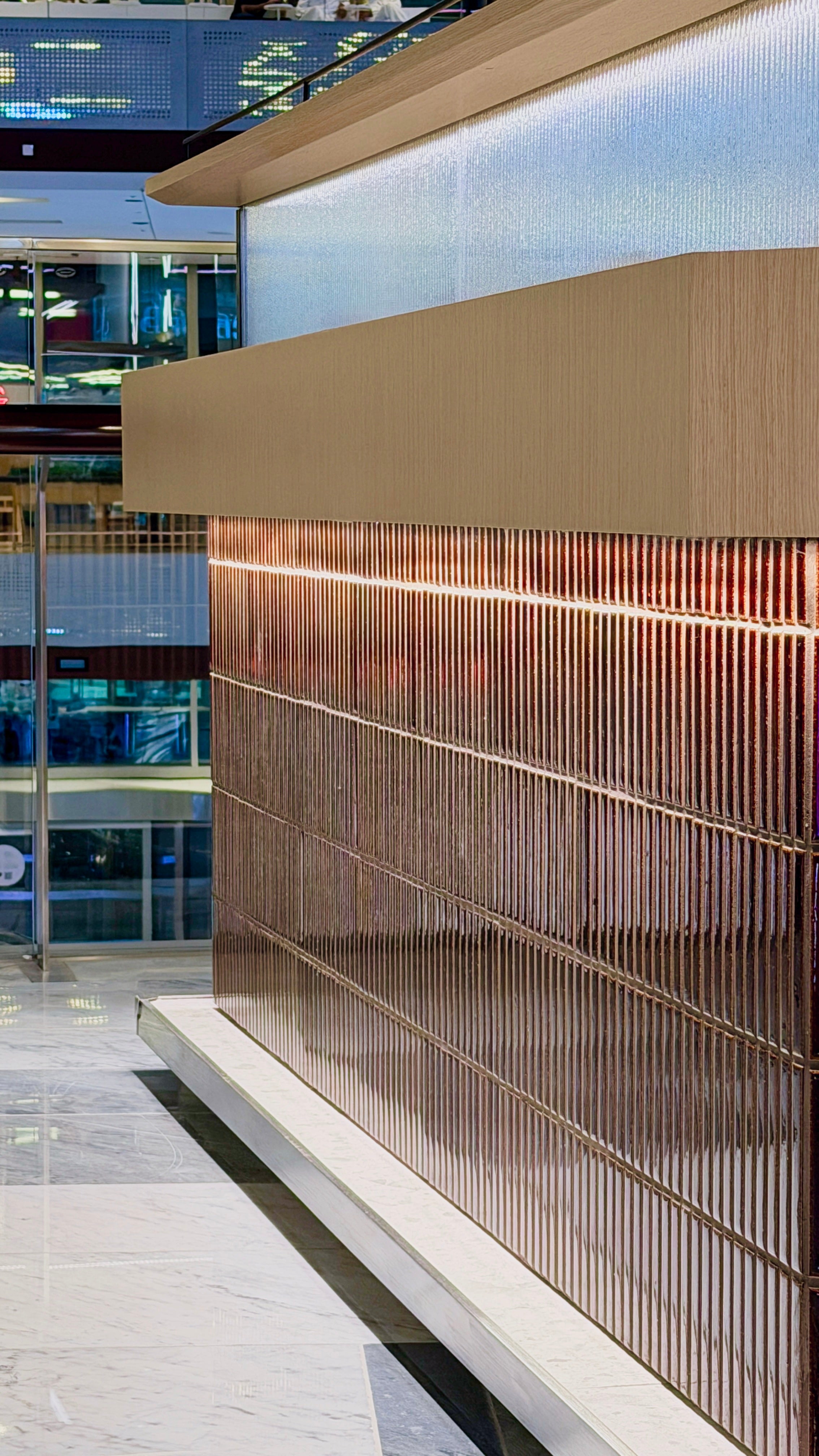
Die Fliesen wurden in der gesamten Kiosk-Einrichtung verwendet und umhüllen Theken und Ausstellungsstücke in einer durchgehenden Keramikoberfläche, die eine starke architektonische Identität im offenen Einzelhandelsbereich schafft. Die länglichen Proportionen erzeugen einen präzisen linearen Rhythmus im Raum, während die Glanzglasur das umgebende Licht aus dem Inneren des Einkaufszentrums reflektiert und so Bewegung und subtile Tonvariationen im Laufe des Tages einführt.
Burnt Russet wurde aufgrund seiner satten rötlich-braunen Glasur mit subtilen Kupferuntertönen ausgewählt, die sich je nach Blickwinkel und reflektiertem Licht ändern. In Kombination mit hellen Holzarbeiten, beleuchtetem Glas und gebürsteten Metallapplikationen verleihen die Fliesen dem kompakten Einzelhandelsbereich Wärme, Kontrast und materielle Tiefe.
Material- und Oberflächenbeschaffenheit
Jede in Japan im Hochtemperaturofen gebrannte Fliese weist natürliche Variationen in Ton, Glanz und Oberflächenbeschaffenheit auf. Diese subtilen Unregelmäßigkeiten verhindern, dass das wiederholte lineare Format flach wirkt, und ermöglichen es der Installation, über große, ununterbrochene Flächen visuelle Tiefe zu bewahren.
Im Gegensatz zu bedruckten Keramikoberflächen entsteht die Variation bei Kaji Border während des Brennens, was zu einer natürlichen Tonbewegung statt eines wiederholten Musters führt.
Die Fliesen haben eine Wasseraufnahmerate von 0,02–0,07 %, was den dichten Porzellankörper widerspiegelt, der beim Hochtemperaturbrennen entsteht.
Installationsansatz
Kaji Border wird auf papierkaschierten Platten geliefert, was eine saubere Ausrichtung über lange horizontale Strecken, gekrümmte Kanten und detaillierte Einbauelemente hinweg gewährleistet. Diese Installationsmethode bewahrt den präzisen visuellen Rhythmus des Projekts und vereinfacht die Installation auf komplexen Oberflächen.
Über Kaji Border
Kaji Border ist eine japanische Porzellanfliesenkollektion, die sich durch ihr längliches Format, ihre strukturierte Glasur und ihre natürlichen Tonvariationen auszeichnet, die beim Hochtemperaturbrand in Japan entstehen. Die Kollektion wurde für architektonische Wandanwendungen entwickelt, bei denen Licht, Rhythmus und Oberflächenbewegung eine zentrale Rolle im Design spielen.
Warum japanische Porzellanfliesen ausgewählt wurden
Japanische Porzellanfliesen werden bei extrem hohen Temperaturen gebrannt, wodurch ein dichter Keramikkörper mit sehr geringer Wasseraufnahme und außergewöhnlicher Oberflächenbeständigkeit entsteht. In Kombination mit natürlich variierenden Glasuren, die beim Brennen entstehen, ermöglicht dies, dass große geflieste Flächen Tiefe, Bewegung und Materialcharakter unter wechselnden Lichtverhältnissen beibehalten.
„Dieses Projekt zeigt, wie ein einziges Material einen Raum definieren kann, wenn es konsequent und präzise angewendet wird“, sagt Ian Reynolds. „Die Fliese wird nicht als Verkleidung behandelt, sondern als Teil der Kioskstruktur.“
Zusammenfassung
Bei Mikel wird Kaji Border als durchgehende Oberfläche im gesamten Kiosk verwendet und definiert den Raum durch Proportionen, Reflexion und Materialkonsistenz.
Muster ansehen und bestellen von
Kaji Border Japanische Porzellanfliesen (Großbritannien)
Kaji Border Japanische Porzellanfliesen (Europa)
Kaji Border Japanische Porzellanfliesen (VAE)
Erfahren Sie mehr über japanische Fliesen
Erfahren Sie mehr über japanische Glasurvariationen
Presse & Medien
Hochauflösende Bilder vom Mikel-Projekt stehen zur redaktionellen Nutzung zur Verfügung, einschließlich vollständiger Projektfotos und Detailaufnahmen von Kaji Border Burnt Russet.
Projektbildbibliothek herunterladen
Bilder dürfen für redaktionelle Berichterstattung mit Quellenangabe Mittsu Japanese Tiles verwendet werden.
Für Presseanfragen wenden Sie sich bitte an Mittsu Japanese Tiles.
FAQ
Welche Fliesen wurden bei Mikel Abu Dhabi verwendet?
Kaji Border Burnt Russet Japanische Porzellanfliesen von Mittsu Japanese Tiles.
Werden Kaji Border Fliesen in Japan hergestellt?
Ja. Kaji Border wird in Japan im Hochtemperaturofen gebrannt.
Was unterscheidet japanische Porzellanfliesen?
Japanische Porzellanfliesen sind bekannt für ihren dichten Keramikkörper, ihre natürlichen Glasurvariationen und die raffinierten Oberflächendetails, die während des Brennens entstehen.
Sind Kaji Border Fliesen für Einzelhandelsinterieurs geeignet?
Ja. Kaji Border wurde für architektonische Wandanwendungen entwickelt, einschließlich Einzelhandel, Gastgewerbe und Wohninterieurs.
Warum weist Kaji Border Farb- und Tonvariationen auf?
Die Variation entsteht natürlich während des Brennens im Ofen, wobei Unterschiede in der Glasurstärke, Temperatur und Atmosphäre subtile Farbverschiebungen auf jeder Fliese erzeugen.
Verwandte Projekte
Kasumigaseki
Hamilton Park
The Broadcaster
Artikel von Mittsu Japanese Tiles
Kuratiert von Ian Reynolds