
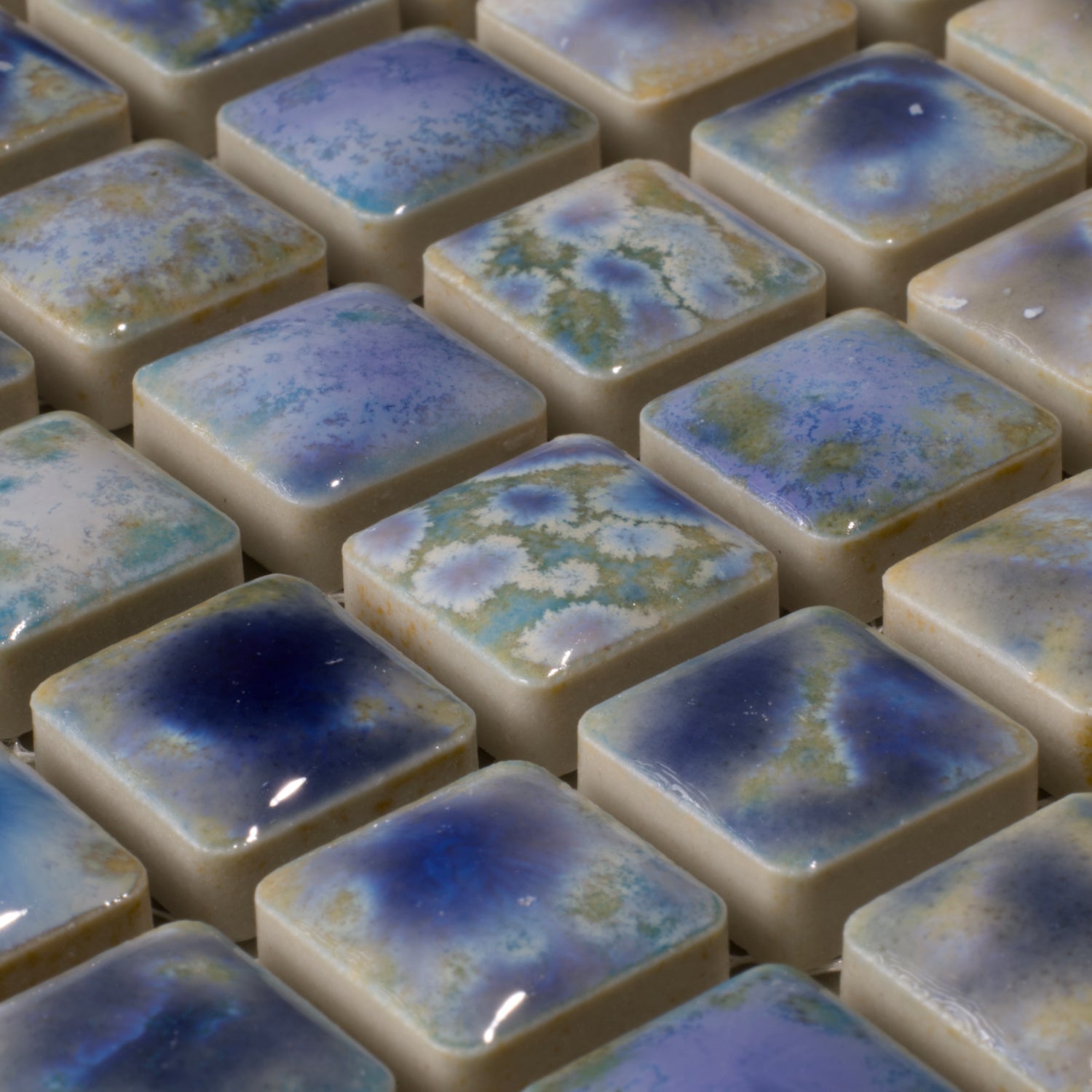
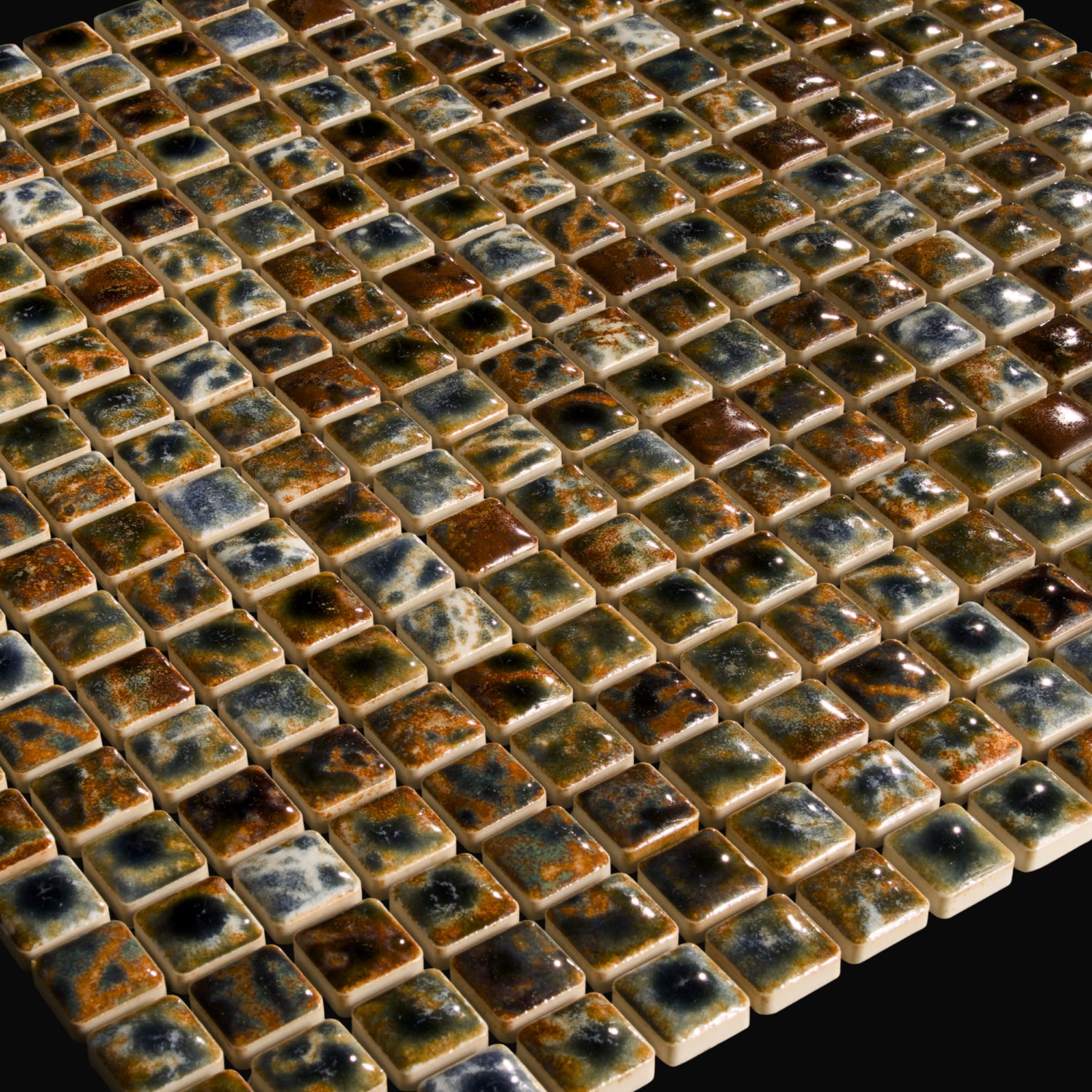
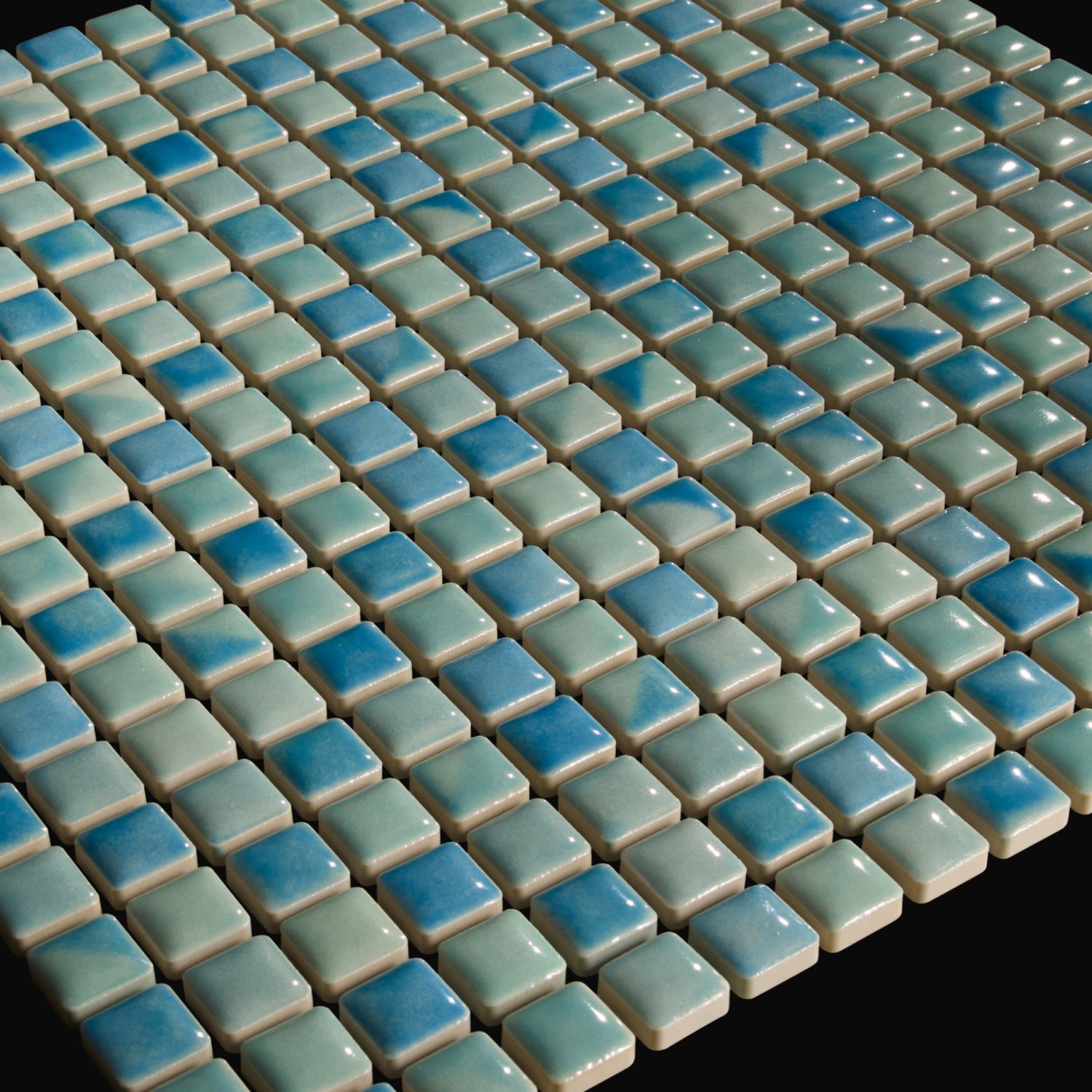
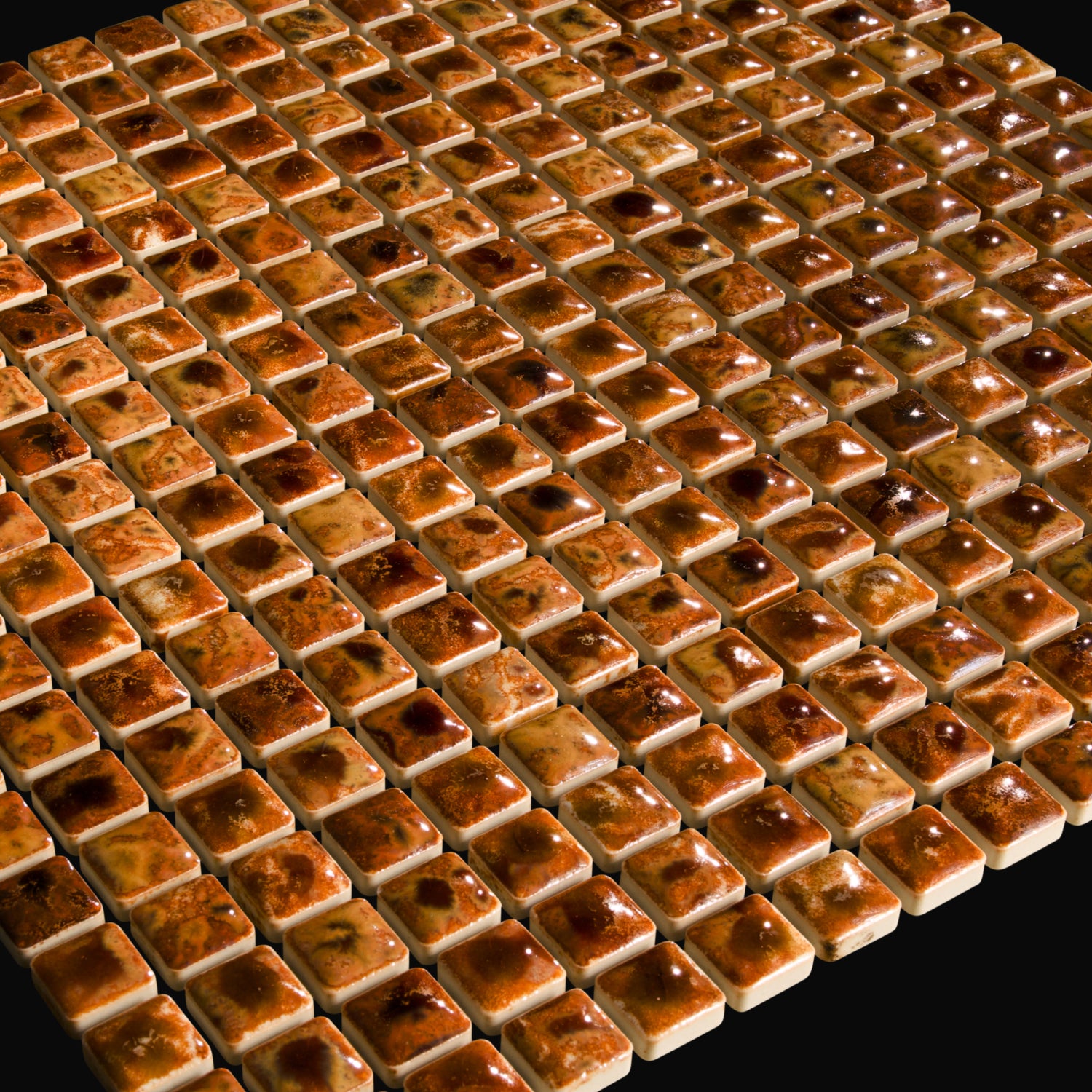
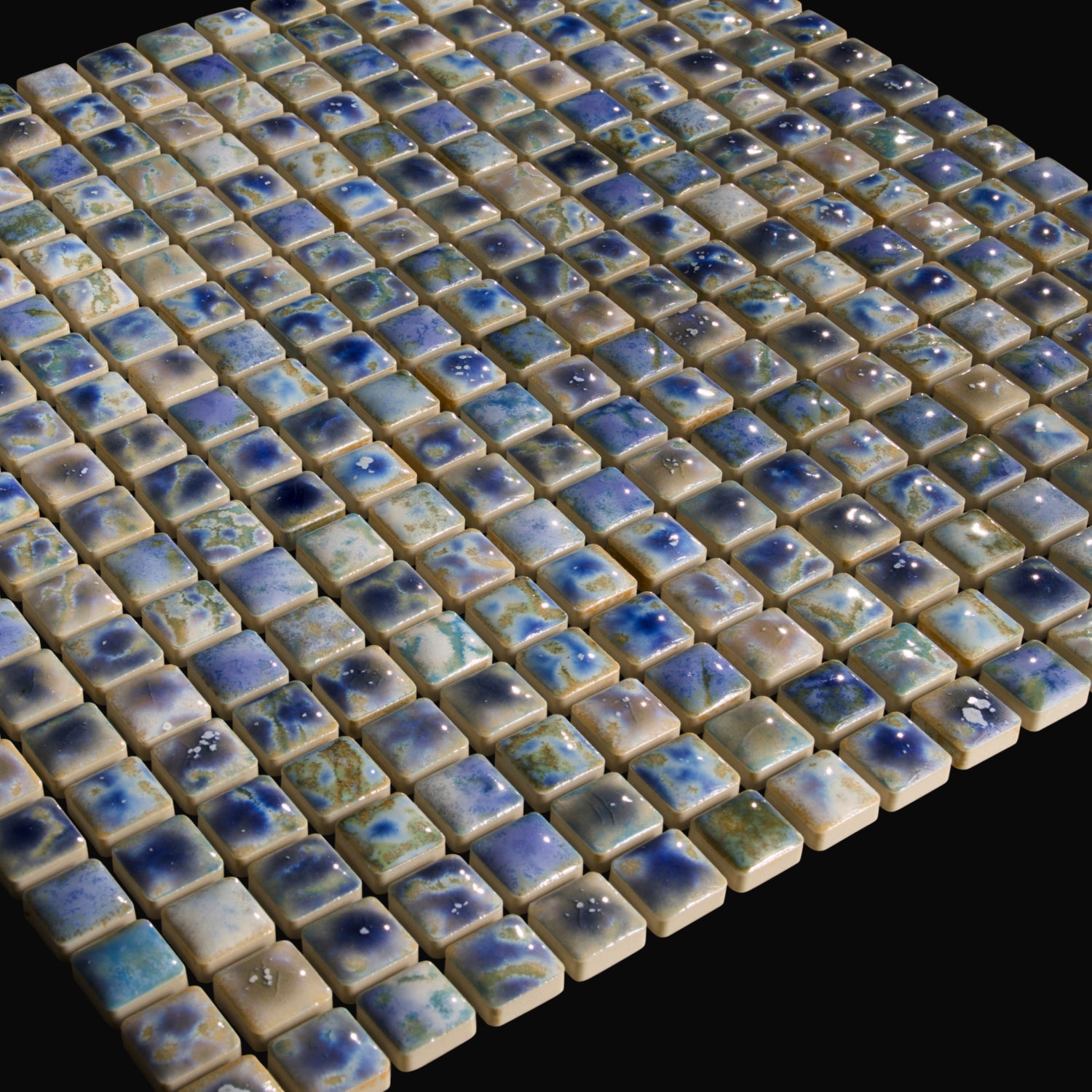
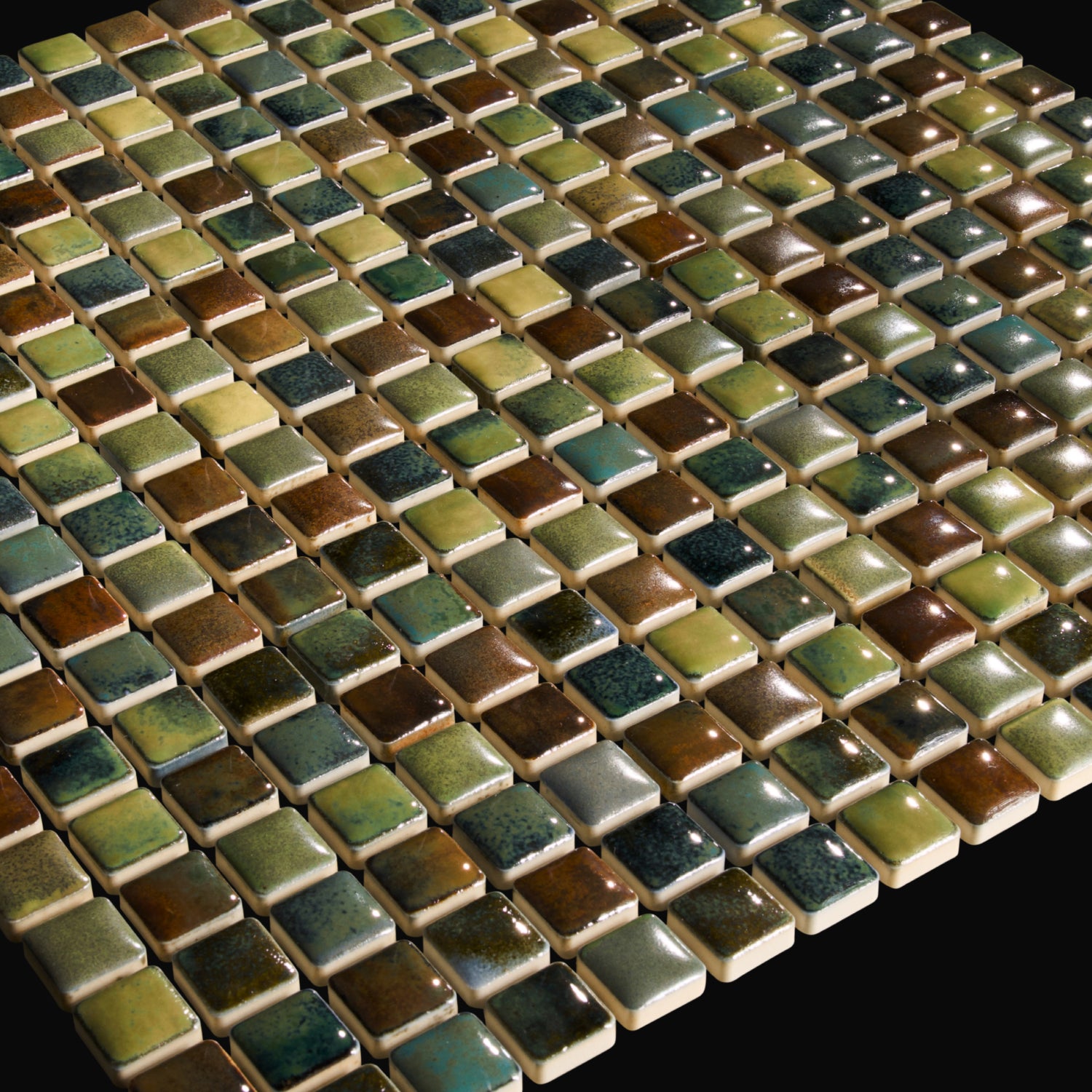
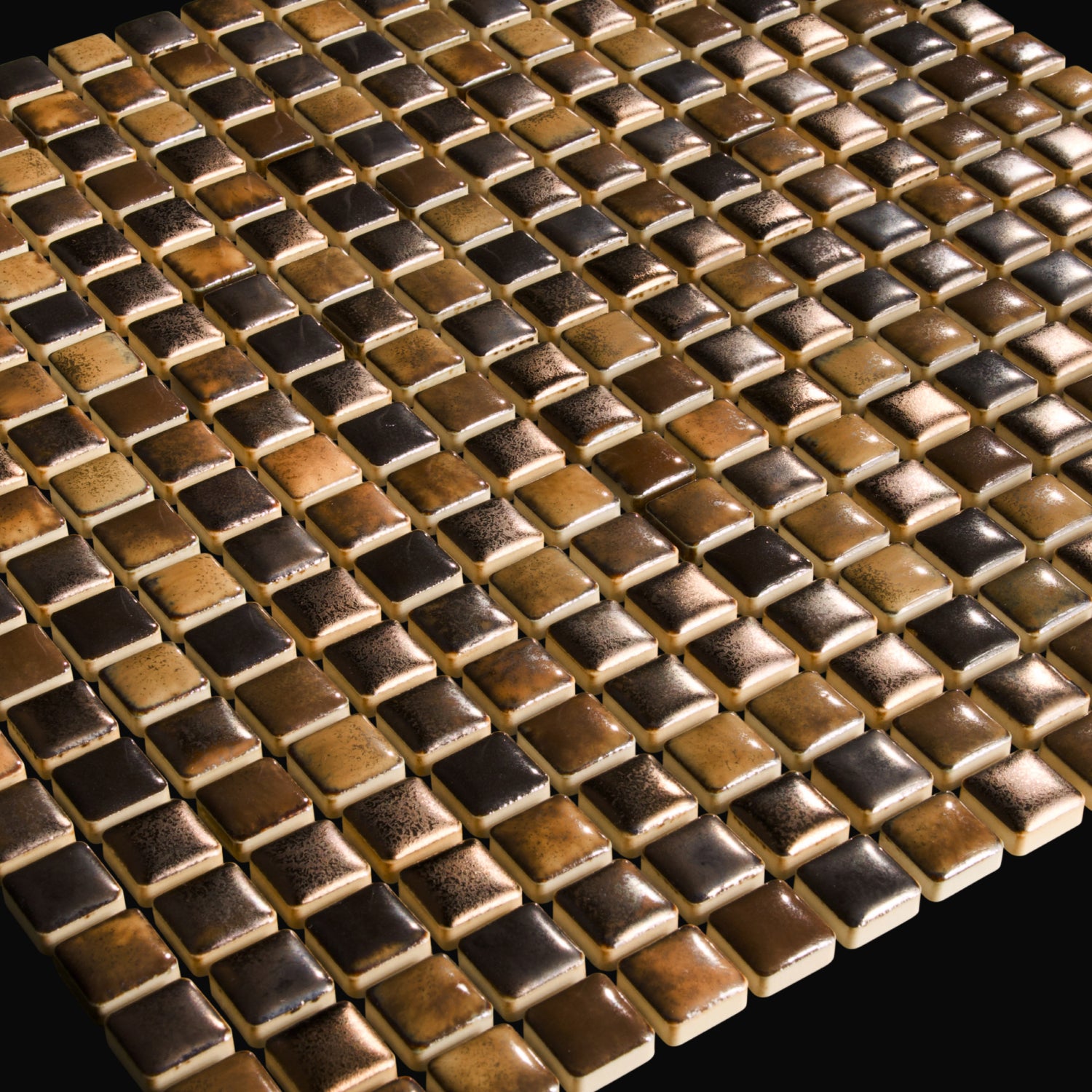
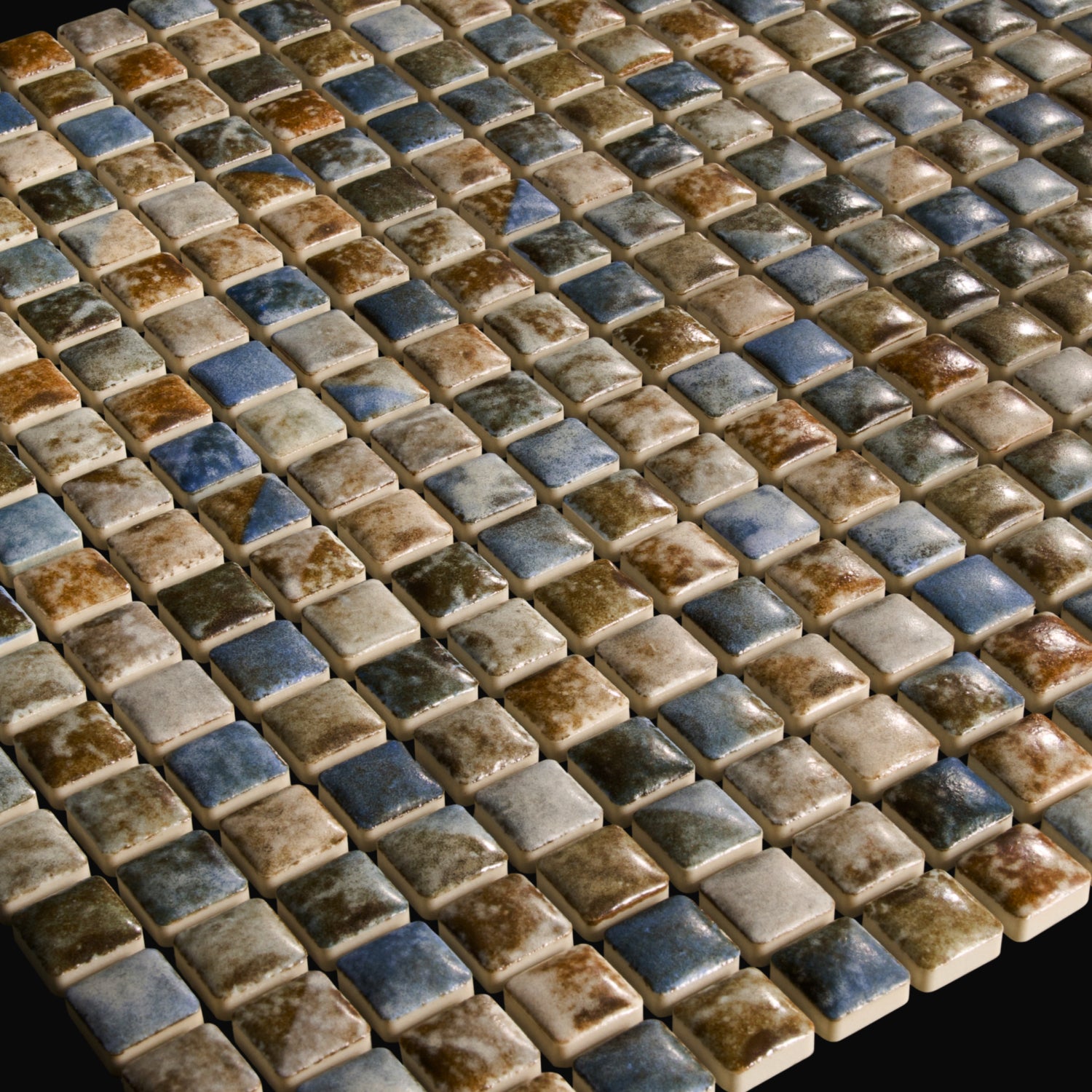
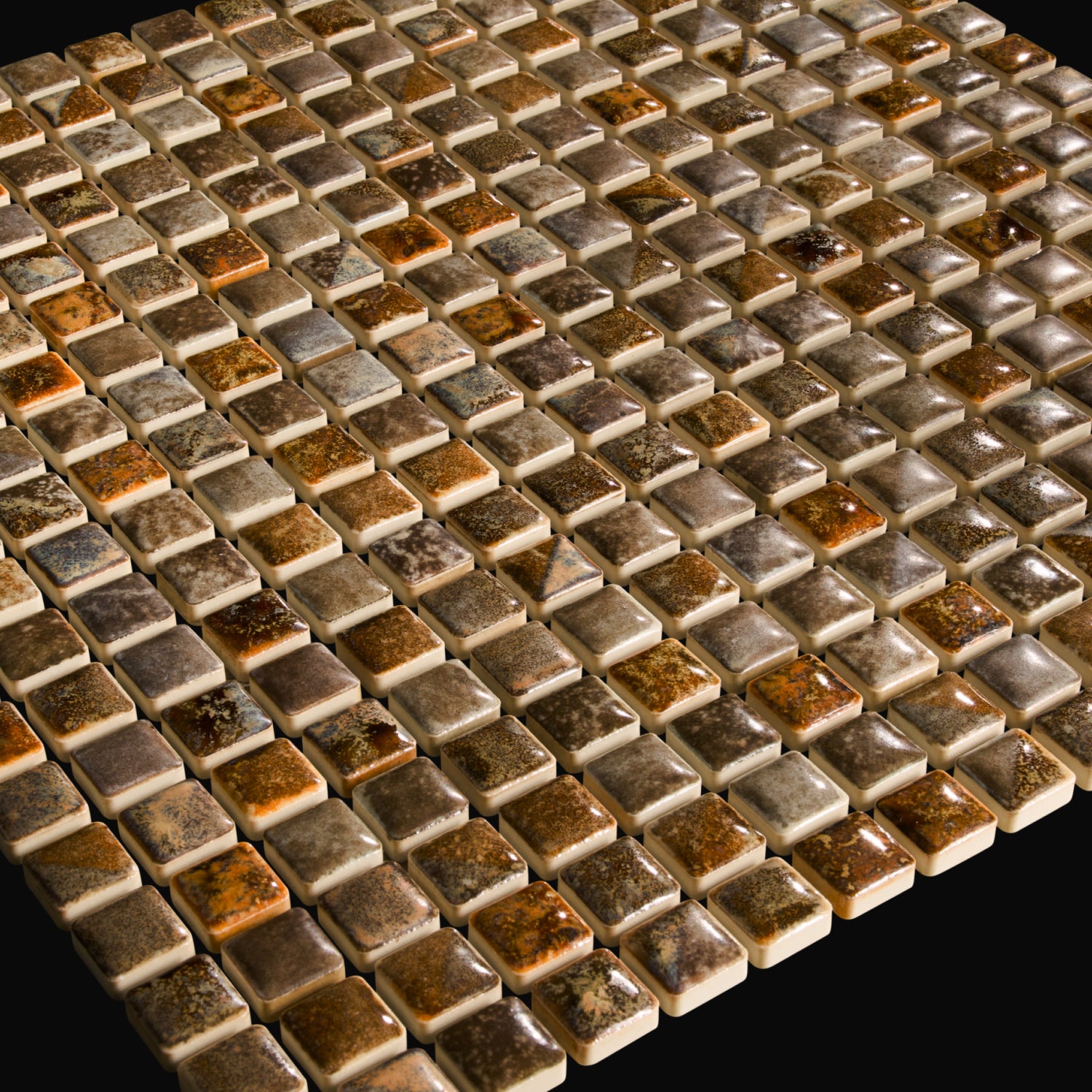
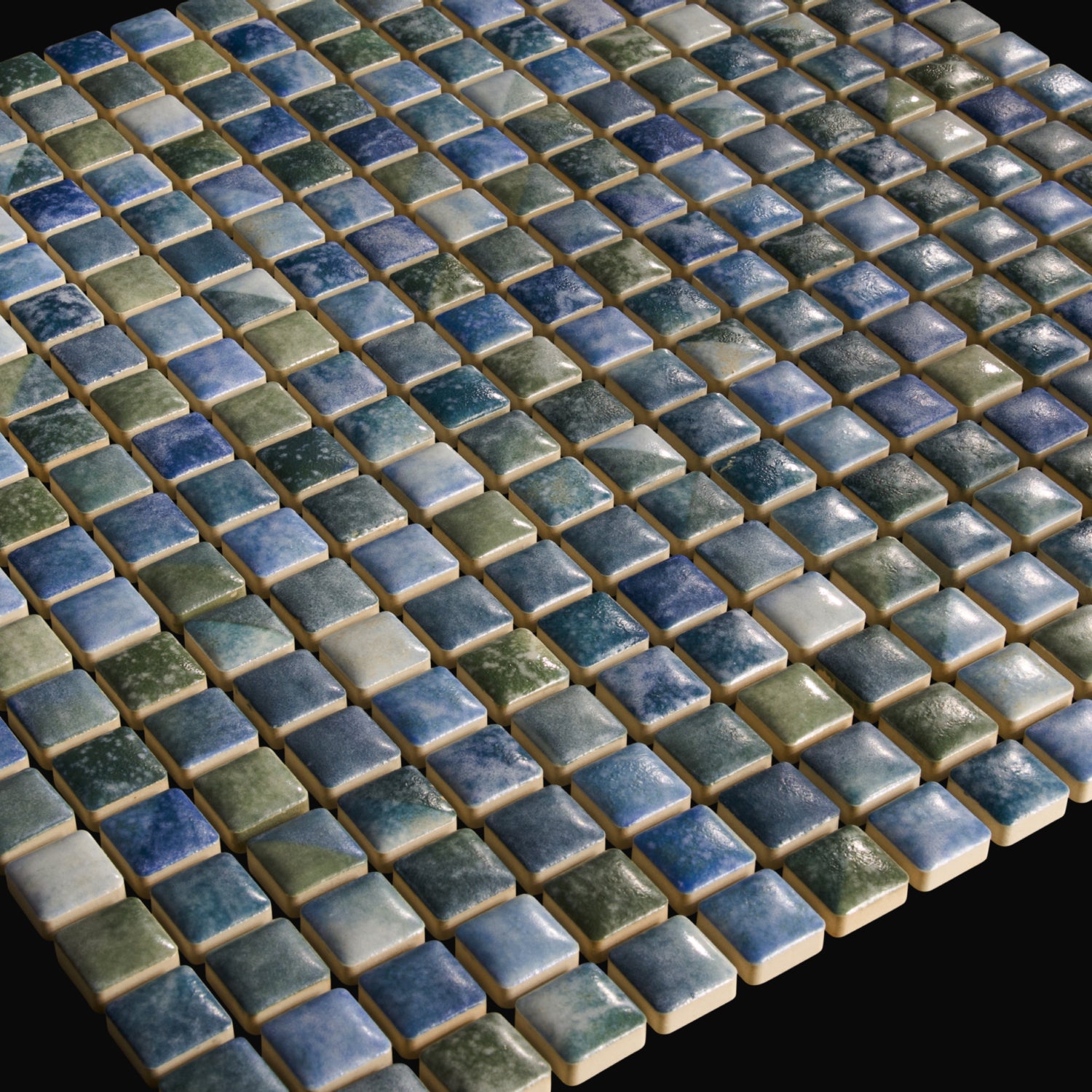
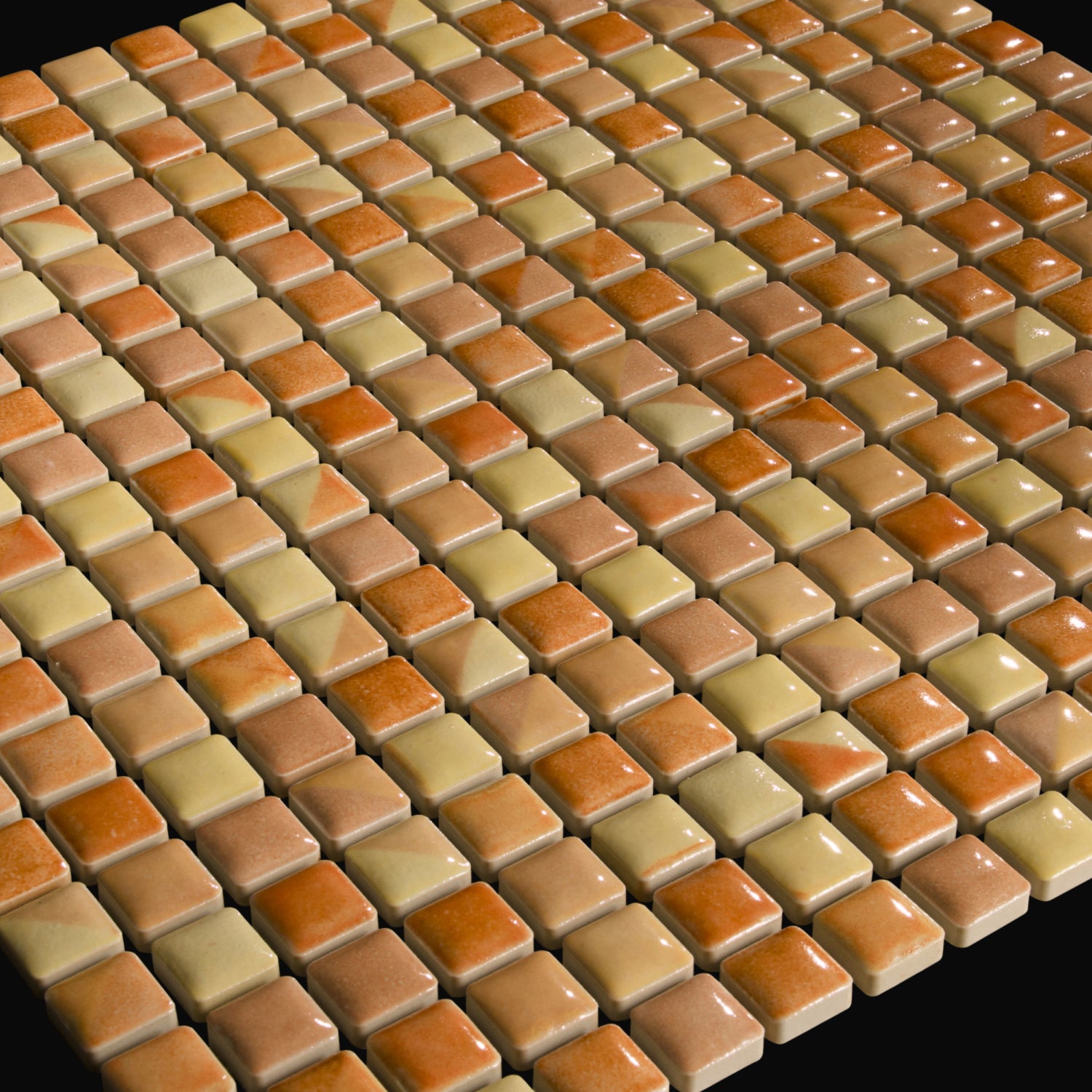
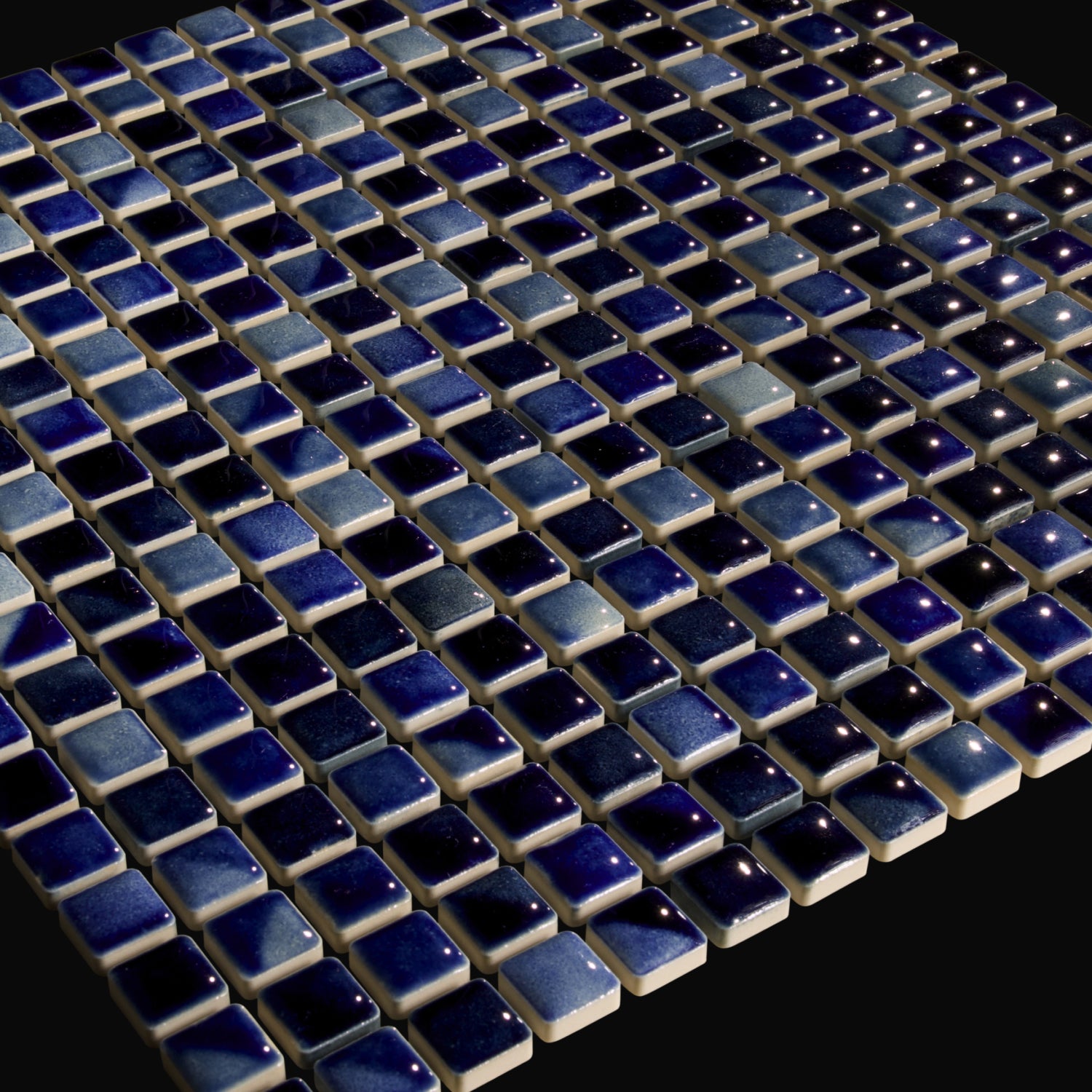
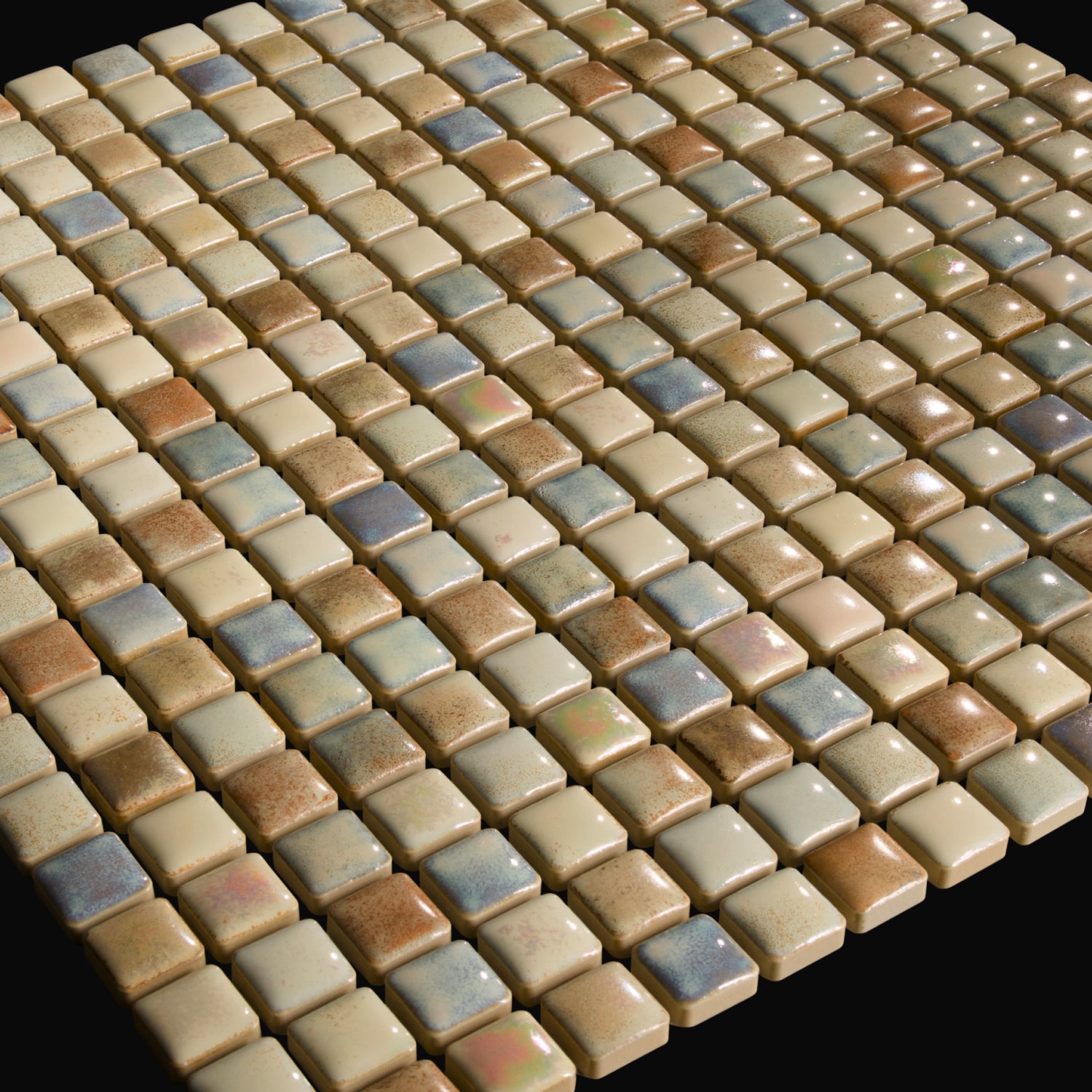
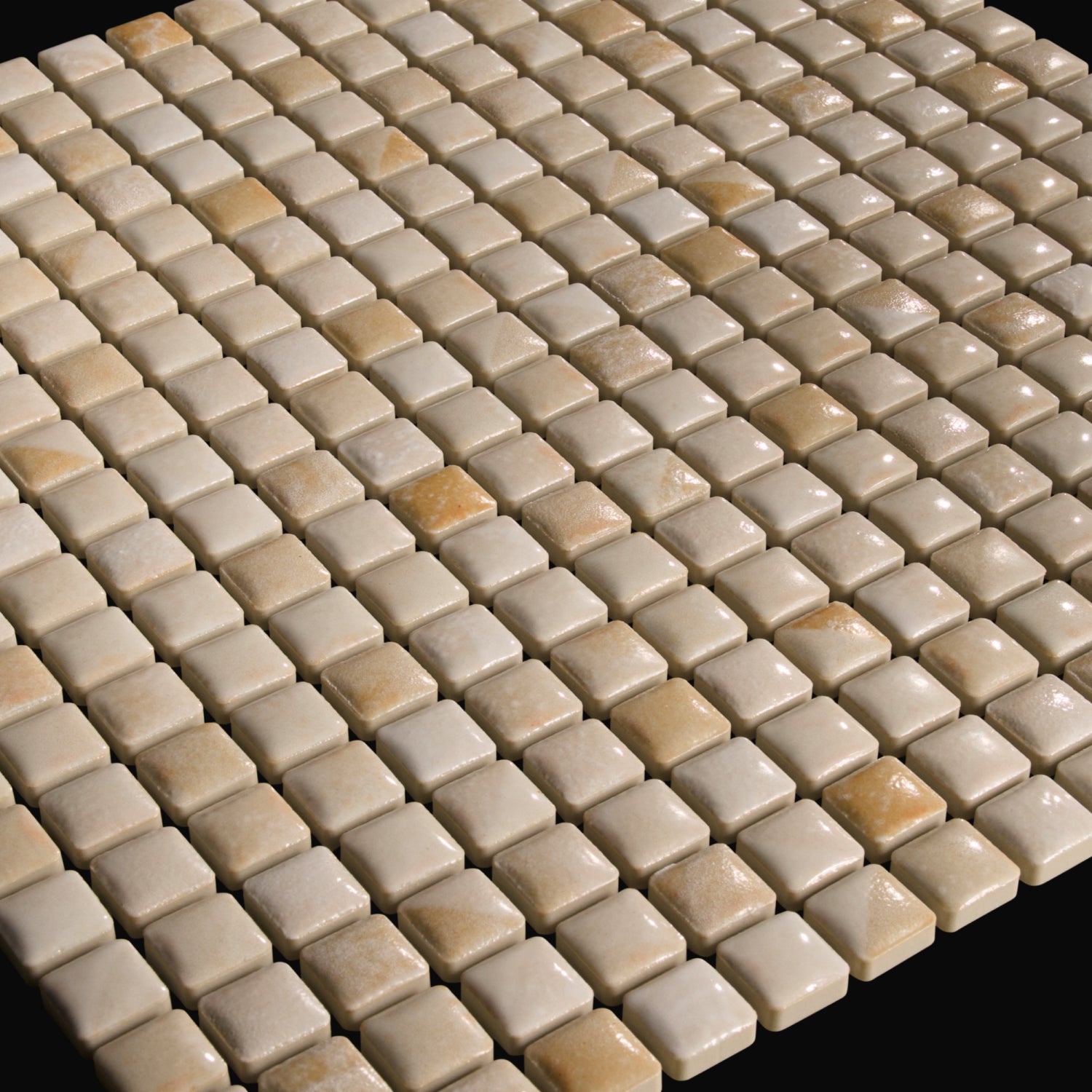
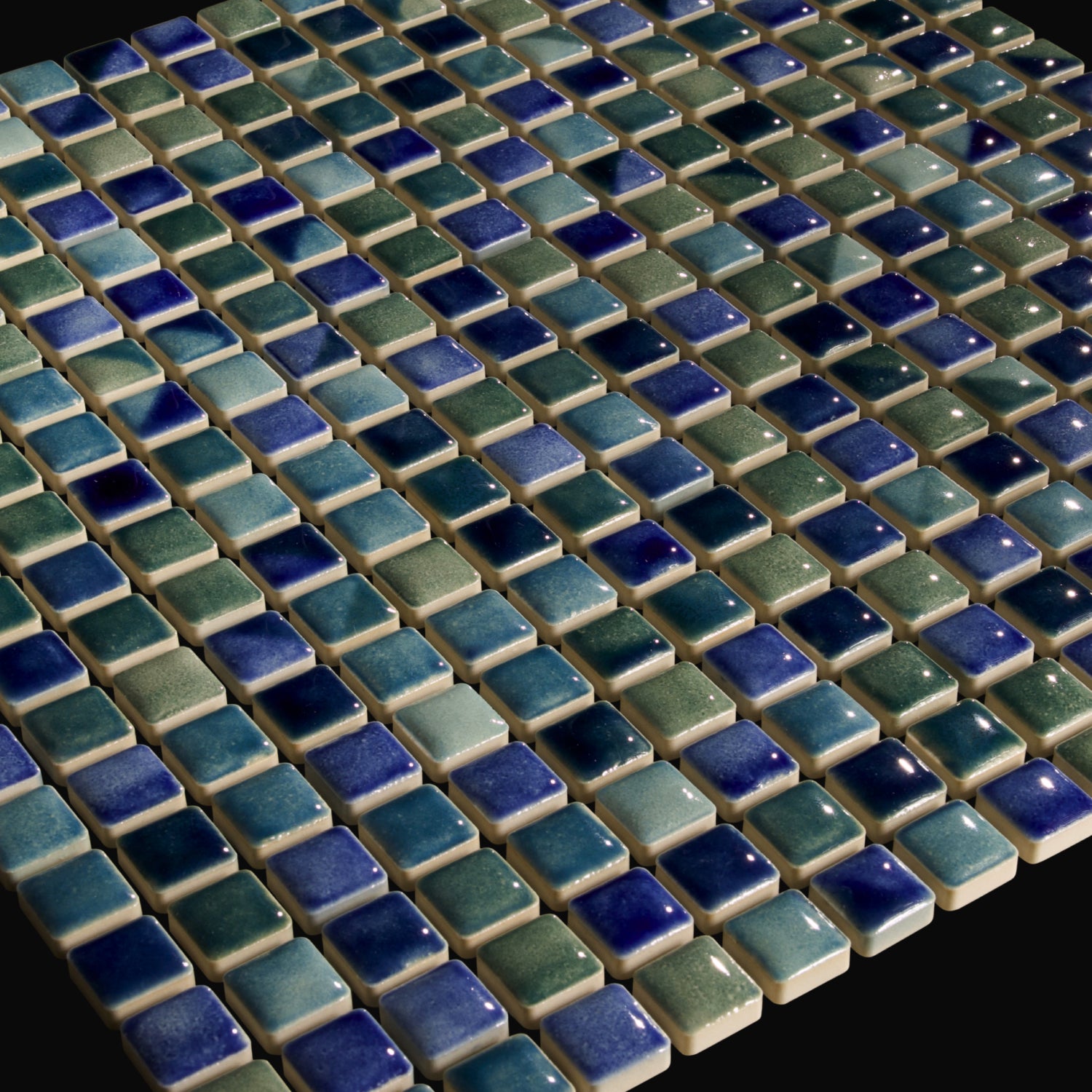
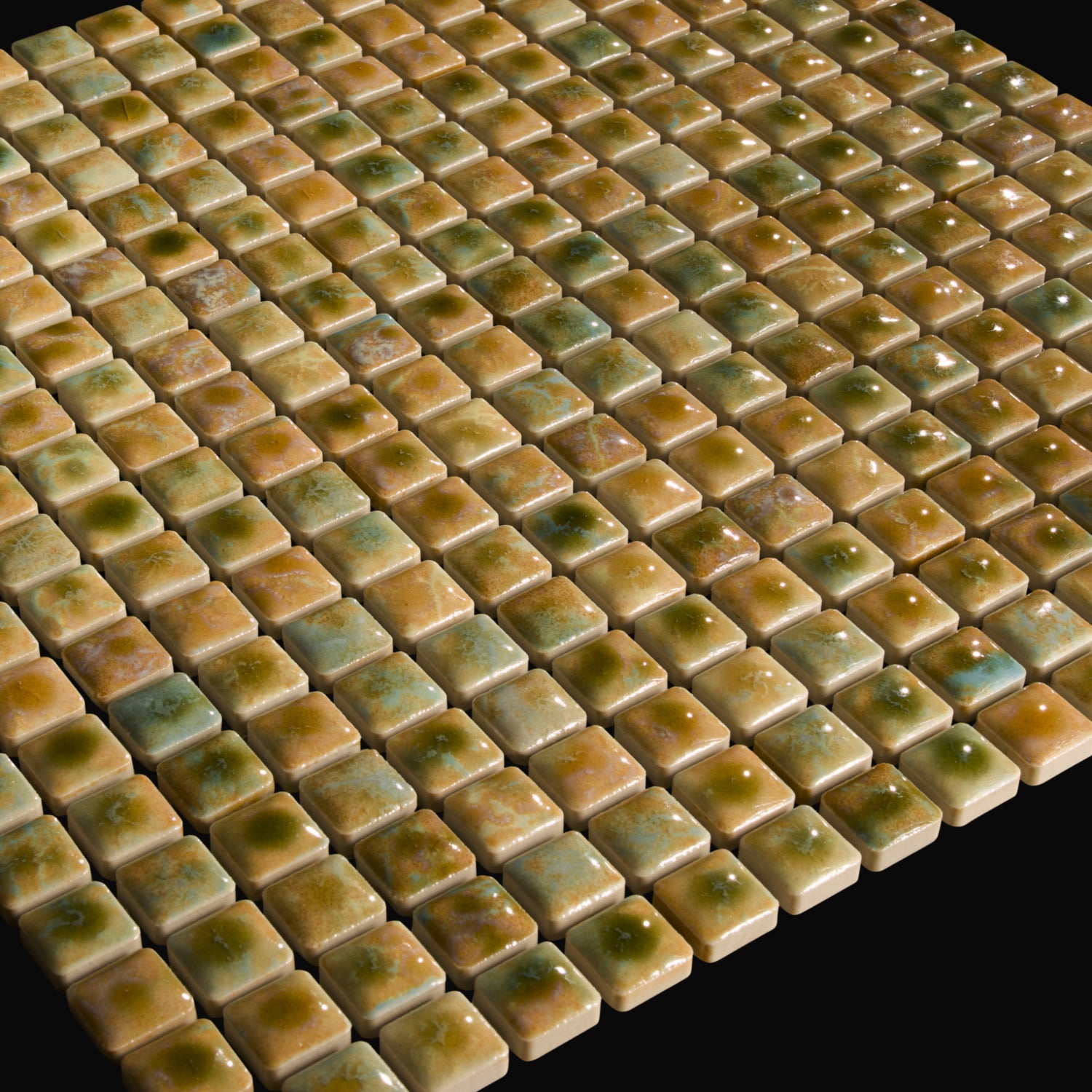
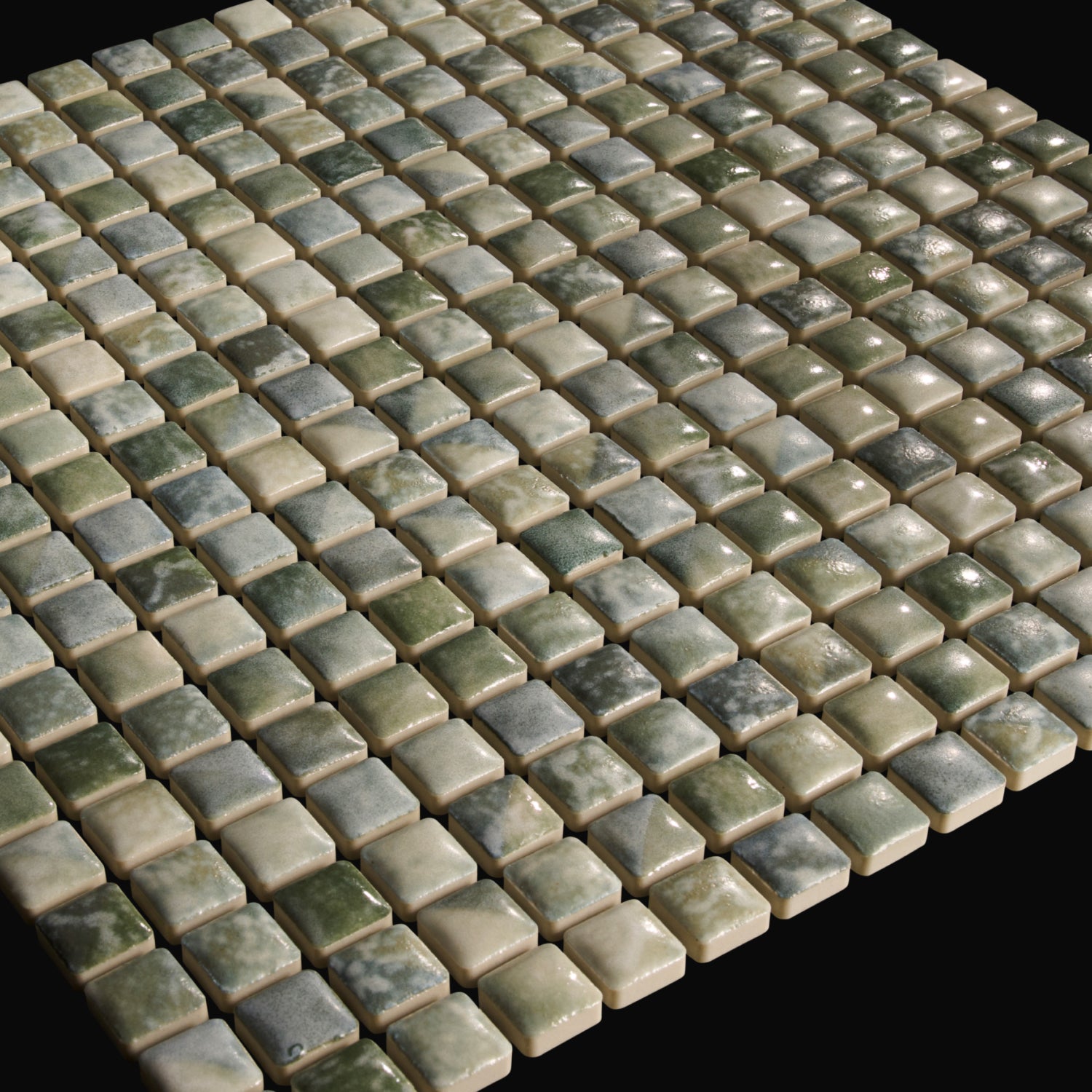
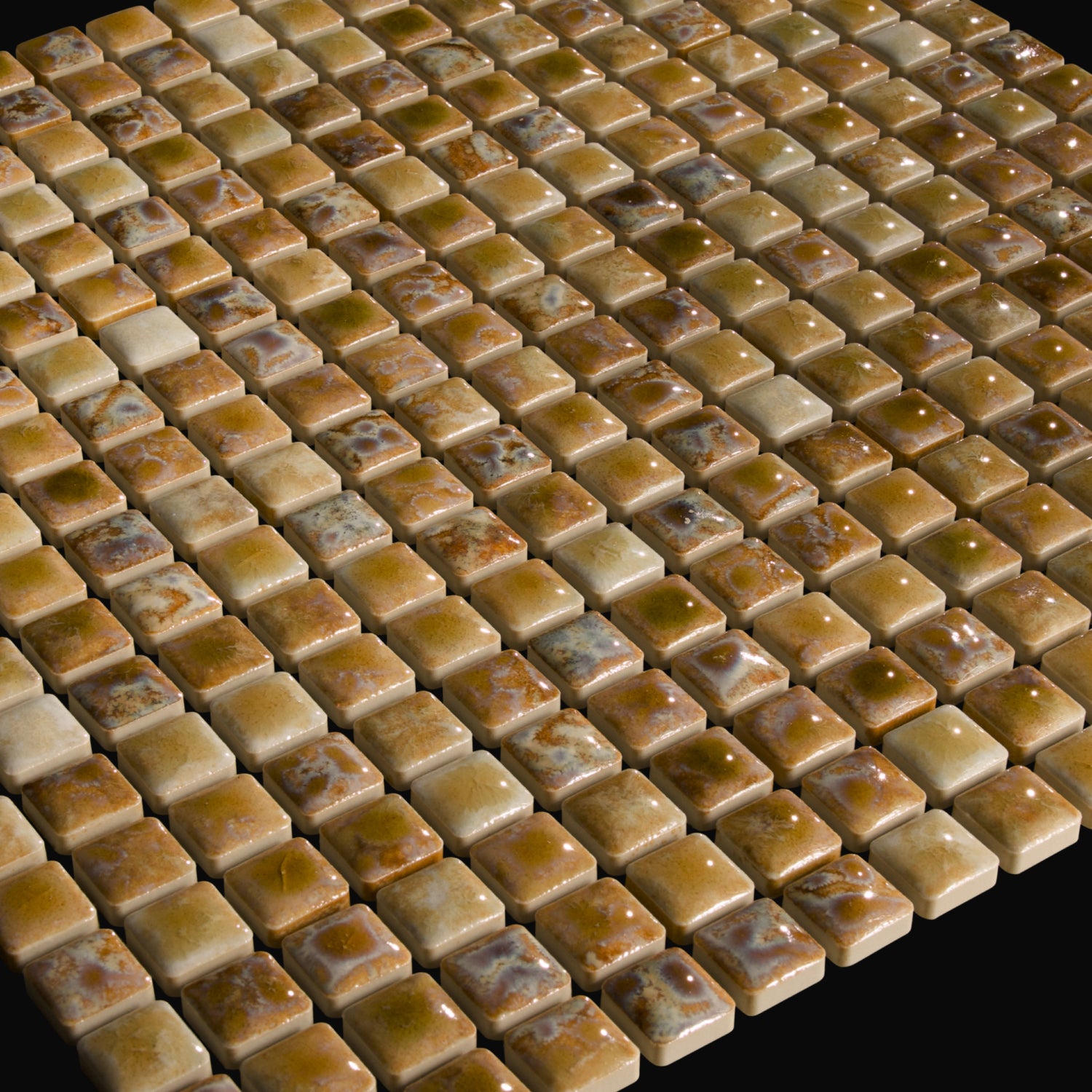
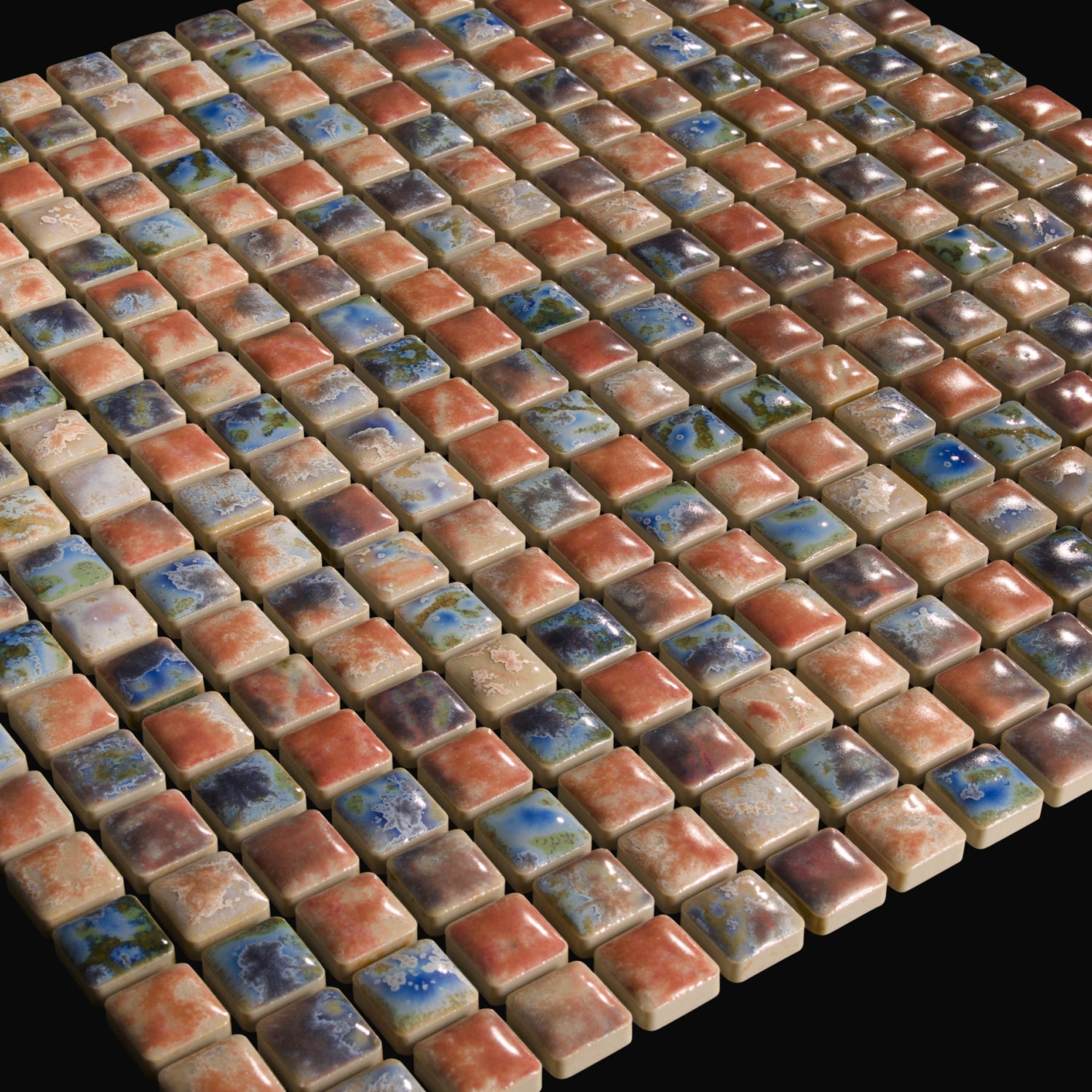
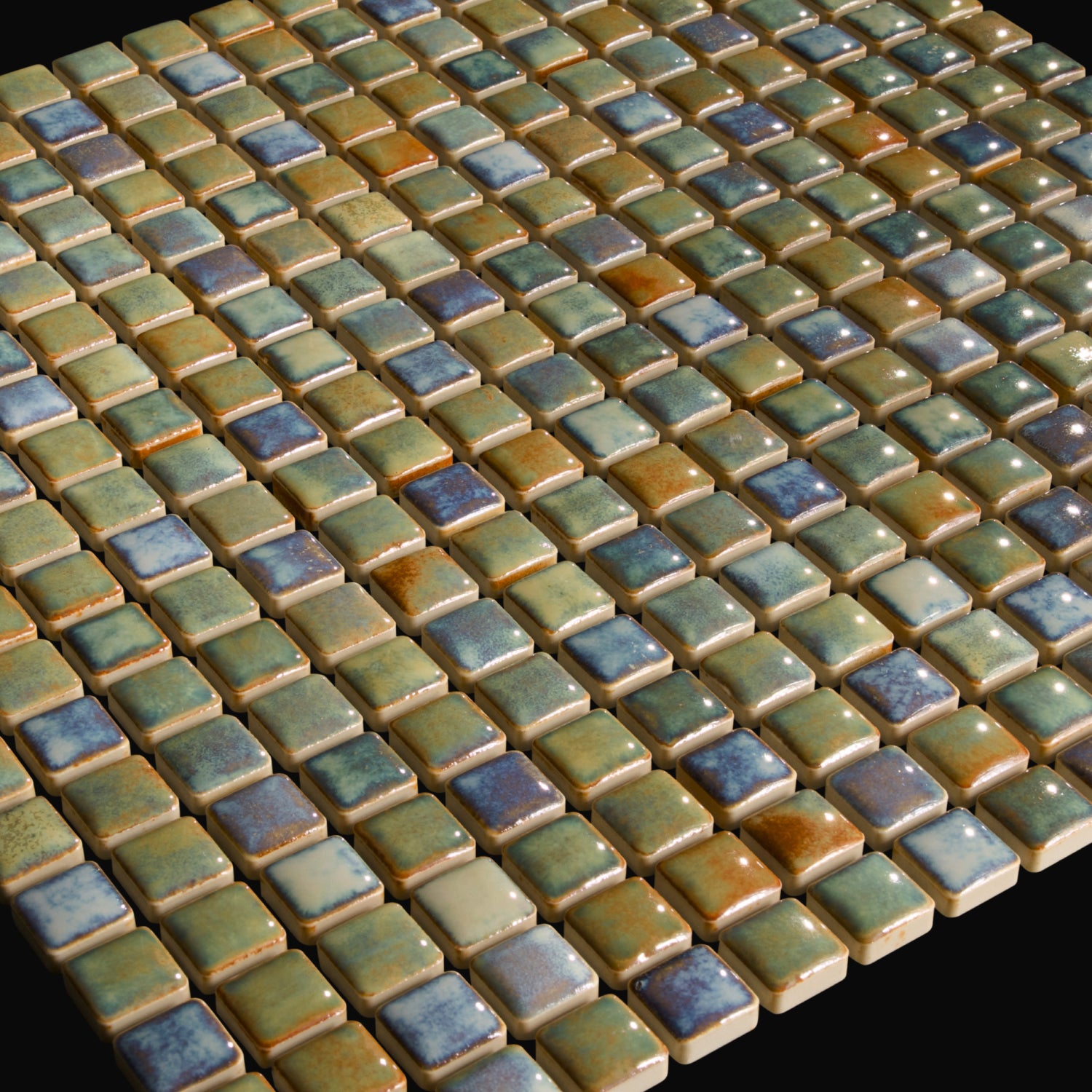
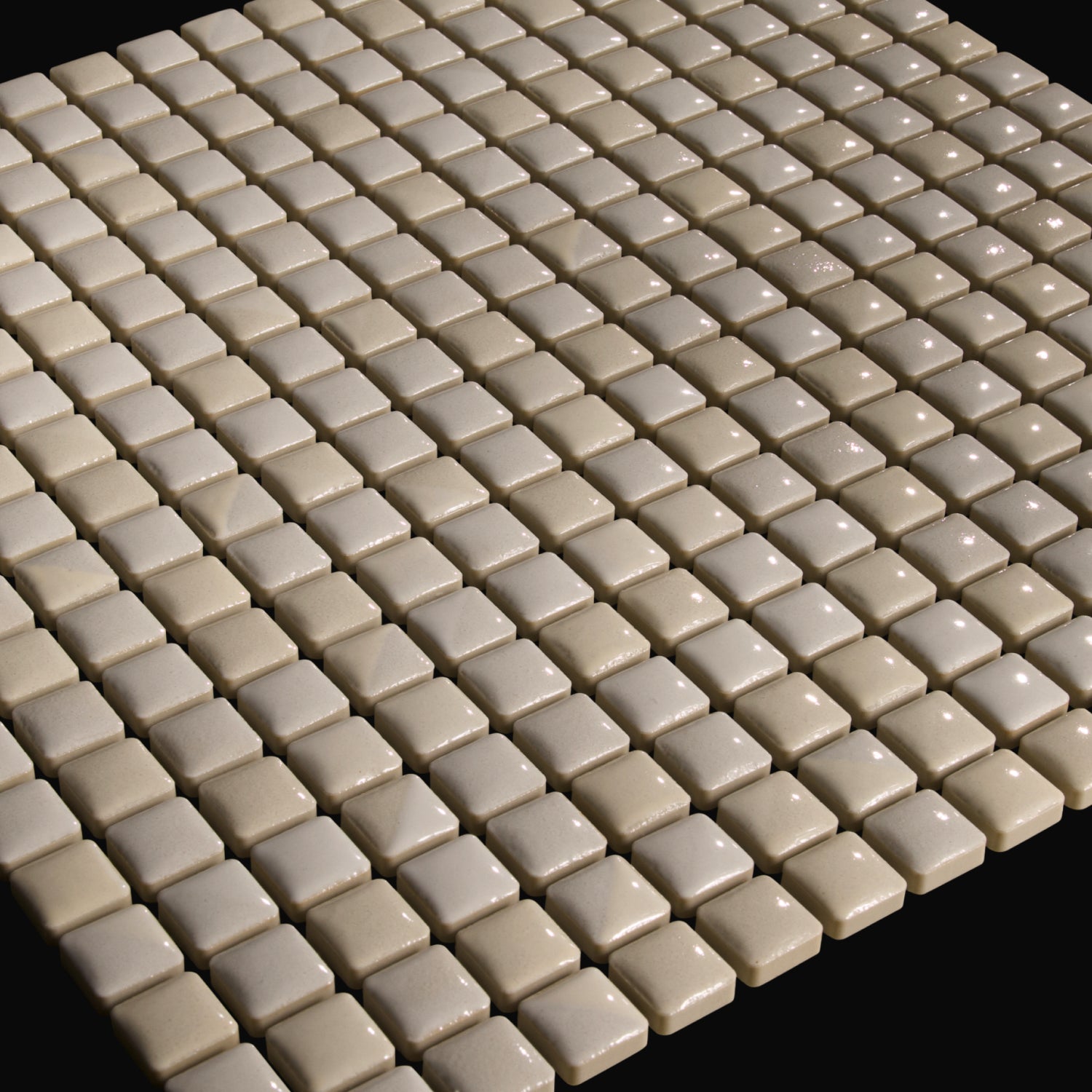
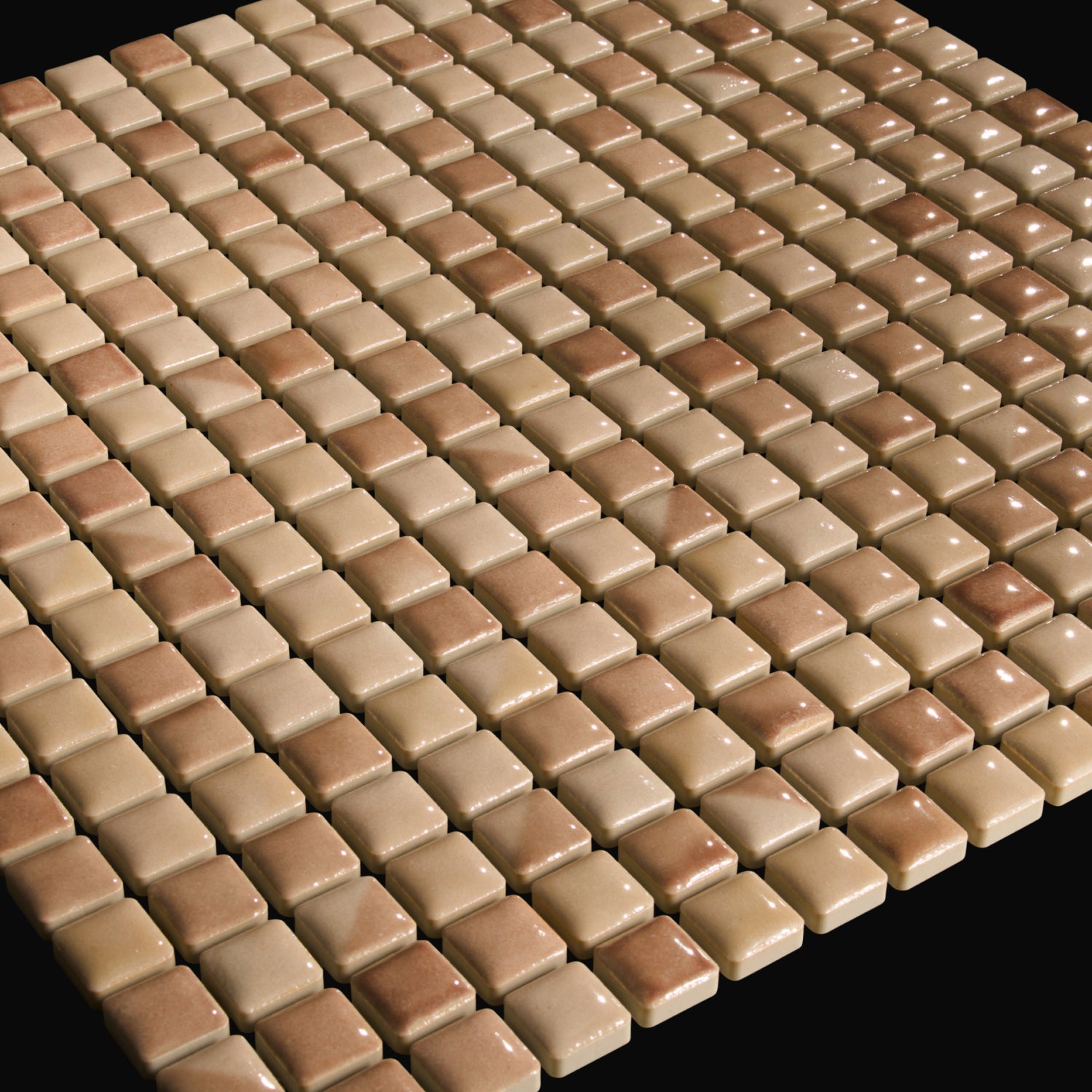
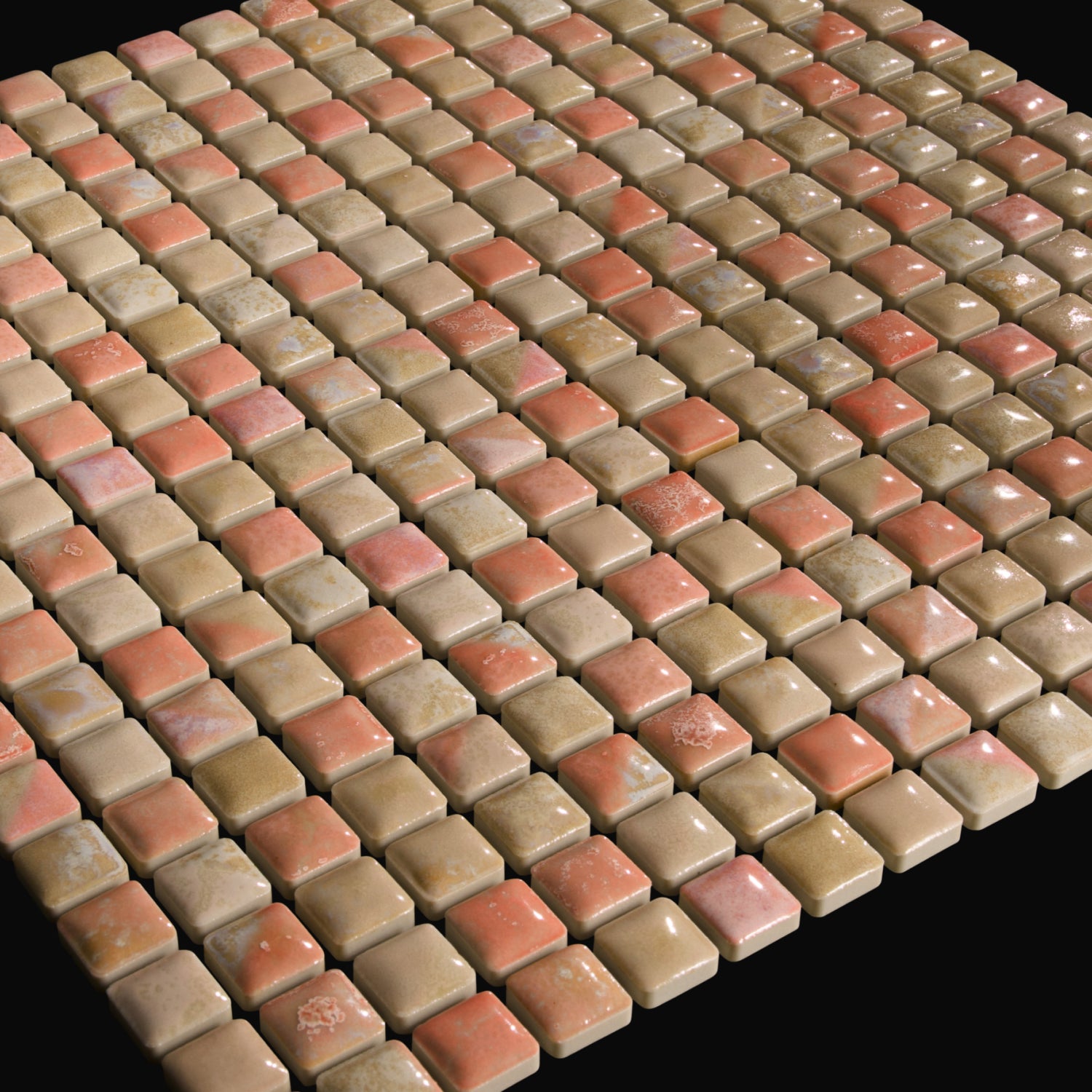
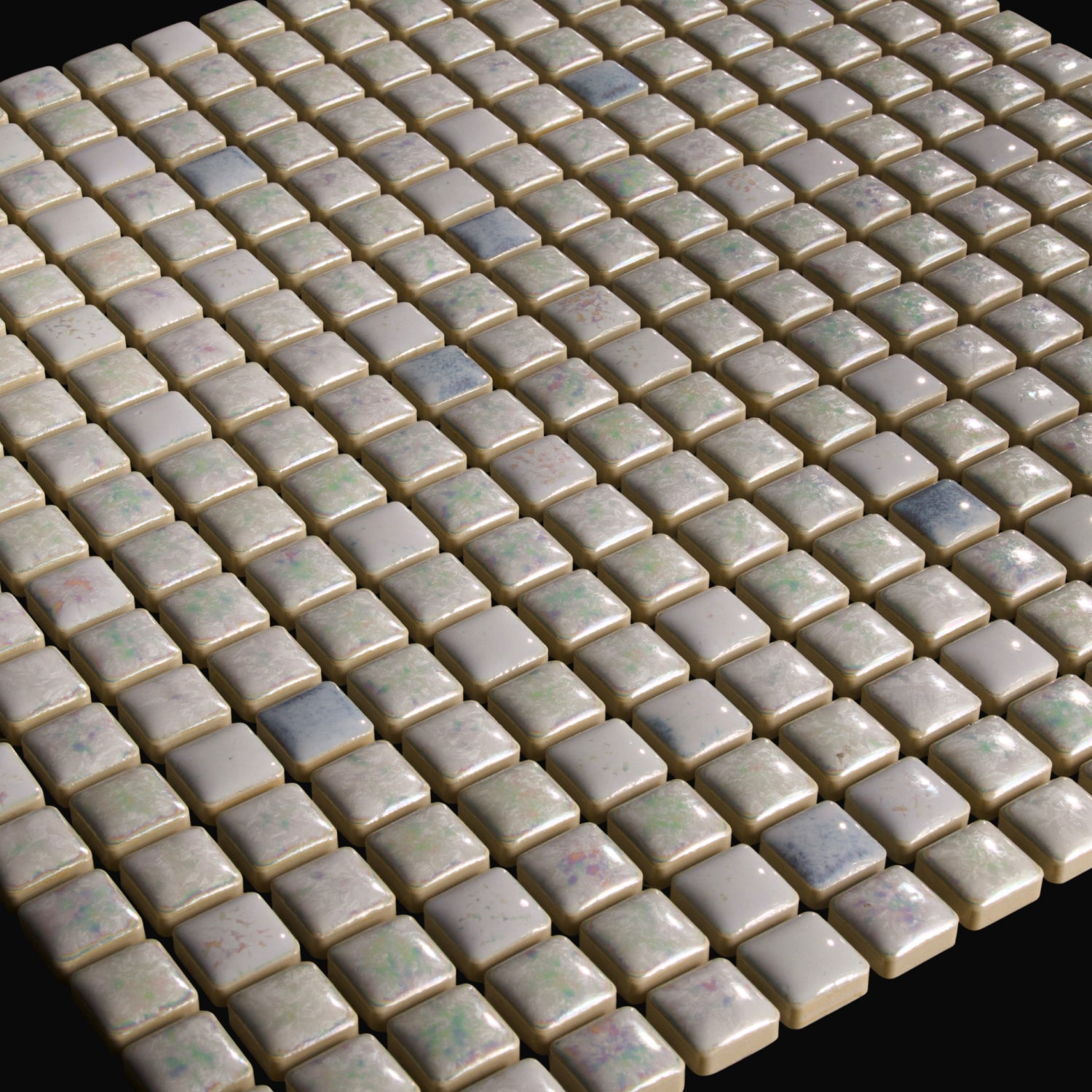
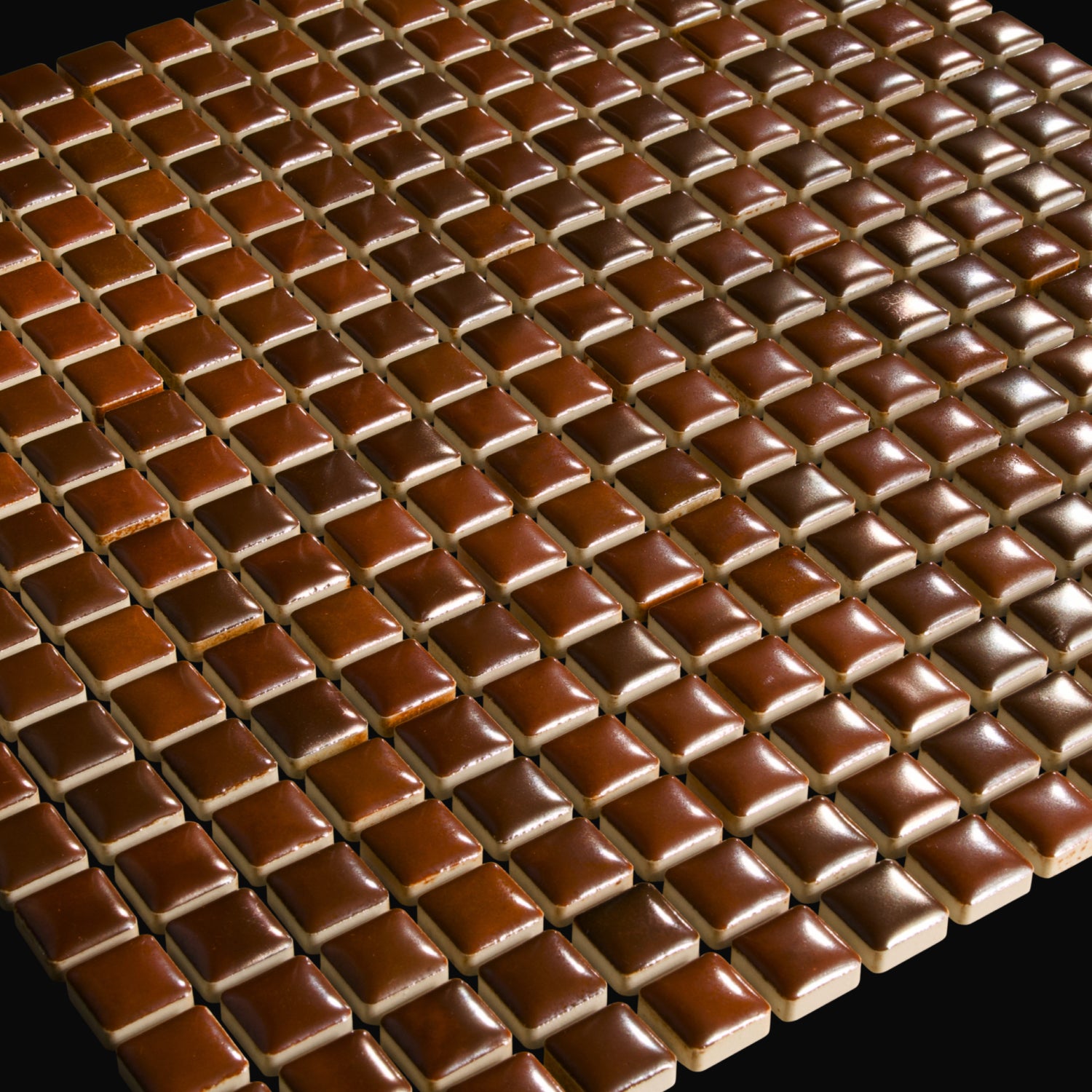
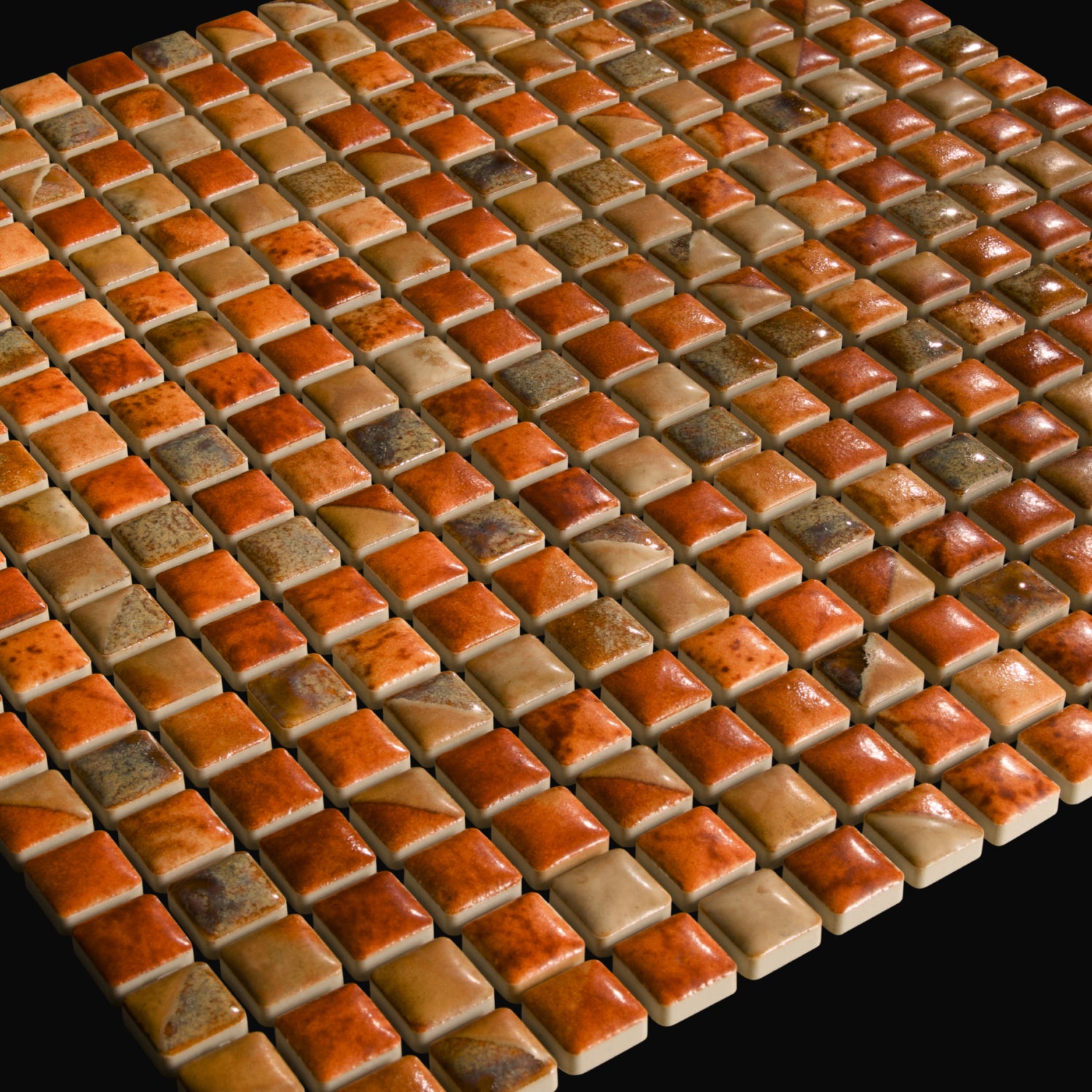
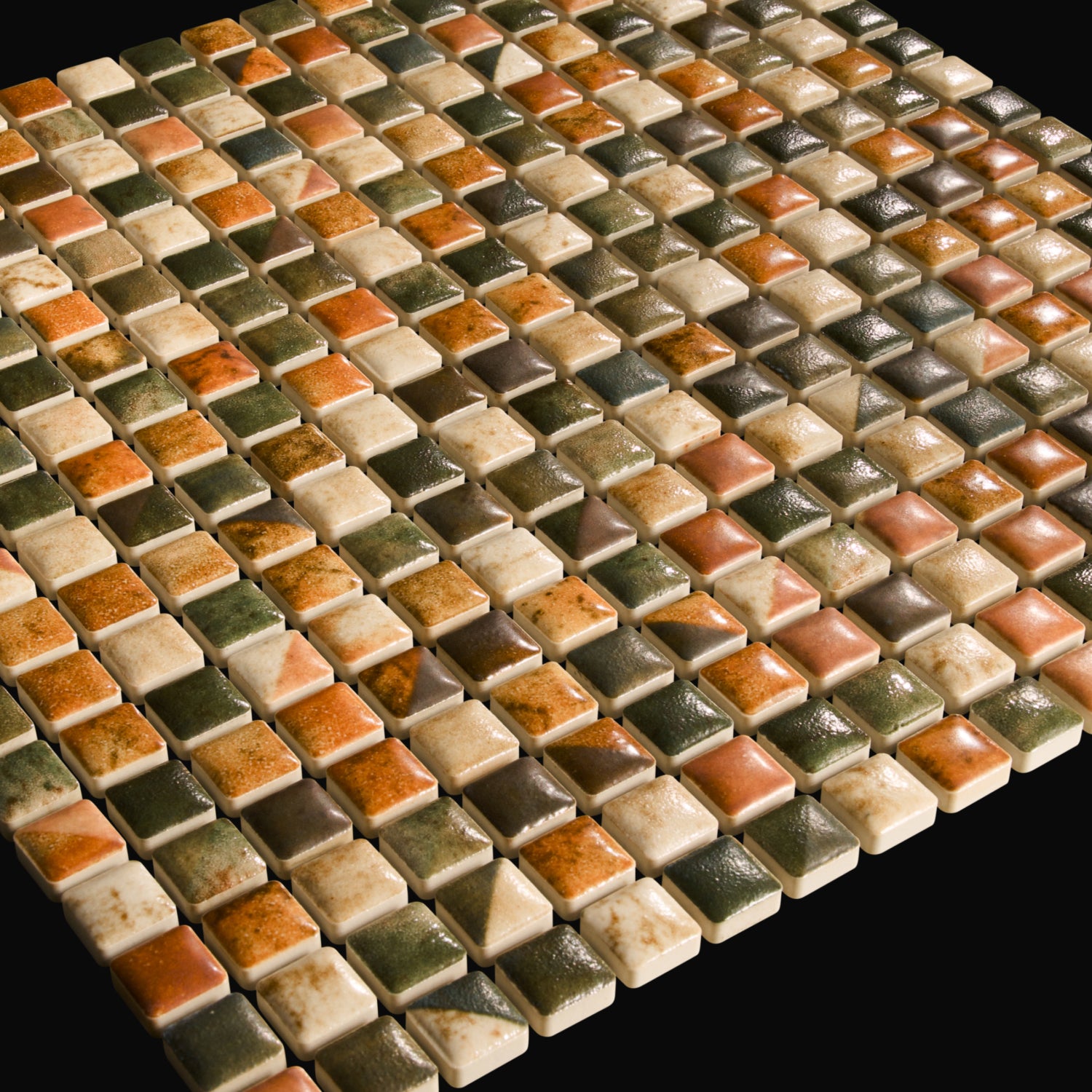
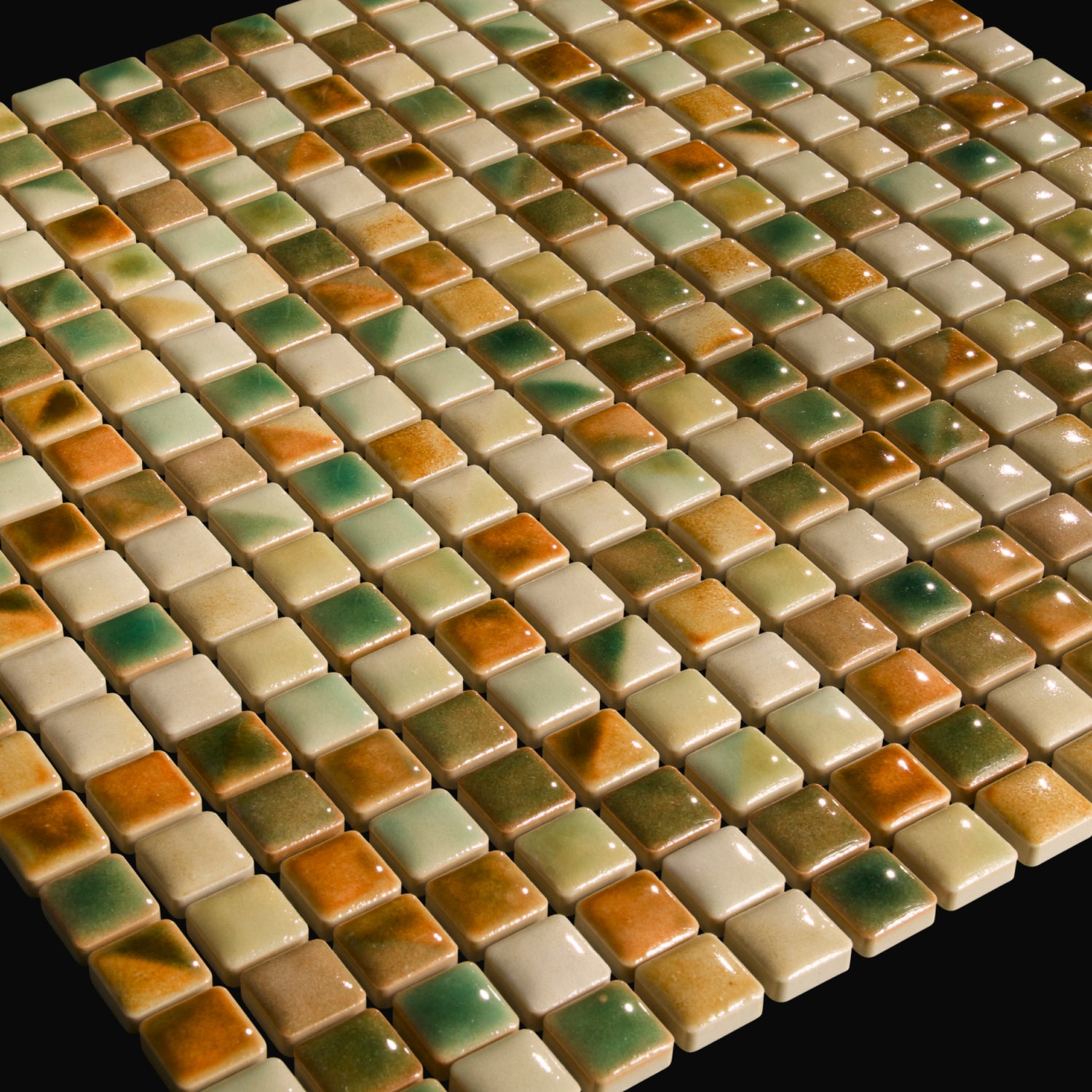
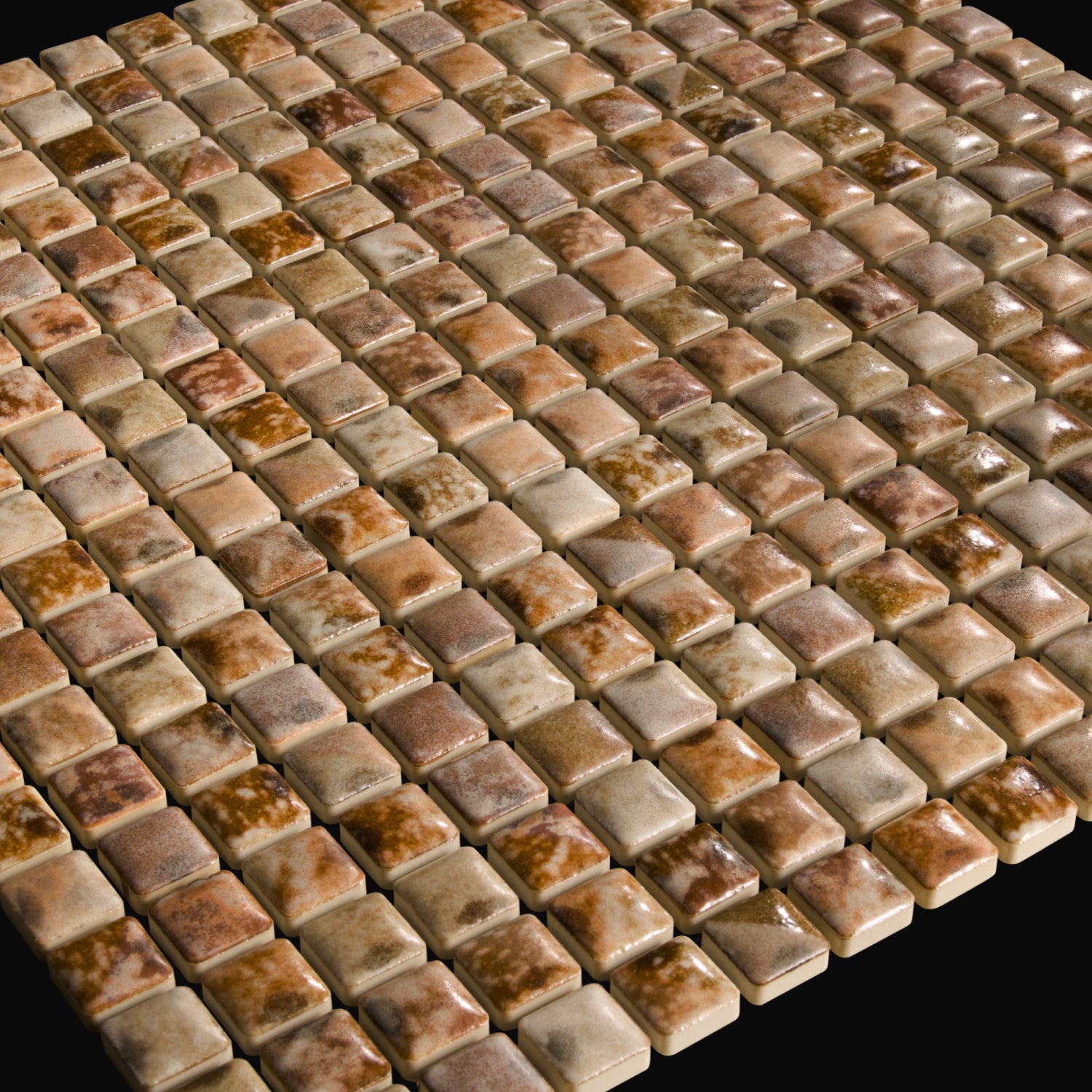
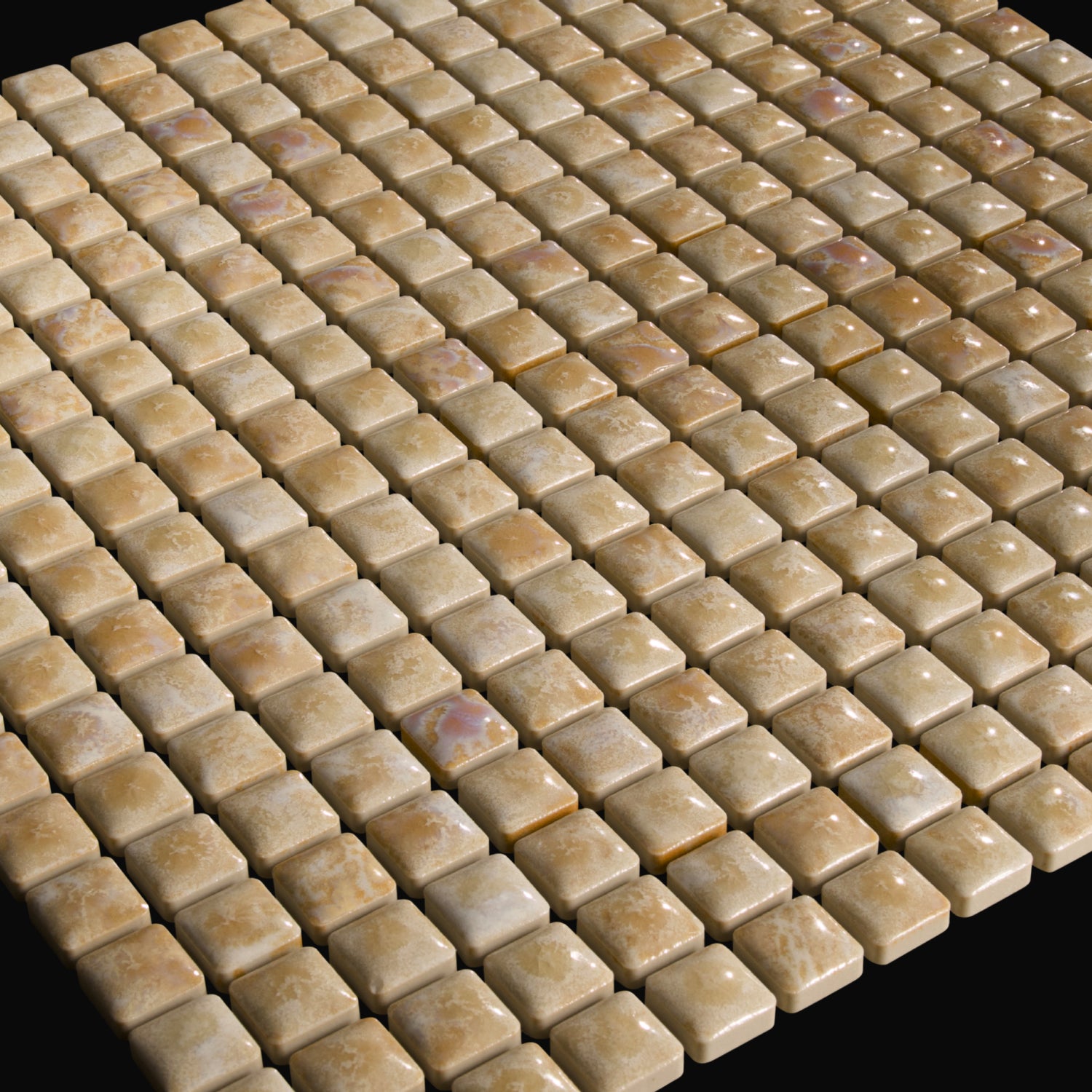
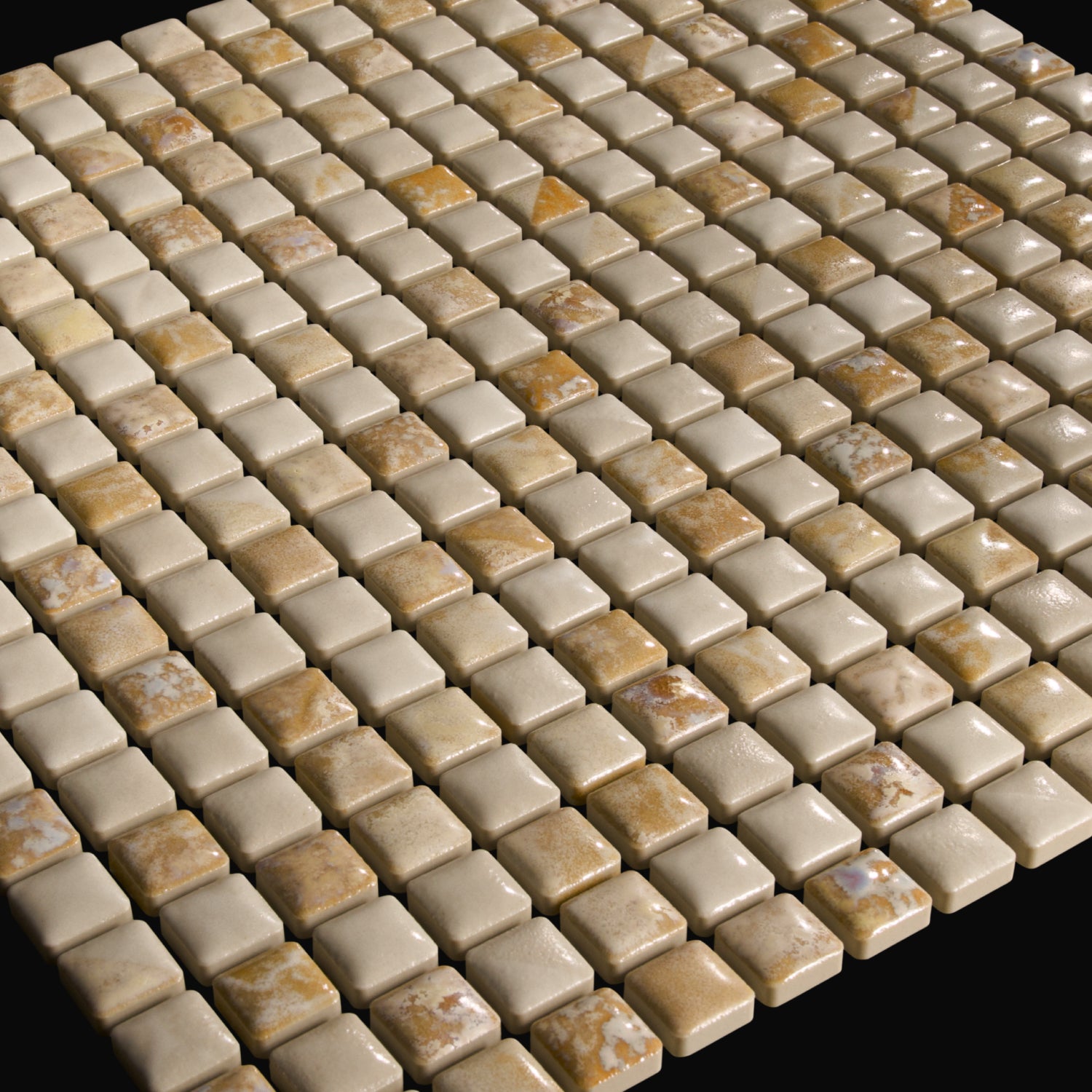
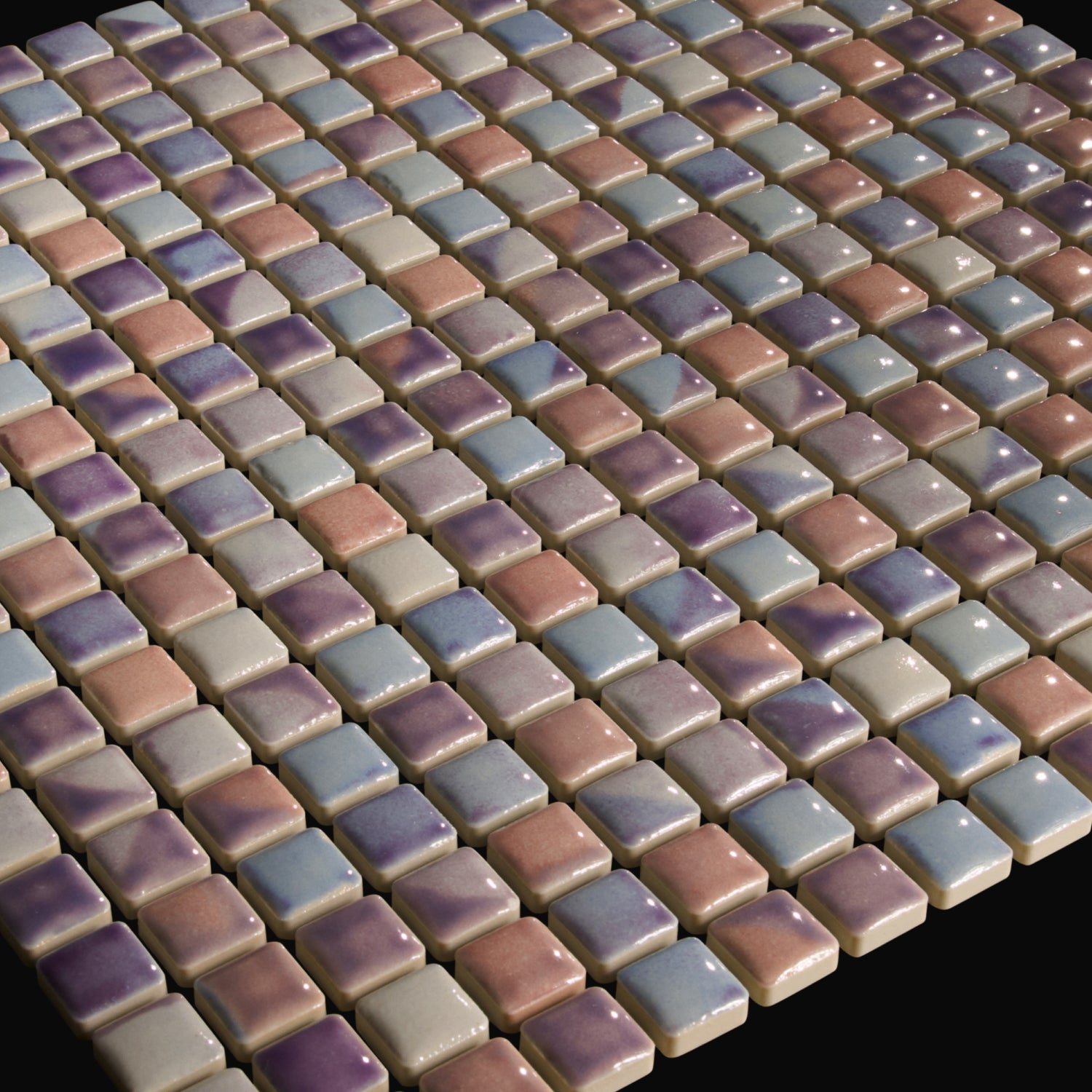
Komasu is a kiln-formed Japanese mosaic wall tile made in Japan. Its colour, texture and surface variation are created during firing rather than printed or applied as a repeating pattern.
Every tile on every sheet is different. One square metre of Komasu contains approximately 34,000 unique individual tiles, creating an exceptionally detailed architectural surface with no visible repetition.
From a distance, the small pieces come together as a coherent composition. Up close, their individual differences reveal remarkable depth, texture and movement. Light responds differently across the kiln-formed surfaces, subtly changing the appearance of the installation throughout the day.
Suitable for feature walls and residential, retail and hospitality interiors, Komasu creates a focal surface that cannot be exactly replicated. No two sheets—and no two completed installations—are ever identical.
A sample is 18 tiles.
Frequently Asked Questions
What makes Komasu unique?
Every individual tile on every Komasu sheet is different. Across one square metre, approximately 34,000 unique pieces combine to create a detailed architectural surface without visible repetition.
Is Komasu digitally printed?
No. Komasu does not use a digitally printed or repeating surface pattern. Its colour, texture and variation develop during firing in the kiln.
Are any two Komasu sheets identical?
No. Each sheet contains a unique arrangement of individual tiles. As a result, no two sheets or completed installations are ever exactly alike.
Where is Komasu made?
Komasu is manufactured in Japan using specialist Japanese ceramic production and kiln-firing techniques.
How does Komasu look when installed?
From a distance, Komasu appears as a coherent surface. When viewed closely, the individuality of its tiny pieces becomes visible, producing depth, movement and subtle changes as light moves across the installation.
Where can Komasu be used?
Komasu is designed for interior wall applications, including feature walls and residential, retail and hospitality interiors. Please consult the technical information on this page for complete application and installation guidance.
Should I order a sample?
Yes. A physical sample allows you to assess Komasu’s colour, scale, texture and response to light. Because every tile is different, a sample represents the overall character of the collection rather than every possible variation.
Mittsu operates a structured supply model based on local stock, Japanese stock and samples.
Each route is designed to balance availability, cost and lead time depending on the nature of the project.
Local stock
Local stock represents a smaller portion of the overall range but accounts for the majority of supply by volume.
- Stock held in Dubai, Germany and the UK
- Pallet delivery only to ensure safe transport
- Dispatch typically same or next working day
- Delivery usually within 3 to 10 days depending on location
- Shipping costs shown clearly at checkout
For remote locations, it is advisable to confirm shipping options in advance.
Stock from Japan
Tiles sourced from Japan are supplied on a pre-order basis, with three main shipping routes.
Dedicated sea freight
- Order shipped individually once ready
- Typical delivery 6 to 14 weeks
- Includes sea transit, customs and local handling
Shared sea freight
- Orders consolidated into scheduled shipments
- Typically four shipments per year
- Delivery timeline similar once dispatched
Air freight
- Direct delivery from Japan to site
- Typical delivery around 2 weeks
- Quoted per project
Lead times vary depending on production, volume and shipping conditions. Early planning is recommended.
Samples
Samples are stocked in the UK and Dubai, with selected ranges available from Germany.
- Courier delivery typically 2 to 10 days
- Ordered directly through product pages
See the Specifier Program for sample access.
Markets
Mittsu primarily supplies projects in the UK, UAE and Europe where local stock is held.
Projects in other regions can often be supported, typically on a minimum order basis of one pallet.
For these projects, supply is usually arranged on a CFR basis, with the client responsible for import clearance.
Certain markets are not currently supported.
Returns
Returns are accepted for local stock items only. Samples and Japan orders are non-returnable.
- Return request within 14 days of delivery
- Return within a further 14 days
- Items must be unopened and undamaged
- Pallet return required to avoid damage
- Refund processed within 14 days of receipt
Due to shipping costs, it is recommended to confirm selections carefully before ordering.
Shipping is structured to ensure safe delivery of specialist materials while balancing cost, timing and project requirements.
For project-specific advice, please contact Mittsu Japanese Tiles.
Authentic Japanese ceramic tiles for architectural and interior design projects.
Mittsu specialises in tiles made in Japan, selected for their surface depth, natural glaze variation and architectural character.
Unlike mass-produced alternatives, these tiles are not defined by printed patterns. Their colour and texture are created during firing in the kiln, producing subtle variation across the surface once installed.
Choosing a tile
Japanese tiles are typically selected for their material quality rather than a fixed visual pattern.
Variation between tiles is part of the character. Across a wall, this creates depth and movement rather than repetition.
Collections can be explored online, but most projects benefit from reviewing physical samples before final selection.
Samples
Samples allow colour, glaze movement and surface texture to be evaluated under real lighting conditions.
They are ordered directly through product pages using the sample option for each tile.
For professional projects, the Specifier Program provides access to complimentary samples and technical resources.
Availability and supply
Tiles may be supplied from local stock in the UK, Europe or UAE, sourced from Japan, or produced to order depending on the collection and project requirements.
Lead times vary accordingly and should be considered during the design stage where tiles form part of the architectural concept.
Working with Mittsu
Mittsu works directly with architects, interior designers and private clients across residential, hospitality and commercial projects.
Each enquiry is handled with a focus on material selection, availability and suitability for the intended application.
Japanese tiles are specified as materials, not finishes.
Komasu Sample
Order a Sample for Project Evaluation.
Confirm colour, texture and glaze before specifying.
A sample is an appropriate representation of the tile and colour selected. Larger tiles have a single tile as a sample, smaller tiles have multiple. Samples are sent attached to a card, with the tile detail.
Komasu is a kiln-formed Japanese mosaic wall tile made in Japan. Its colour, texture and surface variation are created during firing rather than printed or applied as a repeating pattern.
Every tile on every sheet is different. One square metre of Komasu contains approximately 34,000 unique individual tiles, creating an exceptionally detailed architectural surface with no visible repetition.
From a distance, the small pieces come together as a coherent composition. Up close, their individual differences reveal remarkable depth, texture and movement. Light responds differently across the kiln-formed surfaces, subtly changing the appearance of the installation throughout the day.
Suitable for feature walls and residential, retail and hospitality interiors, Komasu creates a focal surface that cannot be exactly replicated. No two sheets—and no two completed installations—are ever identical.
A sample is 18 tiles.
Frequently Asked Questions
What makes Komasu unique?
Every individual tile on every Komasu sheet is different. Across one square metre, approximately 34,000 unique pieces combine to create a detailed architectural surface without visible repetition.
Is Komasu digitally printed?
No. Komasu does not use a digitally printed or repeating surface pattern. Its colour, texture and variation develop during firing in the kiln.
Are any two Komasu sheets identical?
No. Each sheet contains a unique arrangement of individual tiles. As a result, no two sheets or completed installations are ever exactly alike.
Where is Komasu made?
Komasu is manufactured in Japan using specialist Japanese ceramic production and kiln-firing techniques.
How does Komasu look when installed?
From a distance, Komasu appears as a coherent surface. When viewed closely, the individuality of its tiny pieces becomes visible, producing depth, movement and subtle changes as light moves across the installation.
Where can Komasu be used?
Komasu is designed for interior wall applications, including feature walls and residential, retail and hospitality interiors. Please consult the technical information on this page for complete application and installation guidance.
Should I order a sample?
Yes. A physical sample allows you to assess Komasu’s colour, scale, texture and response to light. Because every tile is different, a sample represents the overall character of the collection rather than every possible variation.
Mittsu operates a structured supply model based on local stock, Japanese stock and samples.
Each route is designed to balance availability, cost and lead time depending on the nature of the project.
Local stock
Local stock represents a smaller portion of the overall range but accounts for the majority of supply by volume.
- Stock held in Dubai, Germany and the UK
- Pallet delivery only to ensure safe transport
- Dispatch typically same or next working day
- Delivery usually within 3 to 10 days depending on location
- Shipping costs shown clearly at checkout
For remote locations, it is advisable to confirm shipping options in advance.
Stock from Japan
Tiles sourced from Japan are supplied on a pre-order basis, with three main shipping routes.
Dedicated sea freight
- Order shipped individually once ready
- Typical delivery 6 to 14 weeks
- Includes sea transit, customs and local handling
Shared sea freight
- Orders consolidated into scheduled shipments
- Typically four shipments per year
- Delivery timeline similar once dispatched
Air freight
- Direct delivery from Japan to site
- Typical delivery around 2 weeks
- Quoted per project
Lead times vary depending on production, volume and shipping conditions. Early planning is recommended.
Samples
Samples are stocked in the UK and Dubai, with selected ranges available from Germany.
- Courier delivery typically 2 to 10 days
- Ordered directly through product pages
See the Specifier Program for sample access.
Markets
Mittsu primarily supplies projects in the UK, UAE and Europe where local stock is held.
Projects in other regions can often be supported, typically on a minimum order basis of one pallet.
For these projects, supply is usually arranged on a CFR basis, with the client responsible for import clearance.
Certain markets are not currently supported.
Returns
Returns are accepted for local stock items only. Samples and Japan orders are non-returnable.
- Return request within 14 days of delivery
- Return within a further 14 days
- Items must be unopened and undamaged
- Pallet return required to avoid damage
- Refund processed within 14 days of receipt
Due to shipping costs, it is recommended to confirm selections carefully before ordering.
Shipping is structured to ensure safe delivery of specialist materials while balancing cost, timing and project requirements.
For project-specific advice, please contact Mittsu Japanese Tiles.
Authentic Japanese ceramic tiles for architectural and interior design projects.
Mittsu specialises in tiles made in Japan, selected for their surface depth, natural glaze variation and architectural character.
Unlike mass-produced alternatives, these tiles are not defined by printed patterns. Their colour and texture are created during firing in the kiln, producing subtle variation across the surface once installed.
Choosing a tile
Japanese tiles are typically selected for their material quality rather than a fixed visual pattern.
Variation between tiles is part of the character. Across a wall, this creates depth and movement rather than repetition.
Collections can be explored online, but most projects benefit from reviewing physical samples before final selection.
Samples
Samples allow colour, glaze movement and surface texture to be evaluated under real lighting conditions.
They are ordered directly through product pages using the sample option for each tile.
For professional projects, the Specifier Program provides access to complimentary samples and technical resources.
Availability and supply
Tiles may be supplied from local stock in the UK, Europe or UAE, sourced from Japan, or produced to order depending on the collection and project requirements.
Lead times vary accordingly and should be considered during the design stage where tiles form part of the architectural concept.
Working with Mittsu
Mittsu works directly with architects, interior designers and private clients across residential, hospitality and commercial projects.
Each enquiry is handled with a focus on material selection, availability and suitability for the intended application.
Japanese tiles are specified as materials, not finishes.
Choose options
Komasu is a kiln-formed Japanese mosaic wall tile made in Japan. Its colour, texture and surface variation are created during firing rather than printed or applied as a repeating pattern.
Every tile on every sheet is different. One square metre of Komasu contains approximately 34,000 unique individual tiles, creating an exceptionally detailed architectural surface with no visible repetition.
From a distance, the small pieces come together as a coherent composition. Up close, their individual differences reveal remarkable depth, texture and movement. Light responds differently across the kiln-formed surfaces, subtly changing the appearance of the installation throughout the day.
Suitable for feature walls and residential, retail and hospitality interiors, Komasu creates a focal surface that cannot be exactly replicated. No two sheets—and no two completed installations—are ever identical.
A sample is 18 tiles.
Frequently Asked Questions
What makes Komasu unique?
Every individual tile on every Komasu sheet is different. Across one square metre, approximately 34,000 unique pieces combine to create a detailed architectural surface without visible repetition.
Is Komasu digitally printed?
No. Komasu does not use a digitally printed or repeating surface pattern. Its colour, texture and variation develop during firing in the kiln.
Are any two Komasu sheets identical?
No. Each sheet contains a unique arrangement of individual tiles. As a result, no two sheets or completed installations are ever exactly alike.
Where is Komasu made?
Komasu is manufactured in Japan using specialist Japanese ceramic production and kiln-firing techniques.
How does Komasu look when installed?
From a distance, Komasu appears as a coherent surface. When viewed closely, the individuality of its tiny pieces becomes visible, producing depth, movement and subtle changes as light moves across the installation.
Where can Komasu be used?
Komasu is designed for interior wall applications, including feature walls and residential, retail and hospitality interiors. Please consult the technical information on this page for complete application and installation guidance.
Should I order a sample?
Yes. A physical sample allows you to assess Komasu’s colour, scale, texture and response to light. Because every tile is different, a sample represents the overall character of the collection rather than every possible variation.
Mittsu operates a structured supply model based on local stock, Japanese stock and samples.
Each route is designed to balance availability, cost and lead time depending on the nature of the project.
Local stock
Local stock represents a smaller portion of the overall range but accounts for the majority of supply by volume.
- Stock held in Dubai, Germany and the UK
- Pallet delivery only to ensure safe transport
- Dispatch typically same or next working day
- Delivery usually within 3 to 10 days depending on location
- Shipping costs shown clearly at checkout
For remote locations, it is advisable to confirm shipping options in advance.
Stock from Japan
Tiles sourced from Japan are supplied on a pre-order basis, with three main shipping routes.
Dedicated sea freight
- Order shipped individually once ready
- Typical delivery 6 to 14 weeks
- Includes sea transit, customs and local handling
Shared sea freight
- Orders consolidated into scheduled shipments
- Typically four shipments per year
- Delivery timeline similar once dispatched
Air freight
- Direct delivery from Japan to site
- Typical delivery around 2 weeks
- Quoted per project
Lead times vary depending on production, volume and shipping conditions. Early planning is recommended.
Samples
Samples are stocked in the UK and Dubai, with selected ranges available from Germany.
- Courier delivery typically 2 to 10 days
- Ordered directly through product pages
See the Specifier Program for sample access.
Markets
Mittsu primarily supplies projects in the UK, UAE and Europe where local stock is held.
Projects in other regions can often be supported, typically on a minimum order basis of one pallet.
For these projects, supply is usually arranged on a CFR basis, with the client responsible for import clearance.
Certain markets are not currently supported.
Returns
Returns are accepted for local stock items only. Samples and Japan orders are non-returnable.
- Return request within 14 days of delivery
- Return within a further 14 days
- Items must be unopened and undamaged
- Pallet return required to avoid damage
- Refund processed within 14 days of receipt
Due to shipping costs, it is recommended to confirm selections carefully before ordering.
Shipping is structured to ensure safe delivery of specialist materials while balancing cost, timing and project requirements.
For project-specific advice, please contact Mittsu Japanese Tiles.
Authentic Japanese ceramic tiles for architectural and interior design projects.
Mittsu specialises in tiles made in Japan, selected for their surface depth, natural glaze variation and architectural character.
Unlike mass-produced alternatives, these tiles are not defined by printed patterns. Their colour and texture are created during firing in the kiln, producing subtle variation across the surface once installed.
Choosing a tile
Japanese tiles are typically selected for their material quality rather than a fixed visual pattern.
Variation between tiles is part of the character. Across a wall, this creates depth and movement rather than repetition.
Collections can be explored online, but most projects benefit from reviewing physical samples before final selection.
Samples
Samples allow colour, glaze movement and surface texture to be evaluated under real lighting conditions.
They are ordered directly through product pages using the sample option for each tile.
For professional projects, the Specifier Program provides access to complimentary samples and technical resources.
Availability and supply
Tiles may be supplied from local stock in the UK, Europe or UAE, sourced from Japan, or produced to order depending on the collection and project requirements.
Lead times vary accordingly and should be considered during the design stage where tiles form part of the architectural concept.
Working with Mittsu
Mittsu works directly with architects, interior designers and private clients across residential, hospitality and commercial projects.
Each enquiry is handled with a focus on material selection, availability and suitability for the intended application.
Japanese tiles are specified as materials, not finishes.
Komasu is a kiln-formed Japanese mosaic wall tile made in Japan. Its colour, texture and surface variation are created during firing rather than printed or applied as a repeating pattern.
Every tile on every sheet is different. One square metre of Komasu contains approximately 34,000 unique individual tiles, creating an exceptionally detailed architectural surface with no visible repetition.
From a distance, the small pieces come together as a coherent composition. Up close, their individual differences reveal remarkable depth, texture and movement. Light responds differently across the kiln-formed surfaces, subtly changing the appearance of the installation throughout the day.
Suitable for feature walls and residential, retail and hospitality interiors, Komasu creates a focal surface that cannot be exactly replicated. No two sheets—and no two completed installations—are ever identical.
A sample is 18 tiles.
Frequently Asked Questions
What makes Komasu unique?
Every individual tile on every Komasu sheet is different. Across one square metre, approximately 34,000 unique pieces combine to create a detailed architectural surface without visible repetition.
Is Komasu digitally printed?
No. Komasu does not use a digitally printed or repeating surface pattern. Its colour, texture and variation develop during firing in the kiln.
Are any two Komasu sheets identical?
No. Each sheet contains a unique arrangement of individual tiles. As a result, no two sheets or completed installations are ever exactly alike.
Where is Komasu made?
Komasu is manufactured in Japan using specialist Japanese ceramic production and kiln-firing techniques.
How does Komasu look when installed?
From a distance, Komasu appears as a coherent surface. When viewed closely, the individuality of its tiny pieces becomes visible, producing depth, movement and subtle changes as light moves across the installation.
Where can Komasu be used?
Komasu is designed for interior wall applications, including feature walls and residential, retail and hospitality interiors. Please consult the technical information on this page for complete application and installation guidance.
Should I order a sample?
Yes. A physical sample allows you to assess Komasu’s colour, scale, texture and response to light. Because every tile is different, a sample represents the overall character of the collection rather than every possible variation.
Mittsu operates a structured supply model based on local stock, Japanese stock and samples.
Each route is designed to balance availability, cost and lead time depending on the nature of the project.
Local stock
Local stock represents a smaller portion of the overall range but accounts for the majority of supply by volume.
- Stock held in Dubai, Germany and the UK
- Pallet delivery only to ensure safe transport
- Dispatch typically same or next working day
- Delivery usually within 3 to 10 days depending on location
- Shipping costs shown clearly at checkout
For remote locations, it is advisable to confirm shipping options in advance.
Stock from Japan
Tiles sourced from Japan are supplied on a pre-order basis, with three main shipping routes.
Dedicated sea freight
- Order shipped individually once ready
- Typical delivery 6 to 14 weeks
- Includes sea transit, customs and local handling
Shared sea freight
- Orders consolidated into scheduled shipments
- Typically four shipments per year
- Delivery timeline similar once dispatched
Air freight
- Direct delivery from Japan to site
- Typical delivery around 2 weeks
- Quoted per project
Lead times vary depending on production, volume and shipping conditions. Early planning is recommended.
Samples
Samples are stocked in the UK and Dubai, with selected ranges available from Germany.
- Courier delivery typically 2 to 10 days
- Ordered directly through product pages
See the Specifier Program for sample access.
Markets
Mittsu primarily supplies projects in the UK, UAE and Europe where local stock is held.
Projects in other regions can often be supported, typically on a minimum order basis of one pallet.
For these projects, supply is usually arranged on a CFR basis, with the client responsible for import clearance.
Certain markets are not currently supported.
Returns
Returns are accepted for local stock items only. Samples and Japan orders are non-returnable.
- Return request within 14 days of delivery
- Return within a further 14 days
- Items must be unopened and undamaged
- Pallet return required to avoid damage
- Refund processed within 14 days of receipt
Due to shipping costs, it is recommended to confirm selections carefully before ordering.
Shipping is structured to ensure safe delivery of specialist materials while balancing cost, timing and project requirements.
For project-specific advice, please contact Mittsu Japanese Tiles.
Authentic Japanese ceramic tiles for architectural and interior design projects.
Mittsu specialises in tiles made in Japan, selected for their surface depth, natural glaze variation and architectural character.
Unlike mass-produced alternatives, these tiles are not defined by printed patterns. Their colour and texture are created during firing in the kiln, producing subtle variation across the surface once installed.
Choosing a tile
Japanese tiles are typically selected for their material quality rather than a fixed visual pattern.
Variation between tiles is part of the character. Across a wall, this creates depth and movement rather than repetition.
Collections can be explored online, but most projects benefit from reviewing physical samples before final selection.
Samples
Samples allow colour, glaze movement and surface texture to be evaluated under real lighting conditions.
They are ordered directly through product pages using the sample option for each tile.
For professional projects, the Specifier Program provides access to complimentary samples and technical resources.
Availability and supply
Tiles may be supplied from local stock in the UK, Europe or UAE, sourced from Japan, or produced to order depending on the collection and project requirements.
Lead times vary accordingly and should be considered during the design stage where tiles form part of the architectural concept.
Working with Mittsu
Mittsu works directly with architects, interior designers and private clients across residential, hospitality and commercial projects.
Each enquiry is handled with a focus on material selection, availability and suitability for the intended application.
Japanese tiles are specified as materials, not finishes.
Need advice before specifying this tile?
We can help with tile selection, specification, quantities and project requirements.