TRIO Jumeirah, Dubai
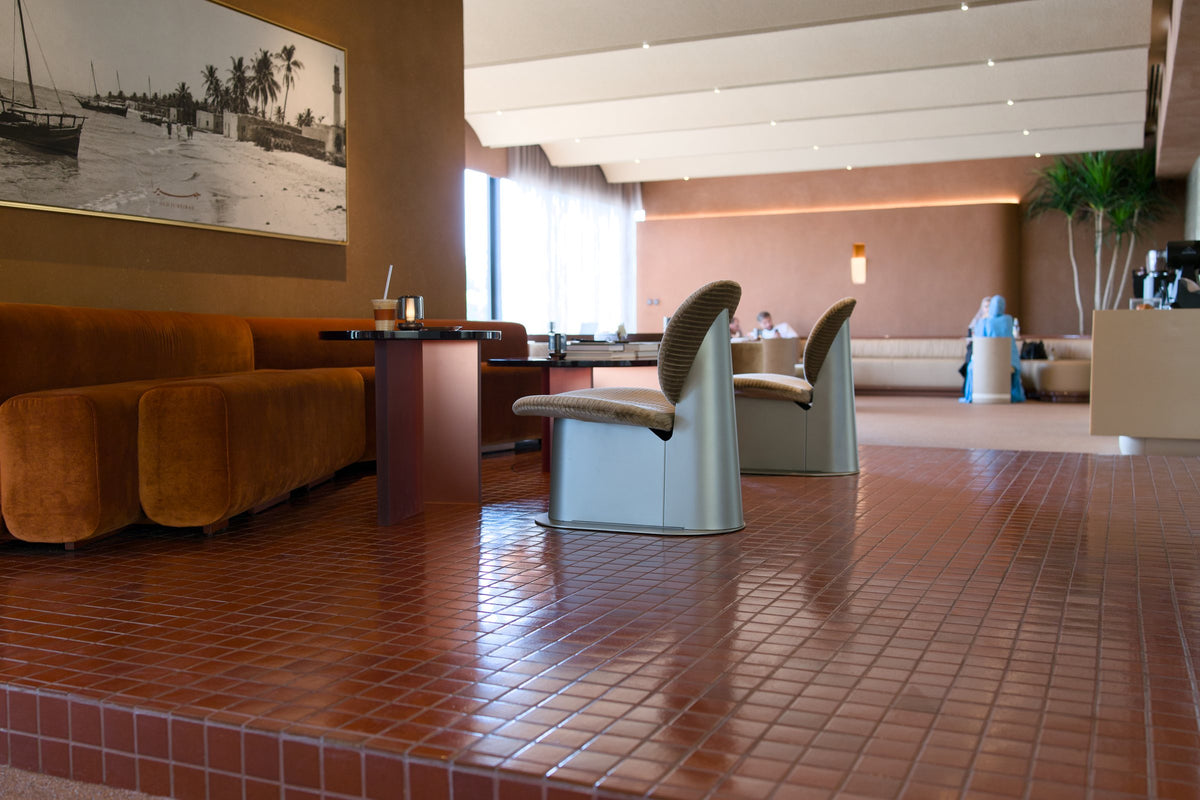
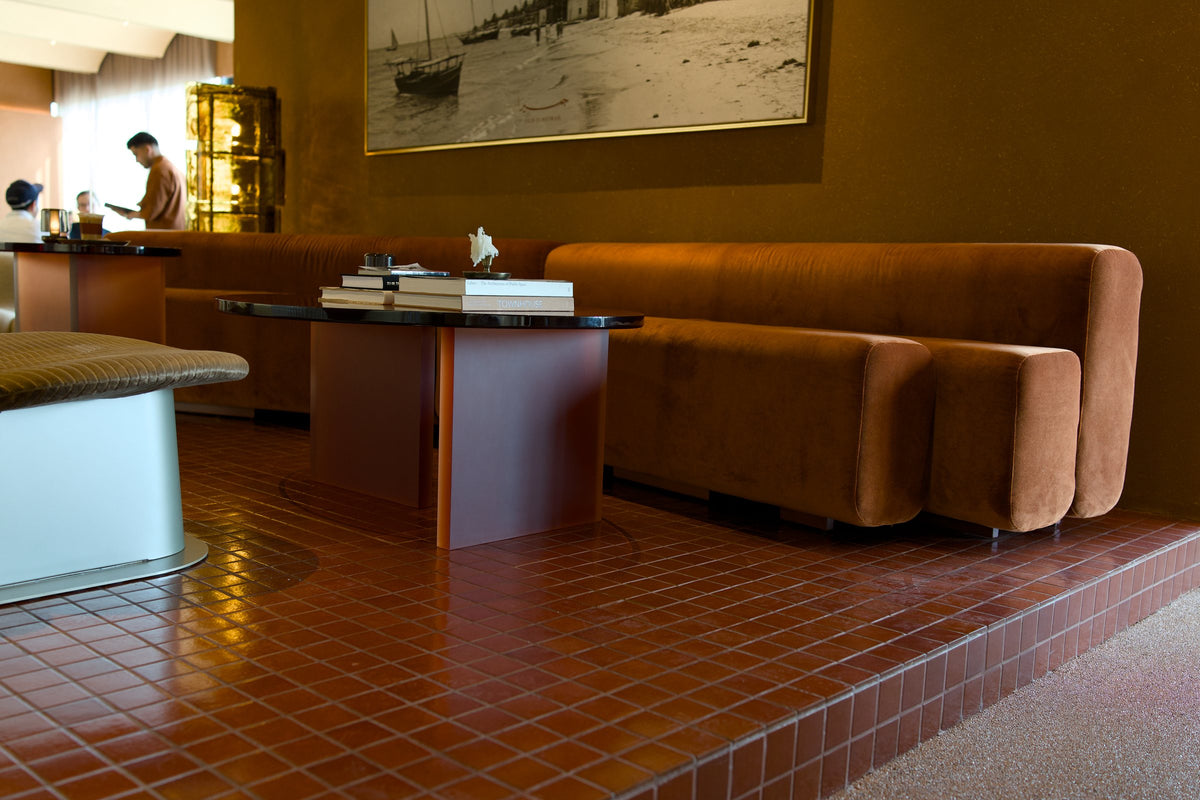
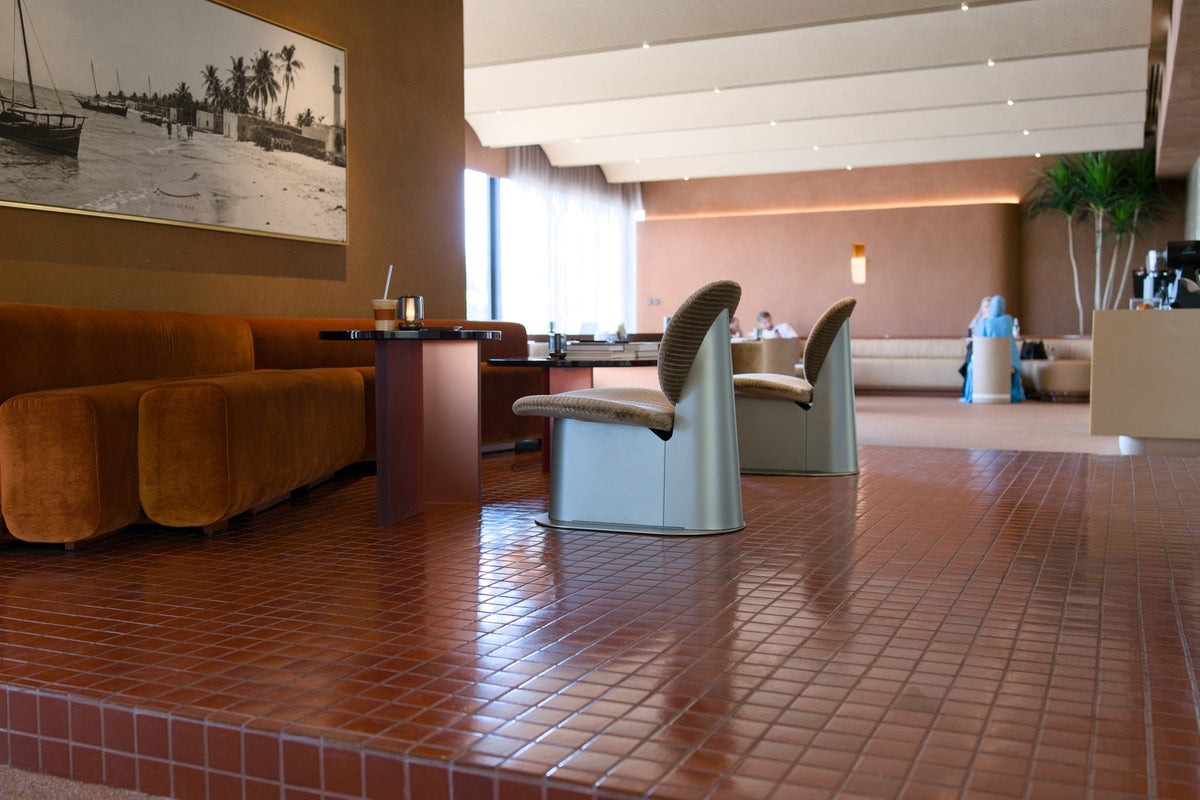
At TRIO Jumeirah in Umm Suqeim 2, Dubai, Kaji Oki in Vintage Red covers the café's raised lounge platform, wrapping its top and step edges in a warm, high-gloss Japanese porcelain tile. The red-brown glaze picks up the rust velvet banquettes and brown plaster walls around it, giving the lounge a continuous ceramic base.
Project Information
Project: TRIO Jumeirah
Location: 22nd Street, Umm Suqeim 2, Dubai, United Arab Emirates
Client: TRIO, founded by Aysha Bin Huwaireb
Supplier: Mittsu Japanese Tiles
Photography: Ian Reynolds
Tile collection: Kaji Oki
Colour: Vintage Red
Country of manufacture: Japan
Material: Glazed porcelain
Format: 69 × 69 mm on 300 × 300 mm sheets
Application: Raised lounge platform floor and step edges
A Café Built Around Three
TRIO is a Dubai-born speciality coffee brand whose identity is built around the number three, carried through its architecture, materials and menu. The Jumeirah café occupies the site of TRIO's first location, which opened as a drive-through in 2021 and has now become a full café. It follows the design language of TRIO's Dubai Mall flagship, with a cream counter folded in soft waves, rippling bouclé seating, rust velvet booths and low brown plaster light.
Three, Twice Over
There is a happy coincidence behind this project. Mittsu (三) is the Japanese word for three, so a café built around the number three is now standing on tiles from a company named after it. TRIO brings together three forms and three materials, and Mittsu carries the same number in its name.
The connection goes beyond the names. TRIO describes its cafés as built on a dedication to detail, and Mittsu works with Japanese makers for whom glaze, colour and texture are everything. Kaji Oki Vintage Red belongs to that kind of thinking. It is a warm, quiet material that people experience underfoot rather than as a feature on display.
Kaji Oki Vintage Red
Kaji Oki in Vintage Red forms the raised platform that carries the lounge's velvet banquettes, dark-topped tables and sculpted lounge chairs. The 69 mm square sets a calm, even grid across the floor, and the glossy glaze reflects daylight from the windows in long, soft bands.
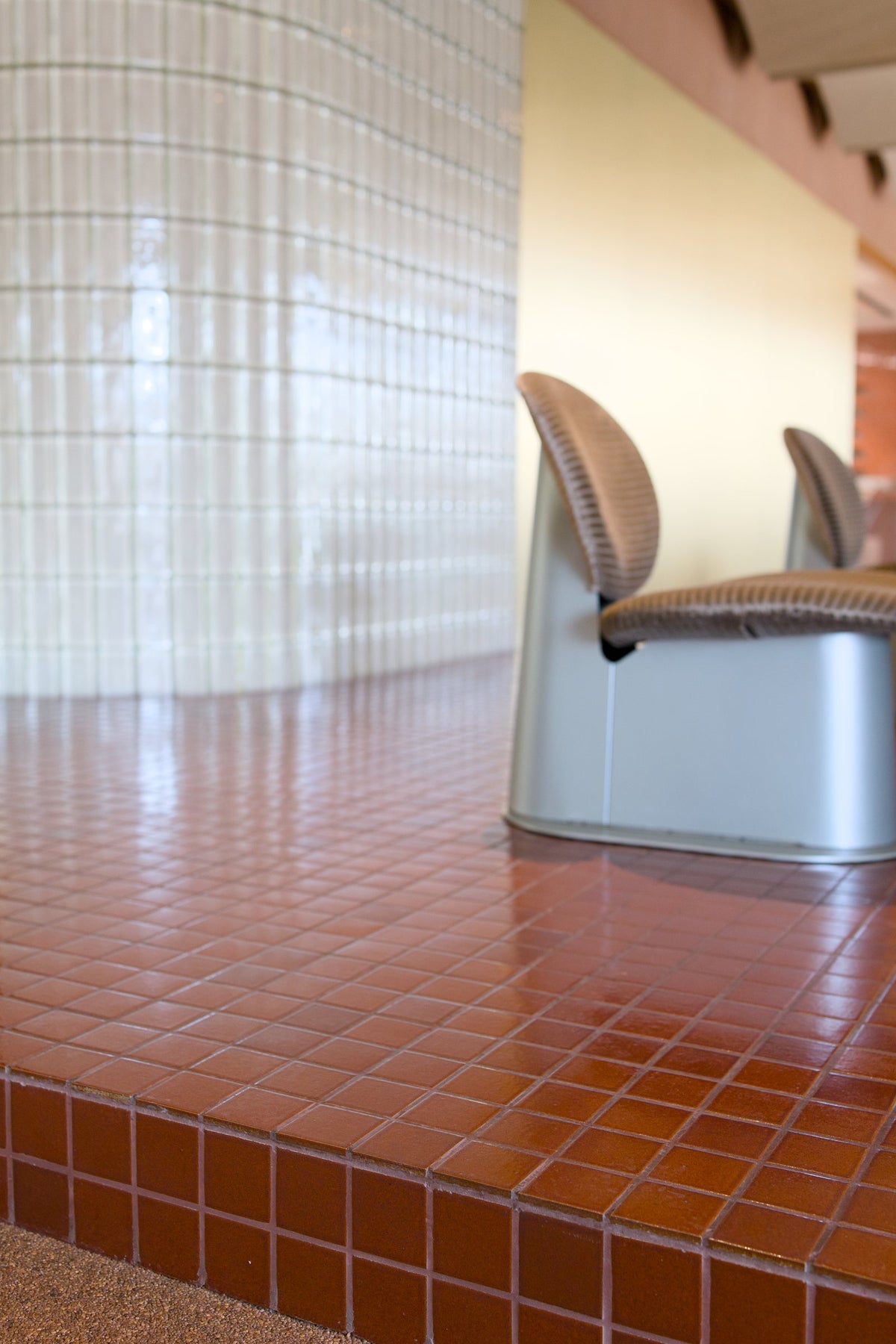
The tile continues over the edge of the platform and down its face, so the step reads as one solid ceramic form rather than a floor with a separate trim. Up close, the colour moves from brick red to deeper chestnut from tile to tile, and that natural variation keeps the large surface from looking flat.
Colour, Light and Warmth
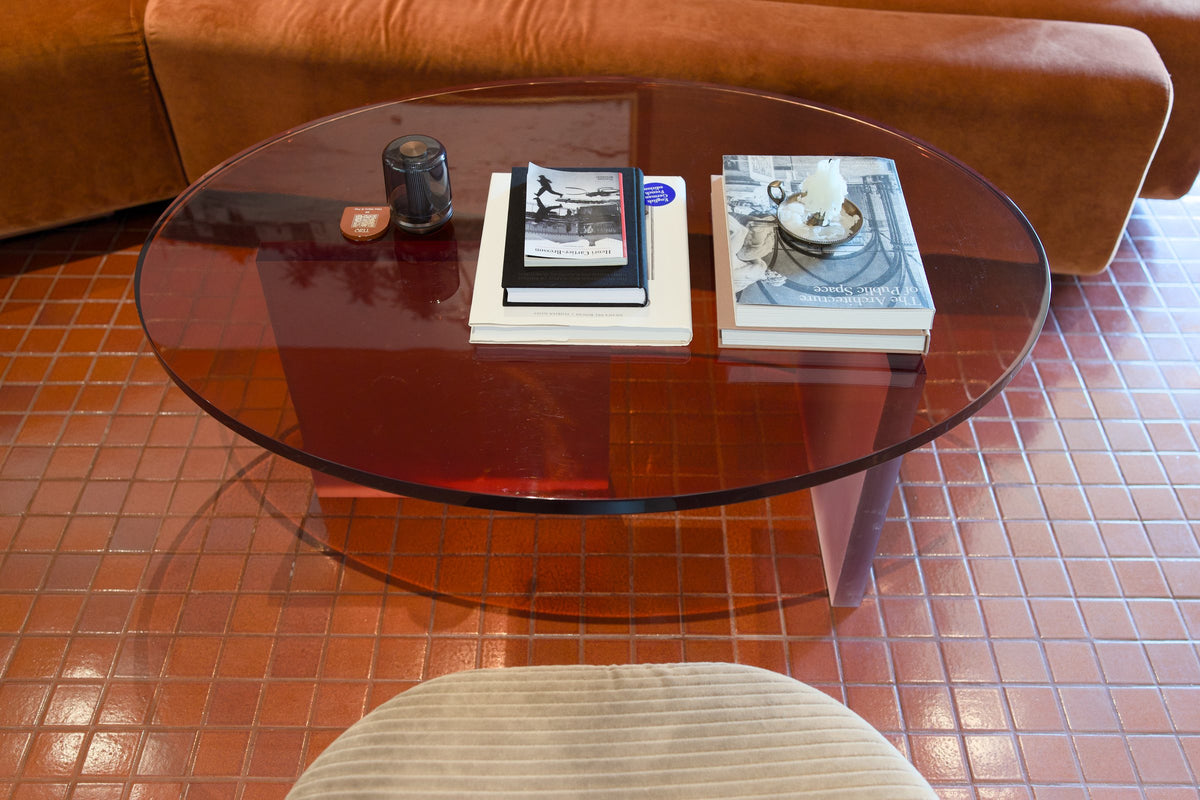
TRIO's interior uses a warm palette of rust, sand, ochre and brown. Vintage Red sits within that range rather than against it, giving the lounge a grounded, slightly richer tone underfoot. Next to the glass-block column and cream counter, the glaze adds depth and shine, and under the tinted glass tables it turns a deeper amber.
About Kaji Oki
Kaji Oki is a Japanese porcelain tile in a 69 × 69 × 7.5 mm square, supplied paper-faced on 300 × 300 mm sheets with 6 mm joints. It comes from a family that began working with ceramics in 1918, and its glazes are reduction-fired in long tunnel kilns. The collection has 24 colour and surface options, including smooth glazes and textured versions marked #. Kaji Oki is frost-proof and suited to interior and exterior walls, wet areas, pools, fireplaces and low-traffic floors.
Summary
At TRIO Jumeirah, a single tile and colour gives the lounge its base. Kaji Oki Vintage Red wraps the raised platform and its step edges in a continuous glossy surface, and its warm, varied glaze ties in with the velvet, plaster and timber of TRIO's interior.
View Kaji Oki in Vintage Red
View Mittsu Japanese tile collections
View more hospitality and interior projects
FAQ
What tiles are used at TRIO Jumeirah?
Kaji Oki in Vintage Red, a Japanese glazed porcelain tile supplied by Mittsu Japanese Tiles.
Where is the tile used in the café?
On the floor of the raised lounge platform and down its step edges, beneath the velvet banquettes and lounge seating.
Can Kaji Oki be used on floors?
Kaji Oki is suited to low-traffic floors as well as walls, wet areas and pools. Contact us to confirm suitability for the traffic and setting of your project.
What does Mittsu mean?
Mittsu (三) means three in Japanese, a fitting link to TRIO, whose café design is built around the number three.
Why does the colour vary from tile to tile?
Each glaze is formed in the kiln, so tone and depth vary naturally. In Vintage Red, this shows as shifts between brick red and deeper chestnut.
Related Projects
Sanāra Spa, Grosvenor House Dubai — Kaji Border, Nigi and Kogarana
Gyu-Kaku Palm Jumeirah, Dubai — Yuki Border Speckled Black
Penthouse, Knokke-Heist — Kaji Border Burnt Russet and Vintage Green
Planning a project in Dubai? See Japanese tiles in Dubai for UAE samples, stock and showroom appointments.